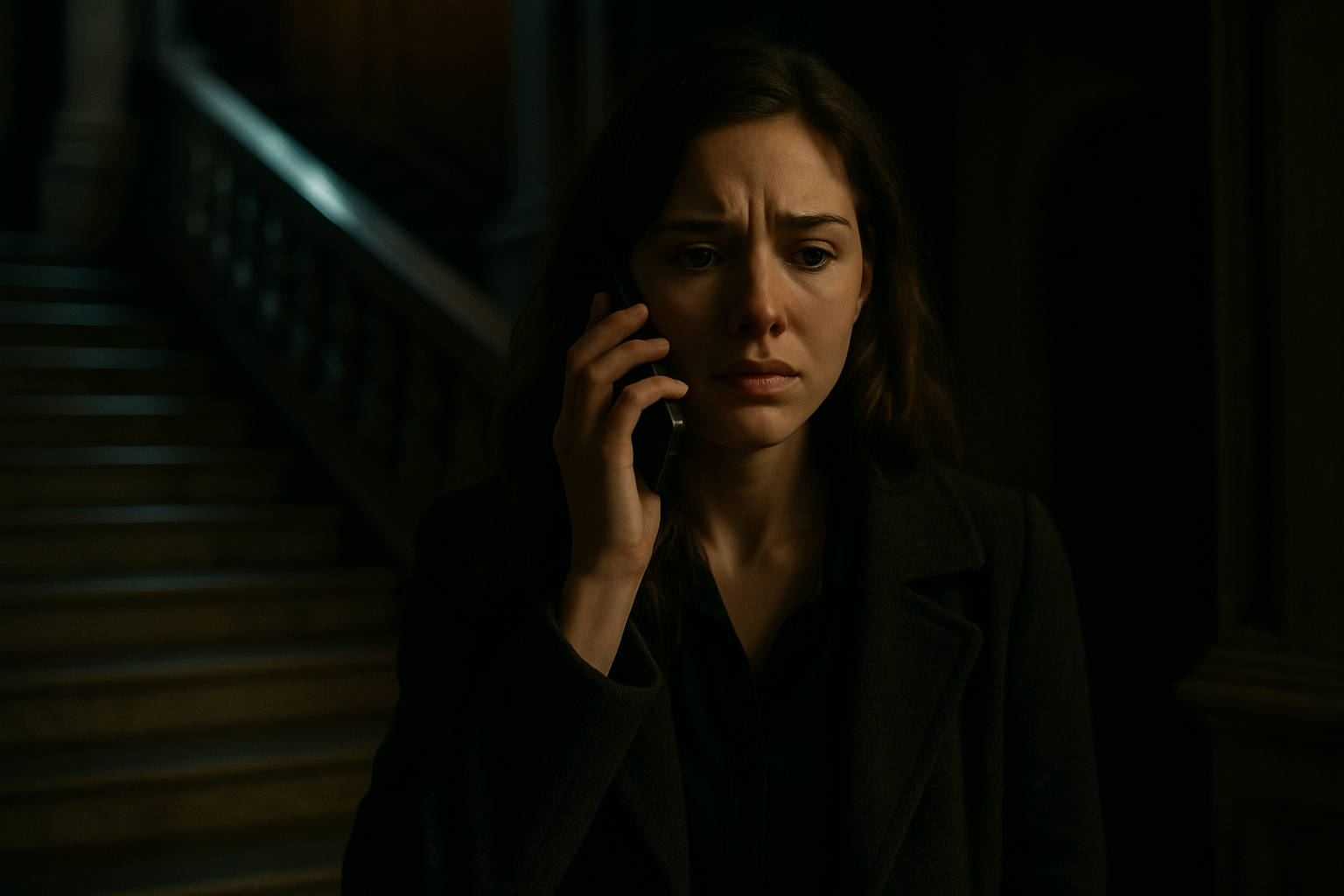
“Call ahead. Tell them severe trauma, third-trimester pregnancy, possible abruption.”
Nathan heard the word and understood enough to feel the floor vanish under him.
Abruption.
The placenta tearing away.
The child losing oxygen.
Evelyn bleeding where no hand could reach her until steel opened her body.
He looked down at his sister, at the lashes resting against her cheeks, at the faint bruise already blooming along one side of her jaw. Only minutes ago she had been standing in front of the courthouse, holding his arm, frightened but upright, speaking of divorce and safety and June.
June.
The name came into his mind like a candle in a sealed room.
When they reached the hospital, the ambulance bay doors flew open before the vehicle fully stopped. A trauma team was already waiting. Surgeons, obstetricians, anesthesiologists, NICU nurses—an entire storm of trained urgency—closed around Evelyn with the terrifying precision of people who knew that compassion could not be allowed to slow their hands.
“Thirty-two weeks,” someone called.
“Fall down multiple stone steps.”
“Blunt abdominal trauma.”
“Hypotensive.”
“Fetal distress.”
“Possible placental abruption.”
“Two large-bore IVs. Type and cross. Get blood ready.”
Nathan moved with the stretcher until a nurse put both hands on his chest.
“Sir, you have to stop here.”
“She’s my sister.”
“I know. But you have to stop here.”
The doors ahead of him opened and swallowed Evelyn whole.
For one awful second, Nathan saw a slice of the room beyond: white lights, blue gowns, stainless steel, a chaos so ordered it felt inhuman. Then the doors closed, and he was left outside in a hallway that smelled of antiseptic and coffee and rain-soaked wool.
He stood there in his bloodstained suit, motionless.
For the first time in his adult life, Nathan Reed had no argument to make.
Law could not cross that threshold.
Money could not bargain with hemorrhage.
Reputation could not intimidate a heart monitor into finding its rhythm and keeping it.
He had built his career on the belief that there was always a pressure point, always a statute, always a witness, always a door one could force open if one knew where to lean.
Now there was only waiting.
And waiting was barbaric.
A nurse tried to guide him to a chair. He did not sit. Another offered him a paper cup of water. He did not drink. Someone asked if there was family to call.
That, at least, he could do.
His hands were steady when he took out his phone. It was a lawyer’s steadiness, a brother’s refusal to shatter while he was still needed.
Their mother answered on the second ring from Richmond, her voice warm with ordinary concern.
“Nathan? Is everything all right?”
He closed his eyes.
“No,” he said. “Come to Fairfax. Evelyn is hurt. The baby is coming now.”
There was a silence on the other end, not empty but collapsing.
“How hurt?”
“Badly.”
“Is she—”
“She’s alive. She’s in surgery.”
Their mother made a sound he had never heard from her, not even when their father died. A thin, wounded intake of breath, as if grief had hooked itself under her ribs.
“I’m leaving now,” she said.
“Don’t drive too fast.”
“Nathan.”
“I mean it. I can’t lose you on the way here too.”
Another pause. Then, softer, “I’m coming.”
He ended the call and stood beneath the fluorescent lights, staring at the closed surgical doors until the grain of the paint blurred.
Then he made the second call.
District Attorney Caroline Shaw answered with the clipped alertness of a woman who had already learned that certain phone calls arrived carrying blood.
“Nathan,” she said. “I’m already hearing about a fall at the courthouse.”
“It wasn’t a fall.”
Silence hardened the line.
“My sister was pushed down the front steps by Grant Mercer’s mistress. There are cameras. There are witnesses. Evelyn is in surgery. The baby may not survive.”
Caroline’s voice changed. It lost all trace of professional distance and became something colder, sharper.
“I’ll send detectives.”
“I want Marissa Vale arrested.”
“If the footage supports it, she will be.”
“It will.”
“You know I can’t take your word for—”
“Caroline.”
That stopped her.
He was not raising his voice. He did not need to. There was something far more dangerous in him now than rage.
“I watched my pregnant sister bleed on courthouse stone.”
Another silence.
“I’ll send detectives,” Caroline said again, quieter this time.
“And Grant Mercer needs to be treated as more than a bystander.”
“That is a serious accusation.”
“I know what serious sounds like, Caroline.”
“I’m listening.”
“He has been moving assets, hiding money, and discussing ways to reduce his obligations if Evelyn loses the baby.”
The words tasted like poison.
“If Evelyn loses the baby.”
Not if the baby dies.
Not if his daughter dies.
If Evelyn loses the baby—as though a child were a misplaced ring, a legal inconvenience, a number in a column.
Caroline exhaled slowly. “Do you have proof he encouraged violence?”
“Not yet,” Nathan said. “But I will.”
“Nathan.”
“I know.”
“Do not obtain evidence illegally.”