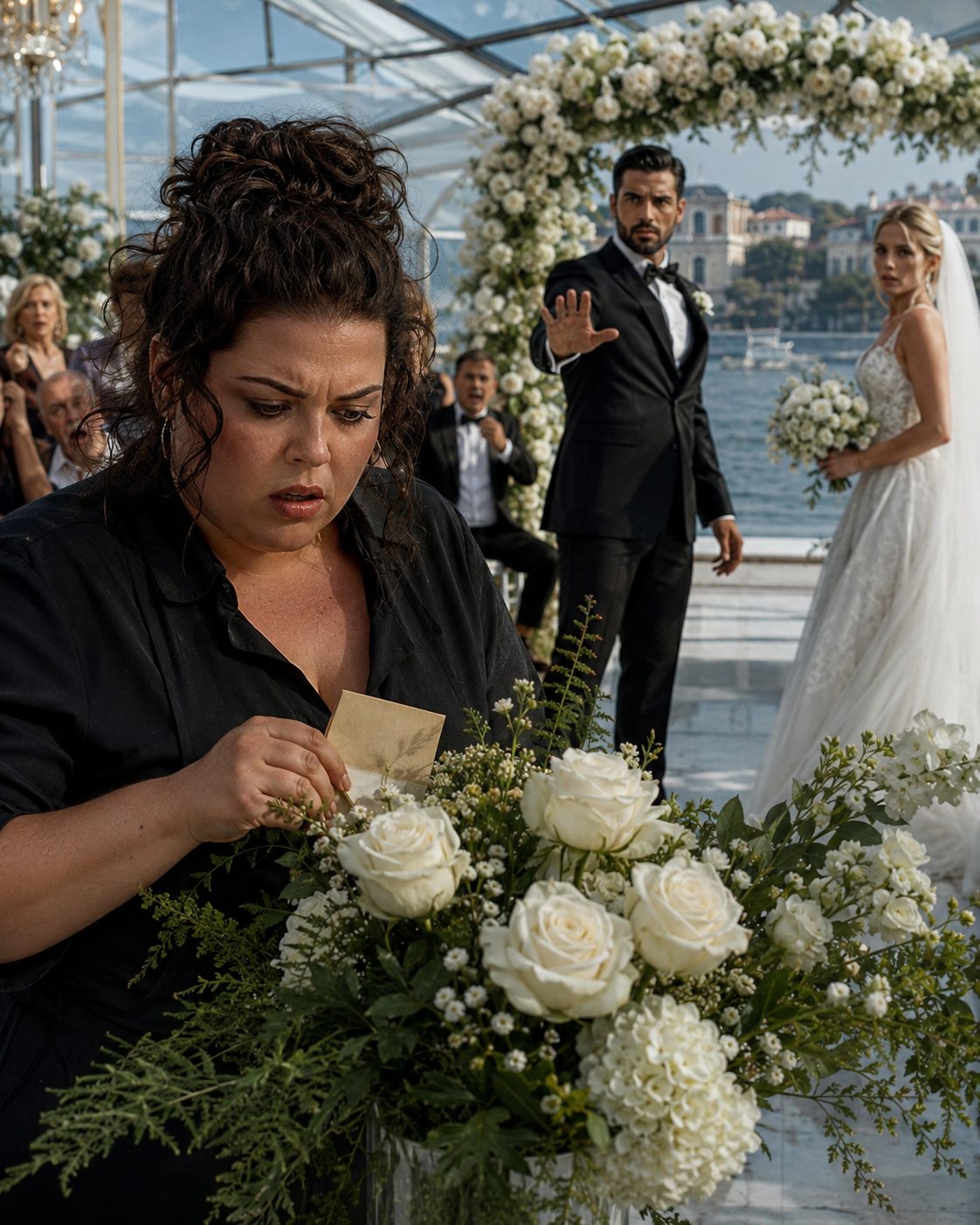
Celeste looked at Leon as if seeing him for the first time.
“You promised me control,” she said.
Leon’s mask cracked.
“I promised you what you needed to hear.”
That was the real betrayal.
Not just a bride against a groom.
Not just a cousin against blood.
Everyone had used everyone. Celeste had planned to ruin Dante. Leon had planned to ruin Celeste. The wedding had never been a wedding. It had been a machine built from greed, envy, beauty, and lies.
And the only person who had noticed the hidden piece was the florist they had treated as invisible.
The investigators moved in quietly. Leon did not fight. Celeste did not scream. The crowd parted as if shame were contagious. The officiant closed his book. Somewhere near the front, an elderly woman began to cry.
Dante turned back to Celeste.
“The wedding is canceled,” he said.
Celeste’s veil trembled around her shoulders.
“You’ll regret humiliating me,” she whispered.
“No,” Dante said. “I regret trusting you. That is different.”
By sunset, the estate looked like the remains of someone else’s dream.
The guests were gone. The musicians had packed their instruments. The chairs stood empty beneath the white flowers. Reporters waited beyond the gates, but security kept them far from the pavilion. The roses still looked perfect, which seemed almost cruel.
Mara stood behind the floral wall where she had found the envelope.
Her body felt hollow now that fear had left it.
The biggest contract of her career had collapsed into scandal. Her name would be everywhere by morning. Some people would call her brave. Others would call her a thief. Some would say Dante had paid her. Some would say she had wanted him from the beginning.
People loved a woman’s courage only until it made them uncomfortable.
“You should be proud.”
Mara turned.
Dante stood a few feet away, his tie loosened, his jacket open, his face tired in a way power could not hide.
“I ruined your wedding,” she said.
“You saved me from a funeral disguised as one.”
She looked back at the roses. “That sounds dramatic.”
“It was a dramatic day.”
Despite herself, Mara smiled.
Dante stepped closer, stopping at a respectful distance. “My attorneys will protect your name. Your payment will be made in full.”
“The flowers did not technically complete the event.”
“The flowers performed better than most of the guests.”
That startled a laugh out of her.
Dante’s face softened.
“There,” he said.
“What?”
“The first honest sound I’ve heard today.”
Mara looked away before the warmth in her chest became dangerous.
He held out an envelope.
She shook her head immediately. “No.”
“You don’t know what it is.”
“I know what rich guilt looks like.”
“It’s not guilt. It’s the balance of your contract, hazard compensation, staff overtime, and a personal apology to your cooler, which I’m told is older than several federal laws.”
Mara stared at him.
Then she took the envelope because pride did not pay rent, and her aunt June had not raised an idiot.
Inside was a check large enough to clear the shop’s debts, replace the cooler, repair the sign, and keep her staff employed through winter.
Her eyes burned.
“I don’t know what to say.”
“Say you’ll keep the blue flower next time.”
She looked up.
Dante’s gaze moved to the altar arrangement. There, hidden among all the white roses, was the one pale blue stem Mara had added that morning before everything fell apart.
Celeste had never noticed.
Dante had.
“I thought you disliked disobedience,” Mara said.
“I dislike betrayal. Disobedience can be useful.”
“Careful. That almost sounded like a compliment.”
“It was one.”
The river behind the estate turned gold in the last light.
For a while, neither of them spoke.
Then Dante said, “The stories about me are not all false.”
Mara looked at him.
“My family built things in ugly ways,” he continued. “I inherited power before I learned what it cost other people. I have spent years trying to clean what carries my name, but some stains do not disappear because a man writes checks to charities.”
Mara listened.
He did not sound like he was asking for absolution.
That mattered.
“What will you do now?” she asked.
“Remove Leon from every company. Restructure the foundation. Cooperate where I must. Fight where I should.” He paused. “And learn to read every document, even when it mentions my mother.”
Mara’s voice softened. “That would be a good start.”
Dante looked at her, and for the first time since she had met him, he seemed less like a man surrounded by power and more like a man standing after a storm, unsure which walls were still real.
“When the headlines calm down,” he said, “I would like to take you to dinner.”
Mara’s first instinct was to laugh.
Not because it was funny.