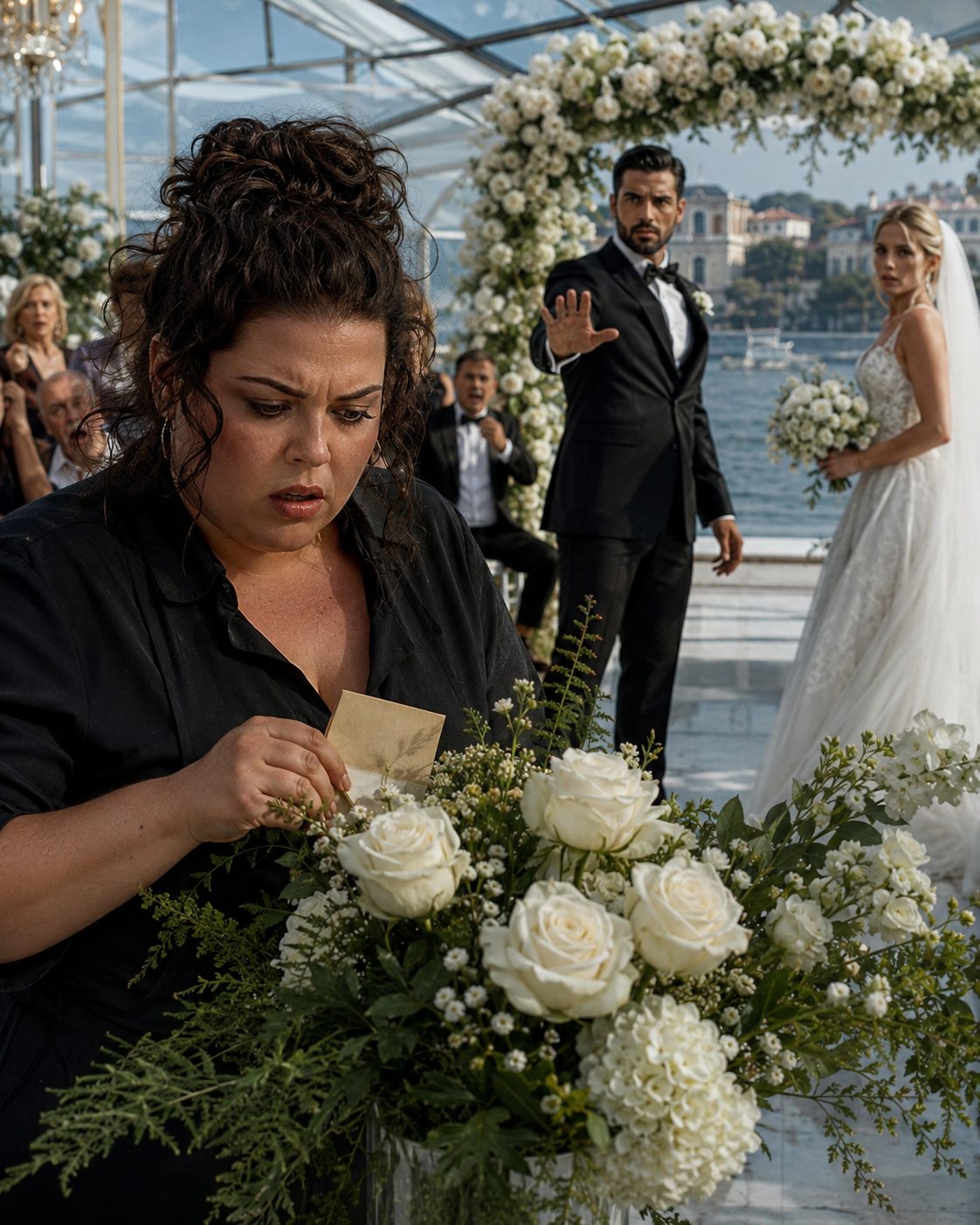
Because women like her learned to laugh before anyone else could. They learned to make jokes about their own bodies so no one could use them as weapons. They learned to distrust desire when it came dressed in expensive suits.
“You know I’m not like the women people expect beside you,” she said.
“No,” Dante replied.
Too fast.
Too honestly.
Then he added, “That is not a problem for me.”
Mara studied him.
“One dinner,” she said.
“One dinner.”
“And not somewhere with twelve forks and silent waiters.”
“Where, then?”
“My neighborhood. There’s a place near my shop with plastic chairs, loud families, and the best baked ziti in Brooklyn.”
Dante nodded solemnly. “I will prepare myself.”
“You won’t survive.”
“I survived today.”
“That was easier.”
Six months later, June & Thorn had a new sign.
Mara kept the same name, the same narrow shop, and the same chipped bell above the door. But the cooler no longer groaned like a dying animal. The front window gleamed. Two new assistants worked beside her. Orders came from hotels, galleries, restaurants, and brides who had once been unable to pronounce her last name.
People came for the scandal at first.
Then they came for the flowers.
Mara learned that attention could be survived. She learned that being seen did not have to mean being consumed. She learned to say no to clients who spoke to her like furniture. She learned to charge more.
As for Dante Bellandi, the papers still called him dangerous.
Maybe he was.
But people were not made of one truth. They were made of choices, repeated until they became a life.
He cleaned his companies. He rebuilt the foundation with independent oversight. He removed men who had confused loyalty with silence. He visited June & Thorn every Friday evening with coffee, pastries, and the careful patience of a man trying to deserve ordinary things.
One winter night, snow began falling over Brooklyn while Mara arranged a small display in the shop window.
White roses.
Pale blue delphinium.
A single thorned stem left visible in the glass.
Dante stood beside her, hands in the pockets of his dark coat.
“What does this one mean?” he asked.
Mara tilted her head as if considering.
“White roses for the wedding that ended before it became a lie. Blue for the truth nobody expected to find. Thorn for the woman who finally stopped apologizing for having edges.”
Dante was quiet for a moment.
Then he said, “It’s my favorite.”
“You say that about all my work.”
“Because I value my life.”
Mara laughed.
Outside, the snow softened the street. Inside, the shop smelled of roses, pine, coffee, and sugar. Dante reached for her hand slowly, giving her every chance to refuse.
She did not.
For most of her life, Mara had believed love would arrive as proof that she was finally enough.
But standing in her own shop, under her own sign, holding the hand of a man who had lost a false future and chosen a truer one, she understood something better.
She had been enough before anyone saw her.
The right people only helped her stop hiding.
And sometimes, the truth did not arrive loudly.
Sometimes it waited behind roses.
Sometimes it wore work shoes, carried pruning shears, and had the courage to bloom with thorns.