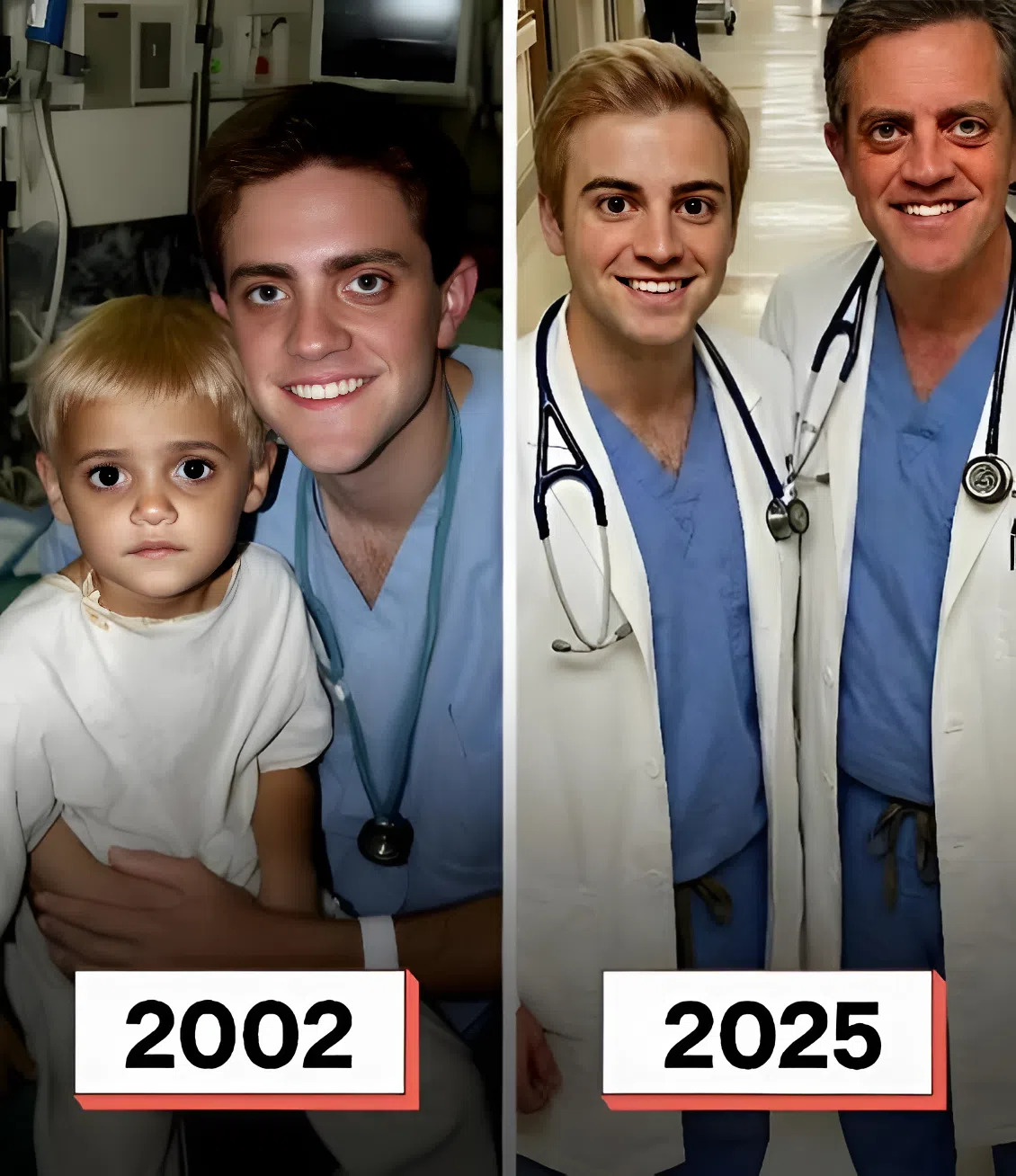
I was working as a paediatric surgeon when I met a six-year-old boy with a heart condition. After I saved his life, his parents abandoned him, and my wife and I decided to raise him as our own child. Twenty-five years later, he froze in the emergency room, staring at the stranger who had saved my wife, recognising the face he had tried to forget.
I had spent my entire career repairing broken hearts, but nothing could have prepared me for the day I met Owen.
He looked so small in that huge hospital bed, his eyes too big for his pale face, and his chart read like a death sentence. Congenital heart defect. Critical. A diagnosis like that takes away childhood and replaces it with fear.
After I saved his life, his parents abandoned him.
His parents sat nearby, looking devastated, as if they had been frightened for so long that their bodies had forgotten how to exist otherwise. Owen kept trying to smile at the nurses. He apologised for needing anything.
God, he was so terribly polite, it broke my heart.
When I went in to discuss the operation, he interrupted me in a quiet voice: ‘Can you tell me a story first? The machines are too loud, and stories help.’
I sat down and made up something on the spot about a brave knight with a ticking clock inside his chest who understood that bravery is not the absence of fear, but being afraid and doing difficult things anyway.
He apologised for needing something.
Owen listened with both hands pressed against his heart, and I wondered if he could feel the irregular rhythm beneath his ribs.
The operation went much better than I had hoped. His heart responded beautifully to the repair, his vital signs stabilised, and by morning he should have been surrounded by relieved, exhausted parents who couldn’t tear themselves away from him to make sure he was real.
Instead, when I walked into his room the next day, Owen was completely alone.
No mother tucking his blanket around him. No father dozing in a chair. No coats, no bags, no signs that anyone had been there at all. Just a stuffed dinosaur sitting limply on a pillow and a glass of melted ice that no one had bothered to throw away.
‘Where are your parents, mate?’ I asked, trying to keep my voice steady, even though something cold was spreading through my chest.
Owen just shrugged. ‘They said they had to go.’
The way he said it made me feel like I’d been punched in the stomach.
The way he said it made me feel as if I had been punched in the stomach.
I checked his stitches, listened to his heart, and asked if he needed anything. All the while, his eyes followed me with desperate hope that perhaps I wouldn’t leave either.
When I stepped out into the corridor, the nurse was waiting with a folder and an expression on her face that told me everything. Owen’s parents had signed all the discharge forms, gathered all the instructions, and then simply left the hospital and disappeared.
They had planned it.
Maybe they were drowning in medical debt. Maybe they thought leaving their son was an act of mercy. Maybe they were just broken people who had made an unforgivable decision.
I stood there staring at the nurses’ station, trying to comprehend what had happened. How could you kiss your child goodnight and then decide never to come back?
That night, I came home after midnight and found my wife, Nora, still awake, curled up on the sofa with a book she wasn’t reading.
She looked at my face and put the book down. ‘What happened?’
I sat down next to her and told her everything. About Owen and his dinosaur… about how he asked for stories because the medical equipment was too loud and scary. About the parents who saved him by bringing him to the hospital and then ruined his life by leaving.
When I finished, Nora was silent for a long time. Then she said something I didn’t expect: ‘Where is he now?’
‘Still in the hospital. Social services are trying to find emergency housing.’
Nora turned to me, and I recognised that look. It was the same expression she had when we discussed having children, starting a family, and dealing with all the dreams that didn’t work out as we had planned.
‘Can we see him tomorrow?’ she asked softly.
‘Nora, we don’t have…’
‘I know,’ she interrupted. ‘We don’t have a nursery or any experience. We tried for many years, and nothing worked out.’ She took my hand. ‘But maybe it wasn’t meant to be that way. Maybe it was meant to be this way.’
One meeting turned into two, then three, and I watched as Nora fell in love with a boy who needed us as much as we needed him.
The adoption process was brutal. The home study and background checks, the interviews that made you question whether you deserved to be a parent.
But none of that was as difficult as watching Owen during those first few weeks.