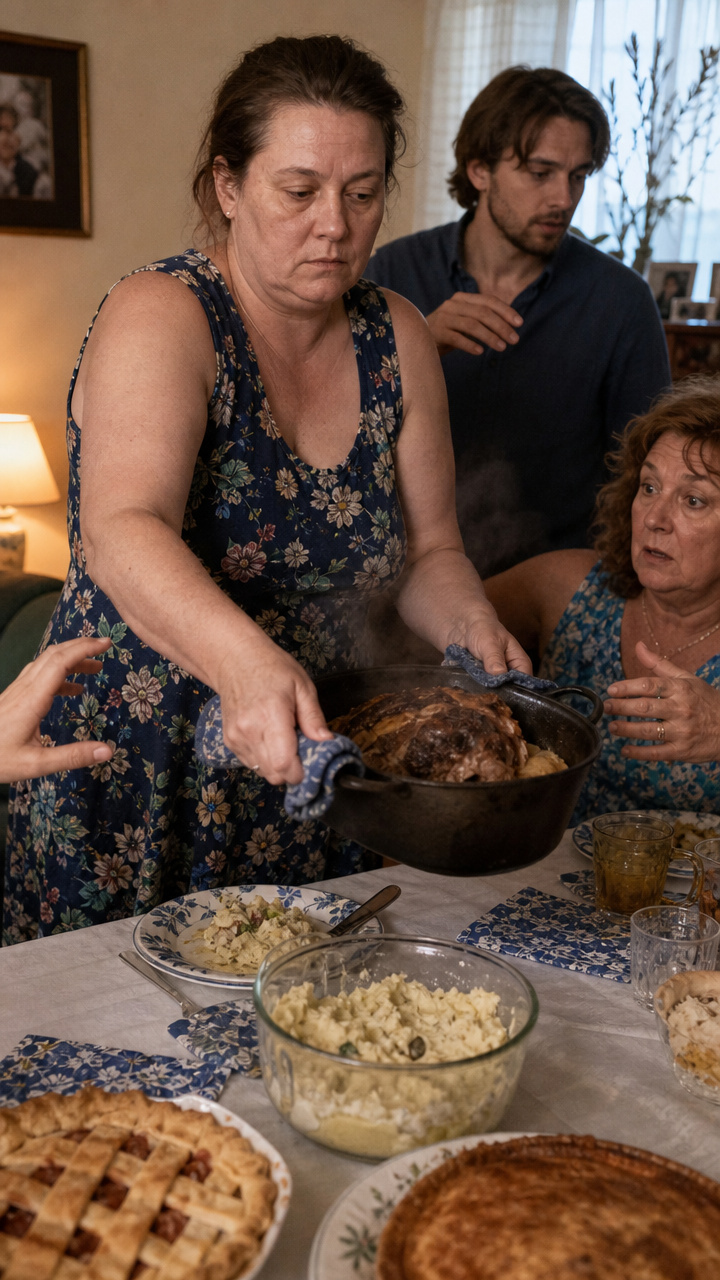
“You could have bought proper napkins for the occasion instead of bringing home that flimsy bargain paper from the clearance aisle. Putting something like that in front of guests is embarrassing.” Patricia picked up one of the thin napkins between two fingers, as though it were something unpleasant, and tossed it toward the edge of the linen tablecloth.
Margaret stood beside the china cabinet, holding a heavy crystal fish platter in both hands. A sharp little ache touched her chest, but she said nothing. Her fingers only tightened around the cold, cut glass. She had chosen those napkins the evening before, especially for the family celebration. Delicate blue cornflowers decorated the white paper, and Margaret had spent a long time sorting through the packages, looking for a pattern that would suit the old holiday china her mother had left her.
The small living room was warm and welcoming. Rich smells of homemade food filled the apartment—the kind of fragrance found only in a home where the hostess has spent nearly two days at the stove. Fresh pastry, garlic, dill, roasted meat, and herbs mingled in the air. Margaret had begun preparing everything on Thursday. After her shift at the medical clinic laboratory, she had gone to the market and chosen a tender pork roast. That evening she had stayed up late making a clear chicken aspic, carefully skimming away every trace of foam and excess fat.
The occasion mattered. Daniel and Emily were celebrating their wedding anniversary. It was an important date for the young couple, and Margaret wanted to give them a truly warm family evening. They had warned her beforehand that a restaurant was beyond their means at the moment: nearly every spare dollar was going toward payments on the car they had recently bought. Margaret had agreed without hesitation to host the celebration and take care of all the food herself.
“Mom, you know perfectly well that Patricia likes everything to look elegant,” Emily remarked, studying her fresh manicure while making no attempt to help her mother-in-law arrange the plates. “You could at least have taken out the cloth napkins, starched them, and folded them properly. We are celebrating an anniversary at home, after all.”
Daniel had made himself comfortable on the sofa and was scrolling through the news on his phone, looking as if table settings had nothing whatsoever to do with him. Patricia’s husband, Robert, a broad-shouldered and usually quiet man, sat a little apart from everyone else. He was examining the fern on the windowsill with such concentration that he seemed to hope he might disappear among its leaves. He knew his wife’s temperament far too well.
“The tablecloth is clean, the good china is out, and everything is set,” Margaret replied with restraint. She placed the crystal fish platter beside a large round bowl of potato salad. “Let’s sit down before the appetizers dry out.”
Patricia lowered herself heavily into a padded chair, adjusted the bright silk scarf around her broad shoulders, and inspected the table like a strict official conducting an audit. Her eyes carried that familiar look of superiority. She had spent twenty years as a purchasing clerk for a major wholesale company and still brought up her old connections whenever she had the chance, treating them as proof that she occupied a higher place in life.
“Margaret, this really belongs in another era,” she drawled with an exaggerated sigh, tapping the bowl of potato salad with her fork. “Another mountain of mayonnaise. Who serves this at an anniversary dinner anymore? Modern people make light salads—arugula, shrimp, avocado, a proper dressing. This is nothing but cholesterol. We’ll be reminded of it by our stomachs all night.”
Margaret eased herself onto the edge of a chair near the kitchen doorway. After spending the whole day on her feet, her ankles and knees throbbed unpleasantly.
“Daniel has loved this salad since he was a child. I made it especially for him. The pickles are homemade, the chicken came from the farm, and I used real meat instead of store-bought sausage.”
Patricia twisted her brightly painted lips and pushed the bowl farther away.
“What difference does it make whether the chicken came from a farm if everything is drowning in cheap mayonnaise? You could have asked the young people what’s fashionable to serve at a celebration. And what is that supposed to be? Aspic? In May? Margaret, that is dreadful taste. Aspic belongs in winter—at Christmas or, heaven forbid, at a funeral.”
Emily pressed her lips together and nodded in agreement with her mother.
Daniel only made an indistinct sound without taking his eyes off the screen.
Margaret looked at her son and remembered how he had stopped by exactly one week earlier after work. He had been exhausted, rumpled, and gray-faced. Daniel had complained that he had no money left at all. After the latest car payment, he had said, there was barely enough for gasoline. Then he had asked his mother to prepare “something proper and homemade, like before” for the anniversary because all the takeout meals and packaged food were beginning to trouble his stomach and liver.