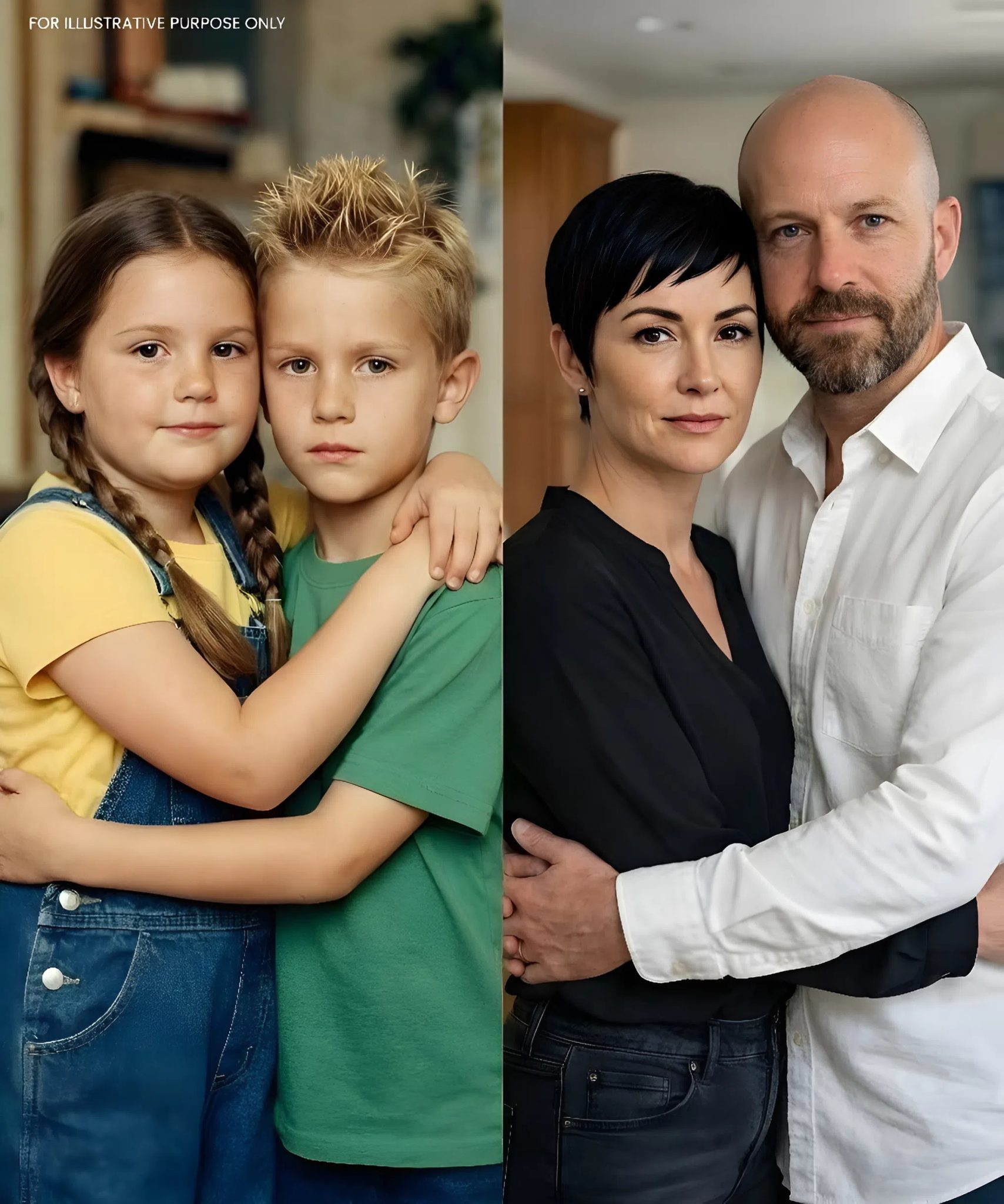
I had known Troy almost my entire life. We grew up next door to each other: one courtyard for two, the same schools, the same familiar routes and holidays that our families celebrated together. We got married when we were twenty — at the time, it seemed like it was meant to be, as if our story had been written long ago.
For decades, everything seemed calm and secure. We raised two children — a daughter and a son. Now they are adults, each with their own life. From the outside, our marriage looked like that ‘strong union’ that stands the test of time.

Sometimes the biggest change comes not with a loud scandal, but with a small crack that you don’t even notice at first.
But in the thirty-fifth year of our life together, something changed imperceptibly. I didn’t realise this from conversations or my husband’s behaviour — I just needed to log into our bank account.
My son had repaid part of his loan, and I logged into our joint account to transfer the money to savings. The numbers didn’t add up. First, one amount was missing, then another. It seemed as if the funds were slowly and silently ‘draining away’ like water from a poorly closed tap.
I asked Troy directly. He answered confidently, but each time differently. He talked about bills, then about some work around the house, then assured me that he had simply ‘moved the money’ and that everything would soon be back in place. However, nothing was returned, and there was no clarity.
At first, ‘it was just ordinary expenses.’
Then, ‘urgent repairs.’
Then, ‘temporary transfer of funds.’
A week later, I was looking for batteries in his desk and accidentally stumbled upon something I shouldn’t have seen. Under a stack of papers were receipts from a hotel. The same hotel. The same city. And again, the same room number. Too many repetitions for it to be a coincidence or a one-time trip.
I felt a chill run through me. I didn’t want to jump to conclusions, but the documents left no room for a reasonable explanation. So I called the hotel, introduced myself as his assistant, and asked if I could book the room he usually stays in.

The receptionist replied without hesitation, as if it were the most normal question in the world:
‘He stays with us often. That room is almost always reserved for him.’
When Troy came home, I laid the receipts out in front of him and asked him to tell me the truth. He didn’t deny that the documents were real. But he didn’t want to explain anything either. Instead of talking, he acted as if the problem was with me — my questions, my distrust, my ‘suspiciousness.’
And at that moment, it dawned on me: I could no longer live with a person who demanded loyalty and silence, but at the same time hid half of his reality from me. If you can’t ask questions in a marriage, then there is no longer any support in it.
I asked for clarity — I got evasiveness.
I sought explanations — I encountered irritation.
I wanted honesty — I heard accusations against me.
So, after thirty-six years, we divorced. Not because of a piece of paper or a single argument — simply because too many things had been left unsaid, and trust is based not on habit but on openness.
Two years passed. Troy died suddenly. The news took me by surprise: no matter how our story unfolded, so many years cannot be erased from memory by a single court decision.

At the funeral, his father approached me — he was eighty-one. He was unsteady on his feet, smelled of alcohol, and his face showed the fatigue of a man grieving in his own way. He leaned closer, as if afraid that someone would hear, and said in a faltering but unexpectedly sharp voice:
‘You don’t even know what he did for you, do you?’
This phrase hit harder than any suspicions or documents. It sounded as if there was a second layer to our shared history — something I hadn’t been told about, something I hadn’t seen and something I might never fully understand.
I stood among the people, listening to the farewell speeches, and suddenly felt everything I considered ‘our past’ swaying beneath my feet. Not because I was told a specific secret, but because I was hinted at: my version of life might be incomplete.
I was about to leave when his father suddenly squeezed my hand tightly. His eyes, clouded by alcohol, became clear for a moment.
‘Do you think he was cheating on you?’ he said quietly. ‘He went to that city every week, not to see a woman… but to see doctors.’
I froze.

“Two years ago, he was given a serious diagnosis. He needed surgery, then expensive treatment. He didn’t want you to know. He said you had already given your whole life to your family, and he had no right to make you go through this with him. The hotel was two blocks from the clinic. He always took the same room because you could see the park from the window… He said the view reminded him of you.
The world around me seemed to go silent.