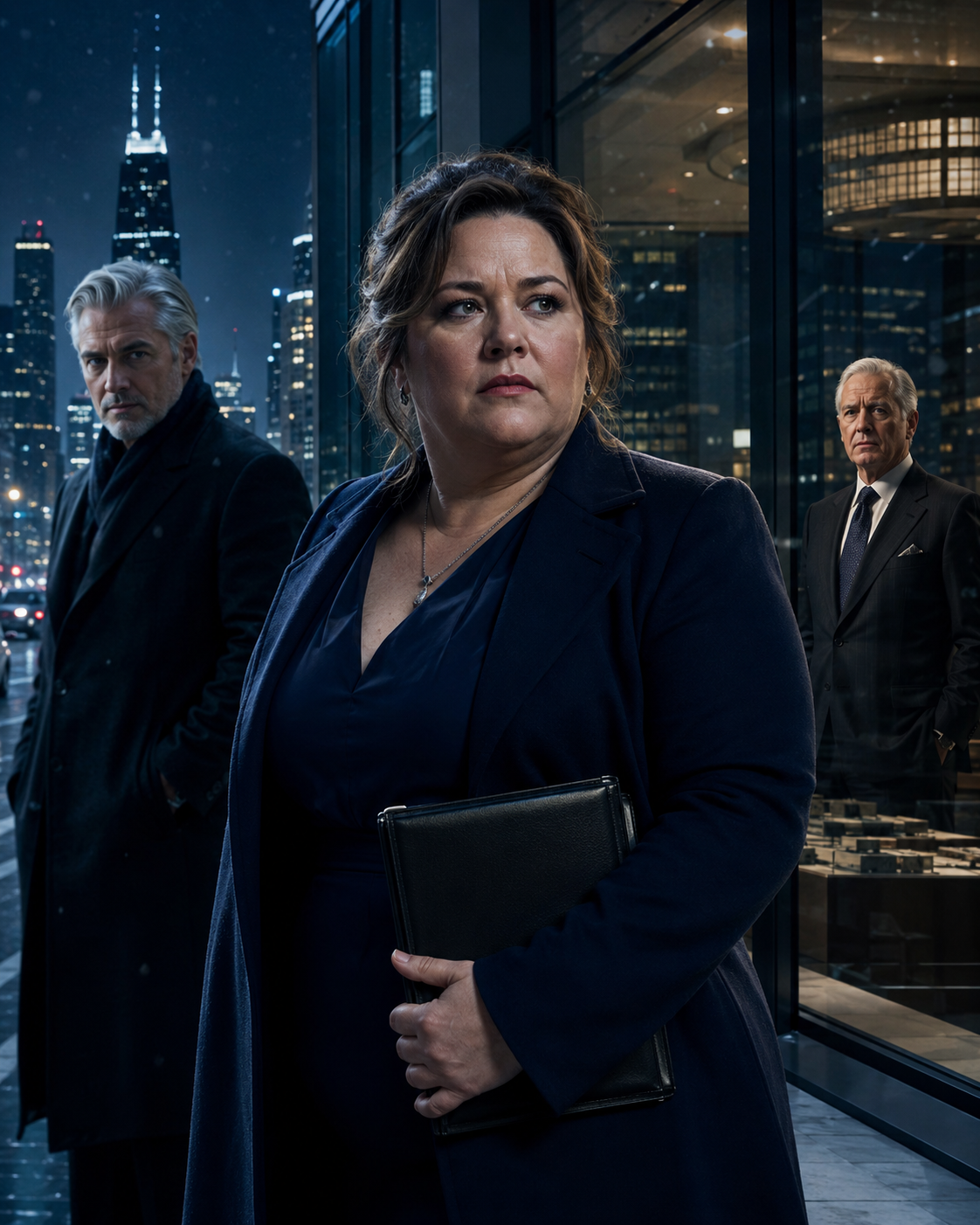
And at the far end of the table sat Edmund Varrick.
Eighty-two years old. Silver hair. Perfect suit. Gentle hands folded before him. The founder. The myth. The man whose portrait hung in the lobby three floors below.
When Clara entered, he gave her the old warm look.
“Clara,” he said. “I wish this had not become so painful.”
She stopped behind her chair.
“Then you should have chosen a cleaner lie.”
The room stiffened.
Varrick’s eyes changed for half a second.
Clara saw it.
The attorney opened with procedure. Clara let her speak. She let the company state its accusation: warning received, escalation failed, employee death connected to operational negligence.
They used polished words.
Incident.
Breakdown.
Miscommunication.
Exposure.
Failure point.
Not Noah.
Not son.
Not man.
Not life.
When the regulator asked whether Clara wished to respond, she stood.
“My name is Clara Bennett. For twenty-two years, I ran the systems no one noticed until they needed someone to blame. I am accused of receiving a critical safety warning and failing to escalate it. I will not ask you to believe me because rooms like this often decide what women like me are worth before we speak.”
A few faces shifted.
“So I brought something better than my word. I brought Meridian North’s own memory.”
She opened her folder and handed out the first document.
“This is the record the company used against me. It shows the warning entering my operations queue and stopping there. Now look beneath the display trail at the embedded alteration stamp. Not the date they want you to see. The system date.”
The regulator leaned forward.
The safety investigator did too.
Clara continued, “That record was altered after Noah Reed died.”
The company attorney objected immediately.
Clara did not raise her voice.
“You can verify it on Meridian North’s own system. I’ll show you where.”
She did.
For twenty minutes, the room watched the regulator access the company’s internal record through a secure terminal. Clara gave directions calmly, as if teaching a new assistant how to find a missing invoice.
Folder.
Mirror.
Header.
Hidden stamp.
Raw audit trail.
The regulator’s face hardened.
“This record was modified after the fatal incident.”
The room went quiet.
Clara handed out the second document.
“This is the automatic archive of the original escalation. It was created when the message was sent, before anyone altered the official record. It shows that I escalated the warning eight days before Noah Reed died. Executive safety received it. The CEO was copied. The warning did not die in Operations.”
Grant closed his eyes.
Clara turned toward him.
“Open them,” she said. “Noah doesn’t get to look away.”
Grant opened his eyes.
The regulator verified the archive. It took less time than the lie had taken to explain.
“The warning was escalated before the incident,” he said. “The company’s disciplinary basis is contradicted by its own archived record.”
Someone at the board table whispered, “Dear God.”
Clara looked at Varrick.
“Not yet,” she said. “We haven’t reached him.”
The attorney stood.
“This hearing is not the proper venue for unsupported allegations beyond the scope of—”
“Grant,” Clara said.
The CEO flinched.
Her voice softened.
“You told me there were people above you who would not let the sale collapse because of one operations woman and one dead maintenance tech.”
Varrick’s gaze moved to Grant.
In that instant, Grant understood he had also been selected.
Not to carry all the blame, perhaps. Not at first. But to absorb whatever damage Varrick needed him to absorb.
The young executive beneath the legend.
The acceptable sacrifice.
Grant began to speak, stopped, swallowed, and broke.
“I was instructed to defer the repair.”
The attorney snapped, “Mr. Bellamy—”
“No,” Grant said, voice shaking. “No. I will not go down alone for this.”
The room froze.
Grant turned to the board.
“The North Testing shutdown would have reopened due diligence. Edmund said the risk was manageable. He said the sale had to close first. After Noah died, he said the liability had to be contained. He said Clara was the obvious failure point because Operations owned the escalation process.”
Clara felt each word enter the room.
Not because it surprised her.
Because betrayal becomes different when it finally has witnesses.
Grant looked at her then, ashamed and terrified.
“He said people would believe it.”
Clara held his gaze.
“And you agreed.”
Grant looked down.
“Yes.”
The room erupted.
Board members spoke over attorneys. The investigator demanded preservation orders. Insurance counsel began asking whether the buyer had been notified. Human Resources started crying silently. On the screens, two directors looked like they were watching their fortunes burn in real time.