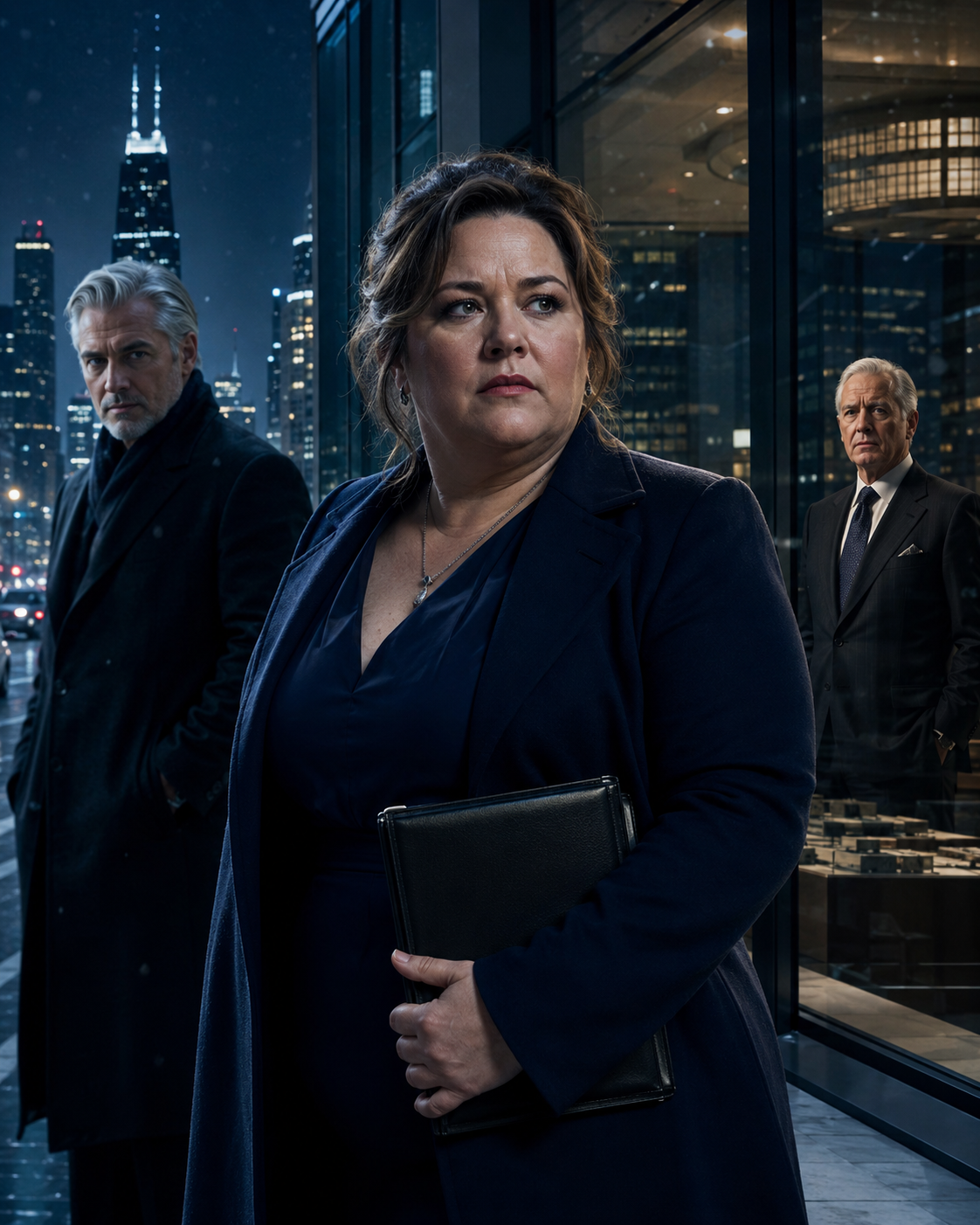
Varrick lifted one hand.
The room quieted.
That was the power he still had.
Enough to hush panic.
Not enough to bury truth.
He looked at Clara with something almost like admiration.
“You always were extraordinary,” he said.
Clara remained standing.
“No. I was useful.”
“You were both.”
Once, that voice might have comforted her. Once, she might have heard kindness in it.
Now she heard machinery.
Varrick turned to the board.
“I made a difficult decision in the interest of preserving a transaction that would have protected this company’s future. I did not intend for anyone to die. After the incident, I acted to prevent one operational failure from destroying thousands of jobs, families, and shareholders.”
Clara laughed softly.
Every head turned.
“One operational failure,” she repeated. “You still need Noah to sound like weather.”
Varrick’s face cooled.
“You are emotional.”
“Yes,” Clara said. “That is what decent people become when a young man dies because an old man loved his legacy more than someone else’s child.”
The words struck harder than any document.
Varrick’s mouth tightened.
“You think small, Clara. People. Names. Cups of coffee. I built something larger than any one person.”
“No,” Clara said. “You built something that depended on people like me remembering the details you were too important to see. You built a company where warnings moved because assistants sent them, doors opened because security checked them, labs ran because technicians maintained them, and people stayed alive because someone noticed a pressure reading and cared enough to write it down.”
Her voice grew stronger.
“You did not build something larger than Noah Reed. You built something that owed him a safe workplace. You did not build something larger than truth. You built something that began dying the moment you treated truth like an expense.”
For the first time in twenty-two years, Clara saw Edmund Varrick without the legend.
He was not a giant.
He was an old man at the end of a table, smaller than the harm he had caused.
The regulator stood.
“This hearing is suspended. These records are being referred for criminal investigation. Mr. Varrick, Mr. Bellamy, and all involved officers are instructed to preserve every related document, message, and system record. Any destruction of evidence from this moment forward will be treated accordingly.”
Until then, Silas Moretti had stood near the back of the room.
No one had invited him.
No one had dared remove him.
Now he stepped forward.
Recognition traveled across the room in waves.
Varrick looked at him without surprise.
“Mr. Moretti,” he said. “I wondered when you would make yourself visible.”
Silas ignored him and addressed the room.
“Noah Reed was under my protection. His mother once saved my life. I promised her he would have a clean future. I placed him here because this building looked respectable.”
No one spoke.
“I found proof weeks ago that Clara Bennett sent the warning. I could have handled this privately. Quickly. In ways many of you are imagining right now.”
The silence thickened.
“I did not,” Silas said, “because she refused to let Noah become a rumor. She refused to let me save her in the dark while his name stayed buried under your lie. She insisted the truth be placed on the record by her own hand.”
He looked at Clara.
“They chose the wrong woman because they never understood what kind of person keeps a building standing for twenty-two years.”
Then he turned back to the table.
“You were not looking at weakness. You were looking at infrastructure.”
Varrick’s gaze remained on Clara.
“I told you once that you saw pressure points.”
“You did.”
“And you did.”
“No, Edmund,” she said. “I saw the people inside the pressure. That is what you never learned.”
His expression flickered.
Regret, perhaps.
Or only irritation at being understood too late.
Clara picked up her folder.
“You thought seeing me made me yours to use. You were wrong. Being seen by the wrong person is not salvation. Sometimes it is just another kind of trap.”
She looked around the glass room at the faces that had watched her fall and now had to watch her stand.
“I did my job. Noah did his. The people who failed him were the people with enough power to ignore us both.”
Then Clara walked out before anyone could dismiss her.
This time, the executive floor did not look away.
Near the elevators, the night security guard, Daniel, stood with wet eyes.
Clara stopped in front of him.
“Your daughter still applying to engineering programs?”
He blinked, startled by the ordinary question in the ruins of an extraordinary morning.
“Yes, ma’am.”
“Good,” Clara said. “Tell her to keep copies of everything.”
The criminal referral against Clara Bennett never happened.