The Widow They Tried to Move Out
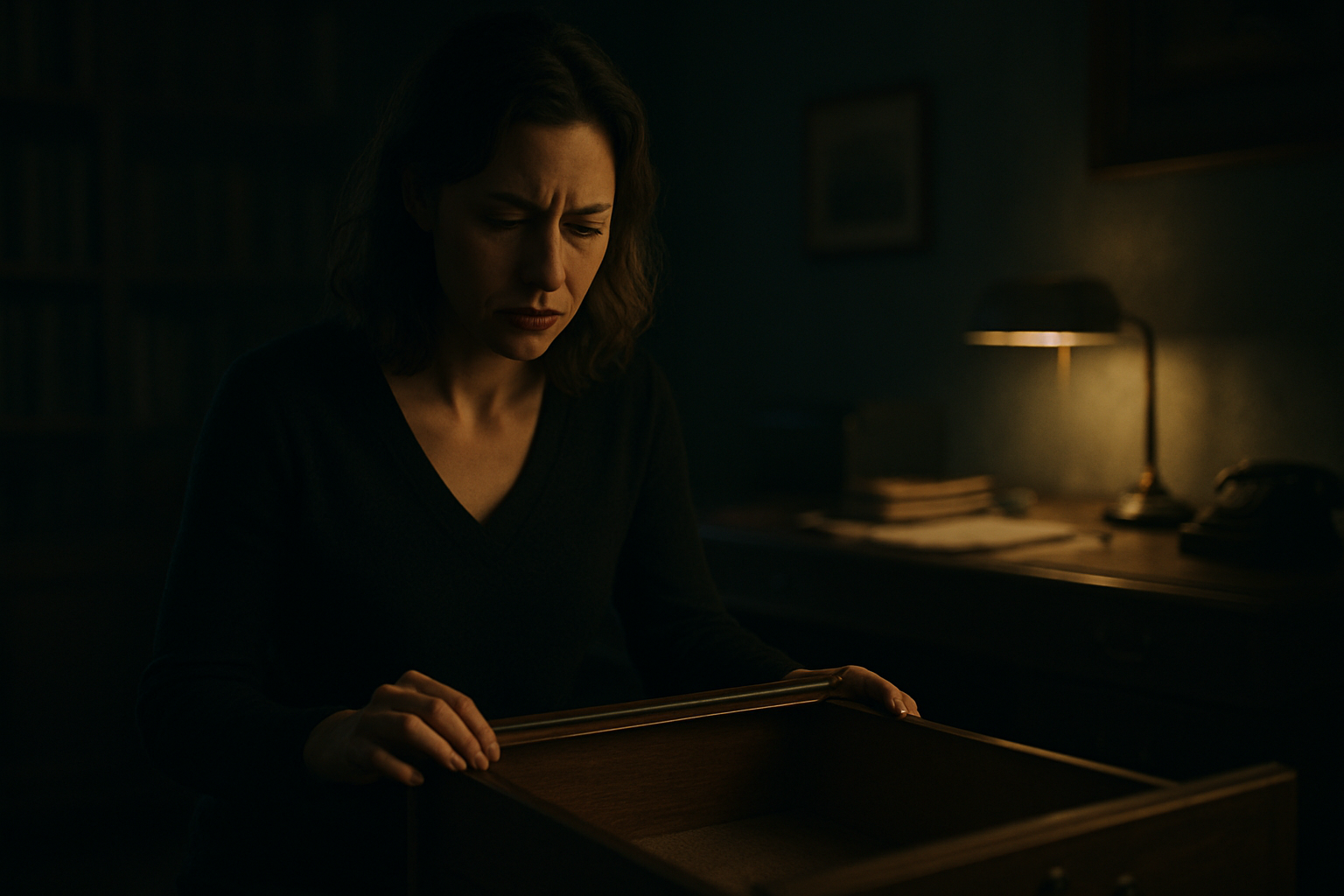
I stood in Thomas’s office long after midnight, staring into the empty drawer.
The property papers were gone.
So was the envelope tied to the little brass bank key I had found in his coat pocket after the funeral.
Thomas Mercer did not misplace things. He labeled warranties. He clipped tax returns by year. He kept every birthday card from our son, Peter, in a blue tin box because, as he once told me, “Even careless love deserves a place to rest.”
So if those papers were gone, someone had taken them.
And if someone had known where to look, then someone had been waiting for Thomas to die.
I closed the drawer and sat in his chair. The house was quiet. Too quiet. Five days earlier, my daughter-in-law, Cassandra, had stood in my kitchen and told me I should “go live on the streets” if I could not manage the house alone.
Peter had stood beside her.
Silent.
That silence hurt more than her words.
I pressed my hand over the key in my pocket, and for the first time since Thomas’s burial, grief gave way to anger.
Not loud anger.
The dangerous kind.
The next morning, I called the bank.
The woman on the phone became very careful when I gave Thomas’s name. She told me to come in person with identification, the key, and a certified death certificate.
So I dressed in the navy suit Thomas loved, tucked the key deep in my purse, and drove downtown through a gray rain.
Crown & Harbor Trust sat between the courthouse and an old brick law office. Thomas and I had passed it a hundred times. He had never once mentioned a safe deposit box.
That hurt too.
After forty-three years of marriage, I thought I knew every corner of that man’s life. I knew which knee ached before storms. I knew how he took his coffee. I knew he hummed when he fixed a hinge. I knew he pretended not to cry during old war movies.
And still, he had carried a secret heavy enough to make him whisper in his final days.
A bank manager named Mr. Alden Whitcomb met me in a private office. He checked my papers, then returned with a woman I recognized from Thomas’s funeral.
Helena Price.
Thomas’s attorney.
She had stood at the back of the church in black, watching everything with quiet eyes. Now she sat across from me with a leather folder on her lap.
“Mrs. Mercer,” she said gently, “Thomas instructed me to meet you here if you came with the key.”
My fingers tightened around my purse.
“You knew?”
“I knew only what he wanted me to know,” she said. “And he was very specific.”
Down in the vault, the air felt cold enough to preserve a secret forever. Mr. Whitcomb used his key. I used mine.
Inside the box were three things.
A sealed envelope in Thomas’s handwriting.
A thick binder.
And a small velvet pouch.
Back in the office, Helena placed the envelope before me.
“Read this first.”
My hands shook.
Ruth,
If you are reading this, then I am gone, and I failed to tell you everything while I still had time.
My father did not die broke as I allowed everyone to believe. He left land, mineral rights, investments, and old company shares. I kept them separate because I wanted our life to belong to us, not to his shadow.
But the assets grew. Far more than I expected.
Helena will explain the trust. Listen to her. Trust her.
Do not trust anyone suddenly interested in your signature, your house, or your grief.
Especially not Peter.
I know that hurts. It hurt me to write it. Our son has debts. Worse, he has let Cassandra believe she can solve them with what belongs to you. I found documents I never signed. I ran out of time before I could confront him properly.
The house is yours. The money is yours to control.
Use mercy, Ruth. But not blindness.
I love you beyond words.
Thomas
I read it once.
Then again.
Then a third time, because my mind could not hold it all.
Twenty-eight million dollars.
Helena said the number softly, as if gentleness could make it smaller.
“Roughly twenty-eight million in total assets,” she explained. “Some liquid, some real estate, some mineral rights. Thomas created the Mercer Legacy Trust seven years ago and amended it six weeks before he died. You are the primary beneficiary and trustee.”
My mouth went dry.
“Peter?”
“He was once listed as a secondary beneficiary. Thomas changed that after discovering suspected fraud.”
Fraud.
The word tilted the room.
Helena opened the binder to a marked page. At the top was an address.
Peter and Cassandra’s house.
I stared at it.
Helena explained that Thomas had quietly bought the property three years earlier through the trust after Peter’s business failed and their mortgage went into default. Peter had begged him not to tell Cassandra. Thomas paid the debt, transferred the house into the trust, and let them stay under a private occupancy agreement.
They paid reduced rent.
Sometimes.
“So their house…” I whispered.
“Belongs to the trust,” Helena said. “And you now control that trust.”
Rain tapped the window.
Cassandra’s words came back to me.
Go live on the streets.