She had said that beneath my roof, wearing shoes that cost more than my old hospital paycheck, while living in a house my husband had saved for her.
I did not feel victory.
I felt shame.
The kind only a mother feels when her child becomes someone she would have protected him from when he was small.
Helena leaned forward.
“Thomas wanted you warned. Do not sign anything Peter or Cassandra gives you. Not a sympathy card. Not an insurance form. Not a moving agreement. Nothing.”
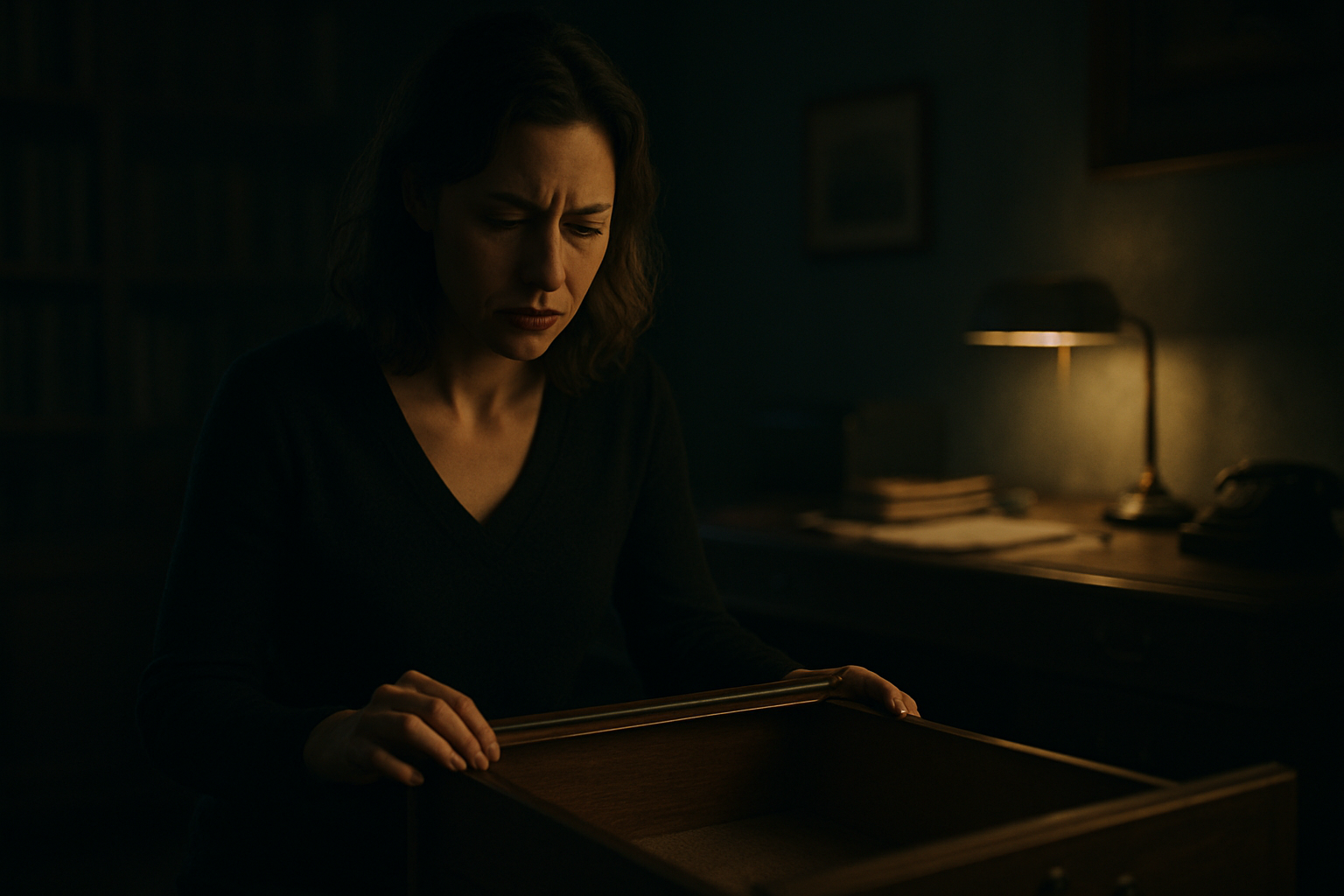
I told her then about the missing papers in Thomas’s desk.
Her face changed.
“Tell me everything.”
So I did.
When I left the bank, I carried copies of trust papers, Thomas’s letter, and the velvet pouch. Inside the pouch was my twenty-fifth anniversary ring, the one I thought I had lost years ago.
Thomas had tucked in a note.
Found it under the laundry cabinet. Saved it because one day you might need to remember: not everything lost stays lost forever.
I cried in the parking lot.
Not for the money.
Not even for the betrayal.
I cried because even while dying, Thomas had found a way to put one last kindness in my hand.
Then I drove home a different woman.
Helena gave me one rule.
“Say nothing.”
So I became quiet.
Grief makes quiet believable. People mistake it for weakness, especially when they have already decided you are old, alone, and easy to move.
Cassandra certainly did.
A week later, she arrived with cardboard boxes and a clipboard. Peter hovered behind her like a boy caught stealing cookies.
“Ruth,” she said, using that patient tone people use when they are trying to own you, “we’re just making this manageable. You can’t rattle around in this big house alone.”
“I didn’t ask you to worry,” I said.
Her smile tightened.
“This is reality. Taxes. Maintenance. Utilities. It’s too much for someone in your position.”
“My position?”
“You know what I mean.”
I did.
Widow.
Older.
Alone.
Easier to push.
She slid a paper across the kitchen counter.
“This lets Peter help with administrative matters.”
“What is it?”
“A power of attorney.”
I did not touch it.
“No.”
Her face changed.
“No?”
“No.”
Peter finally spoke.
“Mom, don’t make this harder.”
That nearly broke me.
He had not asked if I was sleeping. He had not asked if I was afraid. He had not asked how it felt to wake in a bed that still smelled faintly like his father.
He only wanted my cooperation so his discomfort could end.
“I am keeping my own affairs in my own hands,” I said.
Cassandra snatched back the paper.
“You’re being emotional.”
“Probably.”
“That is exactly why Peter should step in.”
“No.”
She waited for an explanation.
But Helena had told me explanations are gifts, and I had no desire to give Cassandra one.
When they left, Peter lingered on the porch.
“Mom,” he said softly, “you don’t understand the pressure I’m under.”
“What kind of pressure?”
He glanced toward Cassandra’s car.
“Business stuff. Loans. People I owe.”
“Your father helped you with the house,” I said.
His head snapped up.
For one second, my son looked like a man caught in a locked room when the lights come on.
“What do you mean?”
“I mean your father helped you more than you admitted.”
Cassandra called his name.
Peter backed away.
“You shouldn’t talk about things you don’t understand.”
That night, Helena called.
A title company had received inquiries about my home two weeks before Thomas died. Someone had requested payoff information for a loan application.
The request included a scanned signature.
Mine.
Except it was not mine.
Helena told me to change locks, install cameras, and freeze my credit.
I did all of it.
Action gave shape to grief.
Three nights later, a camera woke me just after midnight.
On my phone screen, my sister Lenora stood on my back porch in a beige coat, trying a key in my new lock.
Not my key.
She tried twice.
Then gave up.
I did not call her. I saved the video and sent it to Helena.
At nine the next morning, Lenora called brightly.
“Ruth, I thought I’d stop by later and help sort Thomas’s things.”
“No.”
A pause.
“No?”
“I’m not sorting anything.”
“Well, honey, you can’t just freeze.”
“Neither can you enter my house at midnight.”
Silence.
Then a brittle laugh.
“What are you talking about?”
“I changed the locks. I installed cameras.”
Another silence.
“I was worried,” she said. “I wanted to check on you.”
“With a key you never told me you had?”
“Thomas gave it to me years ago.”
Maybe.
But Thomas would have told me.
“Don’t come here without calling again,” I said.
Her voice cooled.
“Cassandra was right. You’re becoming difficult.”
There it was.
The crack in the wall.
“You’ve been talking to Cassandra.”
“I’ve been talking to family,” she snapped. “Something you might try before you turn into a bitter old woman haunting an empty house.”
She hung up.
I stood at the kitchen window, looking at the maple tree Thomas planted when Peter was born.
I remembered Peter at six, climbing it in July, Thomas below with his arms raised, me pretending to scold them both.
Memory is cruel that way.