The Ten-Dollar Wife Who Opened a Million-Dollar Door
For nearly ten seconds, Malcolm Vale said nothing.
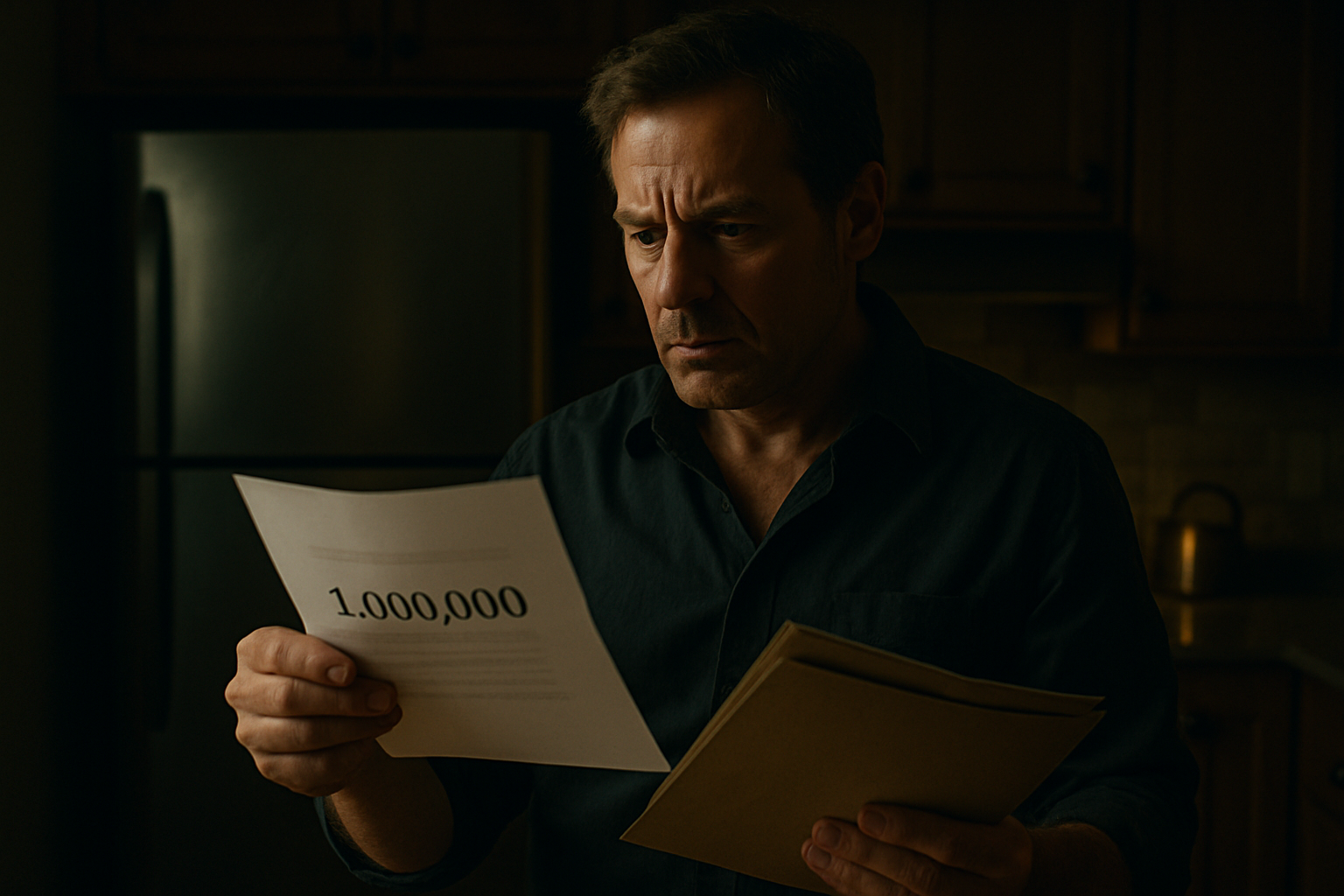
He stood in the kitchen with Adeline Mercer’s letter in one hand and the legal packet in the other. His eyes stayed fixed on the figure printed on the page, as if the number had insulted him personally.
One million dollars.
Behind him, the refrigerator hummed. The house was so still you could almost hear your own life coming back to you.
For twenty-two years, Malcolm had filled every room with himself.
His opinions. His plans. His complaints. His speeches. His little corrections. Even when he was gone, the house still bent around him. What Malcolm needed. What Malcolm expected. What Malcolm would want waiting when he came through the door.
Now he was quiet.
And Lydia Vale, to her own surprise, did not mind.
At last, he looked up.
“This is legitimate?” he asked.
You sat across from him at the kitchen table, still wearing the plain navy dress you had worn to dinner with Julian Mercer. No jewelry. No fresh lipstick. No effort to look like a woman hoping to be admired.
You were tired.
But you were not small.
“It’s legitimate,” you said.
Malcolm looked down again.
“A housing fund?”
“For women on the edge of eviction,” you said. “Adeline wanted it managed apart from your foundation.”
His head snapped up.
“My foundation?”
There it was.
The turn.
It was no longer shock. It was calculation.
You could almost see him rearranging the room in his mind. Sliding the money into place. Imagining the announcement. Measuring the donors’ applause.
Malcolm had always known how to turn another person’s suffering into words that made rich people clap.
Once, you had admired that.
Now it made your stomach tighten.
“No,” you said. “Not your foundation.”
His mouth hardened.
“Lydia, don’t be ridiculous. A million-dollar housing fund connected to the Vale name obviously belongs inside the structure we already have.”
“The structure we already have?”
He gave a sharp little laugh.
“You know what I mean.”
You did.
That had always been the trouble.
For twenty-two years, “we” had meant your labor and his applause. “Our marriage” had meant your endurance and his ambition. “Our foundation” had meant his name at the microphone and your hands on every hidden detail that kept the whole thing standing.
You folded your hands on the table.
“Adeline left it to me.”
Malcolm stared at you as if you had spoken a language he refused to learn.
“She probably didn’t understand the administrative side.”
Something settled inside you then.
Not rage.
Clarity.
You remembered Adeline at your kitchen table years before, rain still shining in her hair, both hands wrapped around a mug of tea as if it were the first warm thing she had touched in weeks. You remembered how quickly she listened. How fiercely she learned. How her whole face changed when she realized someone believed she could begin again.
Adeline had understood plenty.
Far more than Malcolm ever had.
“She knew exactly what she was doing,” you said.
He dropped the packet onto the table.
“Do you understand how this is going to look?”
You almost smiled.
Not because it was funny.
Because after the ballroom, the microphone, the laughter, the ten-dollar insult, Malcolm’s first fear was still appearances.
“Yes,” you said. “It will look like a woman you dismissed had a life you never bothered to notice.”
His face tightened.
“Don’t turn a bad joke into a trial of my character.”
“A bad joke?”
“It was a gala. People expect entertainment. You know how those rooms work.”
You looked at him for a long moment.
That was when you finally understood.
Malcolm had not accidentally humiliated you.
He had simply never considered your dignity worth protecting.
“They laughed because you gave them permission,” you said.
His eyes flickered.
And there it was.
Not remorse.
Annoyance.
He was not ashamed he had wounded you. He was irritated you had decided the wound counted.
He pulled out the chair across from you and sat.
“Fine,” he said. “I went too far. I apologize.”
The words were correct.
The tone was not.
You had spent decades translating Malcolm’s apologies. This one meant, Please stop making this inconvenient.
It did not mean, I understand what I destroyed.
You drew Adeline’s letter closer.
“No.”
His brows rose.
“No?”
“No,” you said. “You don’t get to lay a cheap apology over something you did in front of two hundred people.”
He leaned back.
“What do you want, then? Flowers? A public statement? An apology from the stage?”
You looked around the kitchen.
The marble counters. The pendant lights. The framed magazine cover with Malcolm’s face on the wall.
From the outside, this house looked like victory.
From where you sat, it looked like a beautiful room where a woman had slowly disappeared.
“I want you to understand something,” you said.
Malcolm sighed.
That sigh had ended hundreds of conversations.
It used to make you rush. Soften. Say, “Forget it.”
This time, you did not.