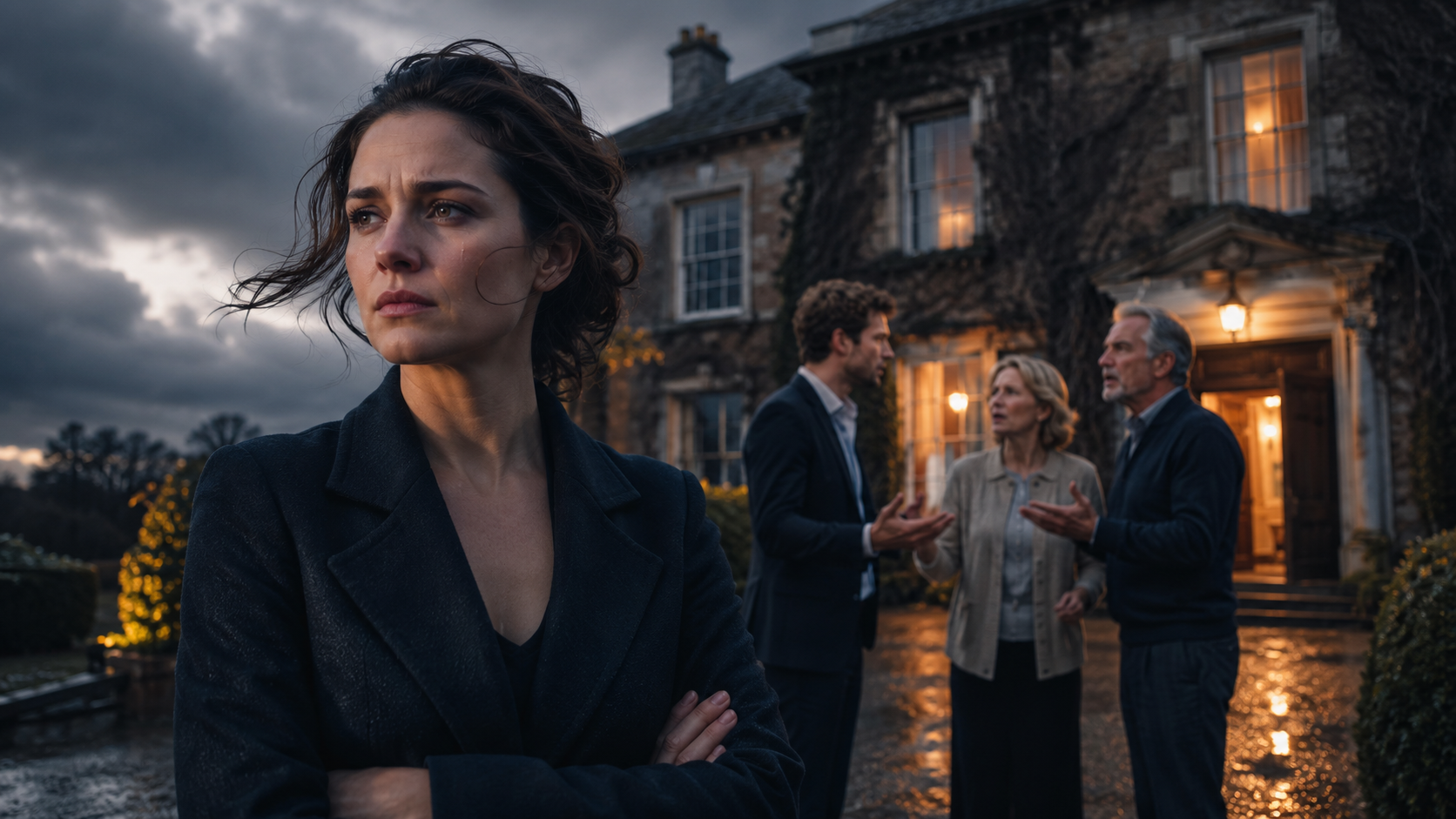
The Son They Always Chose

The first time my mother called me selfish, I was eight years old.

My younger brother, Julian, had torn the wings off the cardboard airplane I had spent an entire Saturday building. When I cried, he started crying louder. My mother rushed into the room, saw the wreckage on the floor, and immediately pulled him into her arms.

“He’s only five, Mara,” she said. “You’re old enough to understand.”

I did understand.

I understood that Julian could destroy something and still be the one who needed comforting. I understood that my anger would always be treated as a greater offense than whatever had caused it. Most importantly, I understood that being older meant I was expected to surrender anything he wanted before he had to ask twice.

That lesson followed me into adulthood.

When Julian failed mathematics, my parents blamed his teacher. When I earned the highest grade in my class, they told me not to become arrogant.

When Julian crashed Dad’s car at seventeen, they paid for the repairs and told everyone another driver had caused the accident. When I accidentally scratched the kitchen table while working on a school project, I spent three months paying for the damage from my weekend job.

When Julian dropped out of college, Mom said he was too creative for traditional education. When I graduated with honors, Dad complained that the ceremony was too long.

By the time I turned thirty-two, I had stopped expecting fairness from them. I had also stopped asking for approval.

I lived two hours away in a renovated brick building near the river. I owned a small event-design company called Northlight, which I had built from a folding table, a secondhand laptop, and several years of working until two in the morning. Northlight was not famous, but it was profitable. I employed six people, paid them well, and had enough savings to sleep without fearing every unexpected bill.

My parents described my success as “good luck.”

Julian described it as “playing with flowers for rich people.”

He was thirty years old and had moved through six careers in eight years. Personal trainer. Real-estate photographer. Cryptocurrency consultant. Restaurant partner. Motivational speaker. Luxury-car broker.

Each career ended the same way: unpaid bills, angry former partners, and a new explanation for why none of it had been his fault.

My parents financed every fresh beginning.

They paid his rent. They covered his credit cards. They gave him money for business courses he never finished and equipment he later sold. Whenever I asked whether constantly rescuing him might be making things worse, Dad would narrow his eyes and accuse me of being jealous.

“Your brother takes risks,” he would say. “You’ve always chosen the safe path.”

Building a company with no investors and no family support apparently counted as safe.

Still, I kept the peace. I attended birthdays, answered holiday calls, and endured Sunday dinners during which Julian described imaginary business deals while my parents listened as though he were negotiating the purchase of an international corporation.

Then my grandmother died.

Grandma Evelyn had been the only person in the family who never asked me to make myself smaller for Julian.

She had attended every school performance, even when I had only one line. She had helped me buy my first professional camera and never once called it a foolish expense. Years later, when Northlight was struggling, she sat at my kitchen table and helped me organize invoices until midnight.

“You don’t need people to believe in you forever,” she told me. “Sometimes you only need one person to believe in you until you learn how to do it yourself.”

Her death left a silence in my life that no amount of work could fill.

Three weeks after the funeral, her attorney asked the family to meet in his office.

My parents arrived dressed in black as though the funeral were happening again. Julian came twenty minutes late wearing sunglasses and carrying an iced coffee. He apologized to no one.

The attorney, Mr. Calder, read the will carefully.

Grandma left modest amounts of money to several charities. She left her jewelry to my mother and her collection of antique tools to my father. Julian received twenty thousand dollars.

Then Mr. Calder looked at me.

“To my granddaughter, Mara Evelyn Bennett, I leave Rosewood House and the surrounding property, together with all furniture, personal records, and remaining contents.”

Julian slowly removed his sunglasses.

My mother stared at me as though I had committed a crime in front of her.

Rosewood House was not a mansion. It was a weathered three-bedroom home on fourteen acres outside the city. The roof needed work, the garden had become wild, and the heating system was older than I was.

But it was beautiful.

Grandma had spent her summers there. I had spent mine helping her grow tomatoes, repaint old furniture, and collect smooth stones from the creek. Rosewood was the only place from my childhood where I remembered feeling completely safe.

“I thought we were selling it,” Julian said.

Mr. Calder folded his hands. “The property belongs to Mara. Any decision regarding it is hers.”

Julian looked at our parents.

Dad’s face had hardened.

Mom forced a thin smile. “Of course. Evelyn always had unusual ideas.”

I said nothing.

Outside the office, Julian caught up with me beside my car.

“You knew about this,” he said.

“No.”

“She must have told you.”

“She didn’t.”

He laughed without humor. “So she just gave you a house and handed me pocket money?”

“She made her decision.”

“It doesn’t make sense.”

For once, I did not try to soften the truth.

“It makes sense to me.”

His jaw tightened.

Mom hurried between us. “This isn’t the place for an argument. We’re grieving.”

Julian turned to her. “Did you know Grandma was doing this?”

“No, sweetheart.”

Sweetheart.

I had inherited a house, and he was still the one being comforted.

That evening, Dad called.

“You need to think about what’s fair,” he said.

“The will is clear.”

“I’m not discussing legality. I’m discussing family.”

In our family, those two words were usually introduced whenever someone wanted something from me.

“What are you asking?”

“Julian has plans.”

“Julian always has plans.”

“This one is serious. He wants to create a wellness retreat. Rosewood would be perfect.”

I nearly laughed. Julian had recently discovered cold baths and had begun posting videos about discipline, usually filmed in the guest room of our parents’ house.

“The property isn’t available.”

“You haven’t even considered it.”

“I have. The answer is no.”

Dad’s voice became quieter, which was always more dangerous than shouting.

“Your grandmother would not want you dividing this family.”

“Grandma made the decision herself.”

“She was old.”

“She was not confused.”

“You don’t know that.”

Mr. Calder had anticipated that accusation. The will included statements from two physicians confirming that Grandma had been mentally competent.

Dad knew it too.

“I’m keeping Rosewood,” I said.

He hung up without saying goodbye.

Over the next month, my parents tried every strategy they knew.

Mom began with guilt.

She sent photographs of Julian as a child, accompanied by messages about how close we used to be. We had never been close. In most of the photographs, I was standing behind him while he held something that had originally belonged to me.

Then she tried praise.

You’ve always been the responsible one.

You understand business better than he does.

You could guide him.

When praise failed, she turned to grief.

Your grandmother’s death has devastated him.

He needs a purpose.

You already have so much.

Dad preferred pressure.

He called my office twice. He appeared at a charity event where Northlight was working and asked one of my employees whether I had been “making rational decisions lately.” When I told him never to involve my staff again, he accused me of embarrassing him publicly.

Julian, meanwhile, behaved as though the matter had already been settled.

He created architectural drawings without consulting an architect. He discussed investors who did not exist. He posted photographs of country estates online and wrote about an upcoming retreat designed to “heal ambitious men from modern weakness.”

Then, one Tuesday afternoon, I drove to Rosewood and found a silver sport-utility vehicle parked beside the house.

The front door was open.

I entered quietly.

Julian stood in the living room with two men in expensive jackets. Dust floated in the sunlight around them.

“This wall comes out,” Julian was saying. “We’ll open the entire space. Glass across the back. Sauna building near the creek.”

One of the men noticed me.

Julian turned.

For half a second, he looked surprised. Then he smiled as though I were an employee arriving late to a meeting.

“Mara. Perfect timing.”

“Who are they?”

“Potential partners.”

“This is private property.”

His smile remained, but his eyes changed.

“We’re only looking.”

“You entered without permission.”

“The side door wasn’t locked.”

“That does not mean you were invited.”

One of the men cleared his throat. “Julian told us the property was controlled by the family.”

“He lied.”

The room went silent.

Julian’s face reddened. “Can we speak outside?”

“No. You need to leave.”

The two men exchanged a glance and headed for the door.

“Gentlemen,” Julian called after them, “give me five minutes.”

They did not stop.

When their vehicle disappeared down the driveway, Julian turned on me.

“You humiliated me.”

“You broke into my house.”

“I had a key.”

My stomach tightened. “Where did you get it?”

“Dad found Grandma’s spare.”

Of course he had.

“You will give it back.”

“You’re making a huge mistake. Those men represent real money.”

“You told them you controlled my property.”

“I told them the family controlled it.”

“The family does not control it.”

He stepped closer.

“Do you even hear yourself? You inherited one old house and suddenly you think you’re better than everyone.”

“This has nothing to do with being better.”

“It has everything to do with it. You’ve been waiting your entire life for a chance to punish me.”

The accusation was so absurd that I almost smiled.

“I did not make Grandma’s will.”

“You manipulated her.”

“No.”

“You were always around her, complaining about us.”

“I never had to complain. She had eyes.”

His expression sharpened.

There it was: the sentence neither of us could take back.

Julian walked toward me until only a few feet remained between us.

“You think she loved you more?”

“I think she trusted me.”

His laugh was soft and ugly.

“You’re still that bitter little girl crying over a cardboard airplane.”

The memory struck me with such precision that I wondered whether he had thought about it too.

“You remember that?”

“Of course I remember. You acted like I’d killed someone.”

“You destroyed something I made.”

“I was five.”

“And I was eight.”

“So?”

“So I was a child too.”

He stared at me as though the idea had never occurred to him.

Then he tossed the key onto the floor.

“You’ll regret this.”

I replaced every lock that evening.

Two weeks later, Northlight received a cancellation notice from its largest client, the Bellweather Hotel Group. We handled seasonal designs for four of their properties, and the contract represented nearly a third of our annual revenue.

The message claimed that someone had sent Bellweather evidence of financial instability, internal conflict, and pending litigation involving my company.

None of it was true.

My operations manager, Sofia, stood in my office holding the printed notice.

“Do you know who would do this?”

I did.

But knowing and proving were different things.

I called Bellweather’s regional director and asked for a meeting. She agreed reluctantly.

The evidence, she explained, had been sent anonymously. It included altered bank statements, fabricated emails, and photographs of my father confronting me at the charity event. The photographs had been framed to make it appear that an investor was accusing me of fraud.

Whoever created the package knew my business well enough to make the lies seem plausible.

Only a few people had that kind of access.

Julian had once spent three months “helping” at Northlight after another failed career. I had given him limited access to old project folders before finally asking him to leave because he rarely arrived before noon.

I showed Bellweather real financial statements, tax records, and letters from our accountant. I offered a temporary independent audit.

The director listened but did not restore the contract.

“We need time,” she said.

Time was expensive.

For the next six weeks, I worked harder than I had during Northlight’s first year. I met clients personally, reassured vendors, and delayed my own salary to protect my employees. I slept four hours a night and answered emails from the floor of Rosewood’s empty kitchen while contractors repaired the roof.

My parents did not call to ask whether I was all right.

Instead, Mom sent one message.

All this conflict could end if you stopped being stubborn.

That was when I knew.

I hired a forensic technology specialist.

The anonymous files had been stripped of identifying information, but Julian had made mistakes. A document contained hidden revision data linked to one of his old email addresses. Several photographs had been edited on a laptop registered through a warranty account in Dad’s name.

There was more.

Julian had contacted three of my clients while presenting himself as Northlight’s “future executive director.” He claimed the company was about to undergo a family-led restructuring. He suggested that clients delay payments until he assumed control.

The betrayal was clumsy, arrogant, and devastating.

I sat alone in my office reading the report.

Some small part of me had still hoped I was wrong.

I called my mother.

“Did you know what Julian was doing?”

She paused too long.

“Doing about what?”

“My company.”

“Mara, your brother was trying to protect the family.”

“By destroying my business?”

“That’s dramatic.”

“He forged documents.”

“He said you were refusing to discuss reasonable options.”

“A reasonable option does not involve stealing my clients.”

“He believed that once you saw how much pressure you were under, you would finally agree to cooperate.”

For several seconds, I could not speak.

“You knew.”

“I knew he was trying to make you listen.”

“And Dad?”

“Your father wants what is best for both of you.”

I looked through the glass wall of my office. Sofia was laughing quietly with one of our designers. Those people had mortgages, children, medical bills, and futures. Julian had gambled with all of them because he wanted land that did not belong to him.

“This is the last time you will excuse him to me.”

“Mara—”

“No. You listen now. I am sending a formal demand that Julian stop contacting my clients. I am also reporting the forged documents. If he approaches my company again, I will pursue every legal remedy available.”

“You would call the police on your own brother?”

“If necessary.”

“You’ll destroy this family.”

“No, Mom. I’m simply refusing to let this family destroy me.”

She began to cry.

For most of my life, her tears had been a command. They meant surrender, apologize, repair everything.

This time, I ended the call.

The legal letters went out the following morning.

Julian responded by coming to Rosewood.

It was raining heavily when his headlights swept across the windows. I was in the dining room reviewing renovation estimates. The power flickered as he pounded on the front door.

I did not open it.

“Mara!” he shouted. “I know you’re inside.”

I called the local sheriff’s office and kept the dispatcher on the phone.

Julian continued pounding.

“You sent lawyers after me? Open the door!”

I moved into the hallway but stayed several feet back.

“You need to leave.”

His face appeared through the narrow window beside the door, pale and distorted by rain.

“You’re really doing this?”

“Yes.”

“I was trying to build something for all of us.”

“You were trying to take something.”

“I would have made you a partner.”

“In my own property?”

“You don’t know how to use it!”

“I know how not to use it. I will not turn Grandma’s home into another stage for one of your fantasies.”

He struck the door with the side of his fist.

“You always hated me.”

“No, Julian. I hated what everyone allowed you to become.”

His expression went still.

For the first time, the confidence disappeared. Beneath it, I saw something frightened and empty.

“What is that supposed to mean?”

“It means no one ever taught you that other people can say no. No one taught you that consequences are real. Every time you failed, Mom and Dad invented someone else to blame.”

“You think you’re perfect?”

“No. I think I’m responsible for what I do. That’s the difference.”

Red and blue lights appeared beyond him.

Julian looked over his shoulder.

Then he looked back at me.

“You called them.”

“I warned you.”

The deputy asked him to leave. Julian argued, then noticed the body camera and changed his tone. He claimed he had only come for a peaceful family conversation.

I gave the deputy copies of the messages, the legal notice, and the security footage showing Julian trying the handle before he began knocking.

He left with a formal warning.

The next day, Dad arrived at my office.

Sofia stopped him in reception, but I agreed to speak with him in the conference room. I wanted witnesses nearby.

He did not sit.

“You involved law enforcement.”

“Julian came to my property after receiving a legal notice.”

“He was upset.”

“That is not a defense.”

“You have taken this too far.”

I placed the forensic report on the table.

“He fabricated evidence against my company.”

Dad did not look at it.

“He panicked.”

“He tried to cost six people their jobs.”

“He thought you would come to your senses before there was any real damage.”

“There was real damage.”

“You recovered.”

The words landed more painfully than I expected.

I recovered.

That had always been the justification. Hurt Mara because Mara recovers. Take from Mara because Mara survives. Ignore Mara because Mara will manage.

“You’re right,” I said. “I recovered. I always do.”

Dad exhaled, believing I was finally becoming reasonable.

Then I continued.

“But recovering does not mean the damage was acceptable.”

His expression hardened again.

“What do you want from us?”

“Nothing.”

“We are trying to find a solution.”

“There is no shared problem to solve. Rosewood is mine. Northlight is mine. Julian’s debts and ambitions belong to him.”

“He’s your brother.”

“And I was your daughter.”

Dad stared at me.

I had never spoken those words aloud.

“You still are.”

“No. I’m the person you call when Julian needs something.”

“That’s not fair.”

I almost laughed.

Fairness had finally become important to him.

“You need to leave.”

“Mara—”

“Please go.”

He left the report on the table.

Three months later, Julian accepted a settlement negotiated through our attorneys. He admitted no wrongdoing but agreed never to contact my clients or represent himself as part of Northlight. He paid a portion of my legal costs by selling the silver vehicle my parents had helped him buy.

Bellweather restored our contract after completing its review.

Northlight survived.

My relationship with my parents did not.

Mom sent long messages about forgiveness while refusing to acknowledge what had happened. Dad sent short messages about loyalty. I answered neither.

For the first time in my life, silence did not feel like punishment. It felt like space.

I continued restoring Rosewood.

We repaired the porch, replaced the ancient pipes, and reopened the garden paths that had disappeared beneath weeds. I turned the largest upstairs bedroom into a studio for Northlight’s creative retreats. The old barn became a workshop where local artists could teach weekend classes.

I did not build a wellness empire.

I built something smaller and more honest.

On the first autumn evening after the renovations were completed, I invited my employees and closest friends for dinner. We set a long table beneath the oak trees and hung warm lights between the branches.

Sofia raised her glass.

“To Rosewood,” she said. “And to the woman who refused to give it away.”

Everyone laughed and lifted their glasses.

Later, after the guests had left, I walked through the quiet house. The rooms smelled of cedar, fresh paint, and the apple cake someone had left in the kitchen.

On the mantel stood a photograph of Grandma Evelyn and me in the garden. I was nine years old, sunburned and missing a front tooth. She had one arm around my shoulders. In my hands, I held another cardboard airplane.

After Julian destroyed the first one, Grandma had helped me build a second.

I had forgotten that until I found the photograph.

On the back, in her slanted handwriting, she had written:

Mara builds again.

I sat on the floor beneath the mantel and held the photograph against my chest.

All my life, my parents had mistaken my resilience for permission. Because I could rebuild, they believed they were free to keep breaking things.

Grandma had understood the difference.

She had not left me Rosewood because I was better than Julian. She had left it to me because she knew I would protect what mattered. She knew I would create something without demanding that another person lose everything to make it possible.

My phone vibrated.

A message from Julian appeared on the screen.

I’m starting something new. I thought maybe we could talk.

For a moment, the old instinct returned. Be kind. Be reasonable. Give him another chance. Prevent the next explosion.

Then I looked around the house.

The walls were steady. The windows were bright. The doors were locked, and every key belonged to me.

I deleted the message.

Outside, the wind moved gently through the oak trees. Somewhere beyond the garden, water crossed the stones of the creek, following its own path through the darkness.

For once, I did not feel abandoned by my family.

I felt released from them.