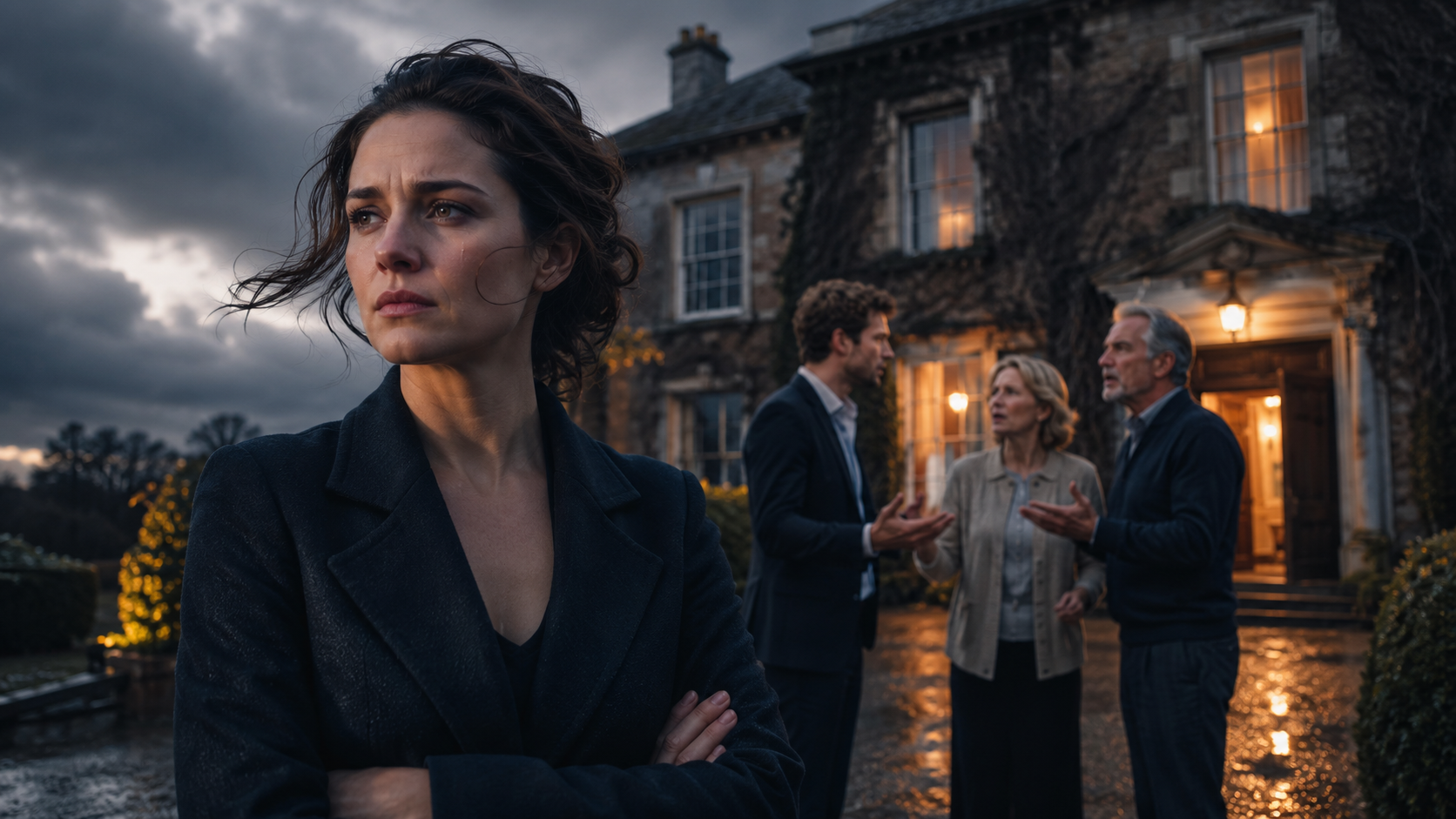
Grandma had spent her summers there. I had spent mine helping her grow tomatoes, repaint old furniture, and collect smooth stones from the creek. Rosewood was the only place from my childhood where I remembered feeling completely safe.
“I thought we were selling it,” Julian said.
Mr. Calder folded his hands. “The property belongs to Mara. Any decision regarding it is hers.”
Julian looked at our parents.
Dad’s face had hardened.
Mom forced a thin smile. “Of course. Evelyn always had unusual ideas.”
I said nothing.
Outside the office, Julian caught up with me beside my car.
“You knew about this,” he said.
“No.”
“She must have told you.”
“She didn’t.”
He laughed without humor. “So she just gave you a house and handed me pocket money?”
“She made her decision.”
“It doesn’t make sense.”
For once, I did not try to soften the truth.
“It makes sense to me.”
His jaw tightened.
Mom hurried between us. “This isn’t the place for an argument. We’re grieving.”
Julian turned to her. “Did you know Grandma was doing this?”
“No, sweetheart.”
Sweetheart.
I had inherited a house, and he was still the one being comforted.
That evening, Dad called.
“You need to think about what’s fair,” he said.
“The will is clear.”
“I’m not discussing legality. I’m discussing family.”
In our family, those two words were usually introduced whenever someone wanted something from me.
“What are you asking?”
“Julian has plans.”
“Julian always has plans.”
“This one is serious. He wants to create a wellness retreat. Rosewood would be perfect.”
I nearly laughed. Julian had recently discovered cold baths and had begun posting videos about discipline, usually filmed in the guest room of our parents’ house.
“The property isn’t available.”
“You haven’t even considered it.”
“I have. The answer is no.”
Dad’s voice became quieter, which was always more dangerous than shouting.
“Your grandmother would not want you dividing this family.”
“Grandma made the decision herself.”
“She was old.”
“She was not confused.”
“You don’t know that.”
Mr. Calder had anticipated that accusation. The will included statements from two physicians confirming that Grandma had been mentally competent.
Dad knew it too.
“I’m keeping Rosewood,” I said.
He hung up without saying goodbye.
Over the next month, my parents tried every strategy they knew.
Mom began with guilt.
She sent photographs of Julian as a child, accompanied by messages about how close we used to be. We had never been close. In most of the photographs, I was standing behind him while he held something that had originally belonged to me.
Then she tried praise.
You’ve always been the responsible one.
You understand business better than he does.
You could guide him.
When praise failed, she turned to grief.
Your grandmother’s death has devastated him.
He needs a purpose.
You already have so much.
Dad preferred pressure.
He called my office twice. He appeared at a charity event where Northlight was working and asked one of my employees whether I had been “making rational decisions lately.” When I told him never to involve my staff again, he accused me of embarrassing him publicly.
Julian, meanwhile, behaved as though the matter had already been settled.
He created architectural drawings without consulting an architect. He discussed investors who did not exist. He posted photographs of country estates online and wrote about an upcoming retreat designed to “heal ambitious men from modern weakness.”
Then, one Tuesday afternoon, I drove to Rosewood and found a silver sport-utility vehicle parked beside the house.
The front door was open.
I entered quietly.
Julian stood in the living room with two men in expensive jackets. Dust floated in the sunlight around them.
“This wall comes out,” Julian was saying. “We’ll open the entire space. Glass across the back. Sauna building near the creek.”
One of the men noticed me.
Julian turned.
For half a second, he looked surprised. Then he smiled as though I were an employee arriving late to a meeting.
“Mara. Perfect timing.”
“Who are they?”
“Potential partners.”
“This is private property.”
His smile remained, but his eyes changed.
“We’re only looking.”
“You entered without permission.”
“The side door wasn’t locked.”
“That does not mean you were invited.”
One of the men cleared his throat. “Julian told us the property was controlled by the family.”
“He lied.”
The room went silent.
Julian’s face reddened. “Can we speak outside?”
“No. You need to leave.”
The two men exchanged a glance and headed for the door.
“Gentlemen,” Julian called after them, “give me five minutes.”
They did not stop.
When their vehicle disappeared down the driveway, Julian turned on me.
“You humiliated me.”
“You broke into my house.”
“I had a key.”