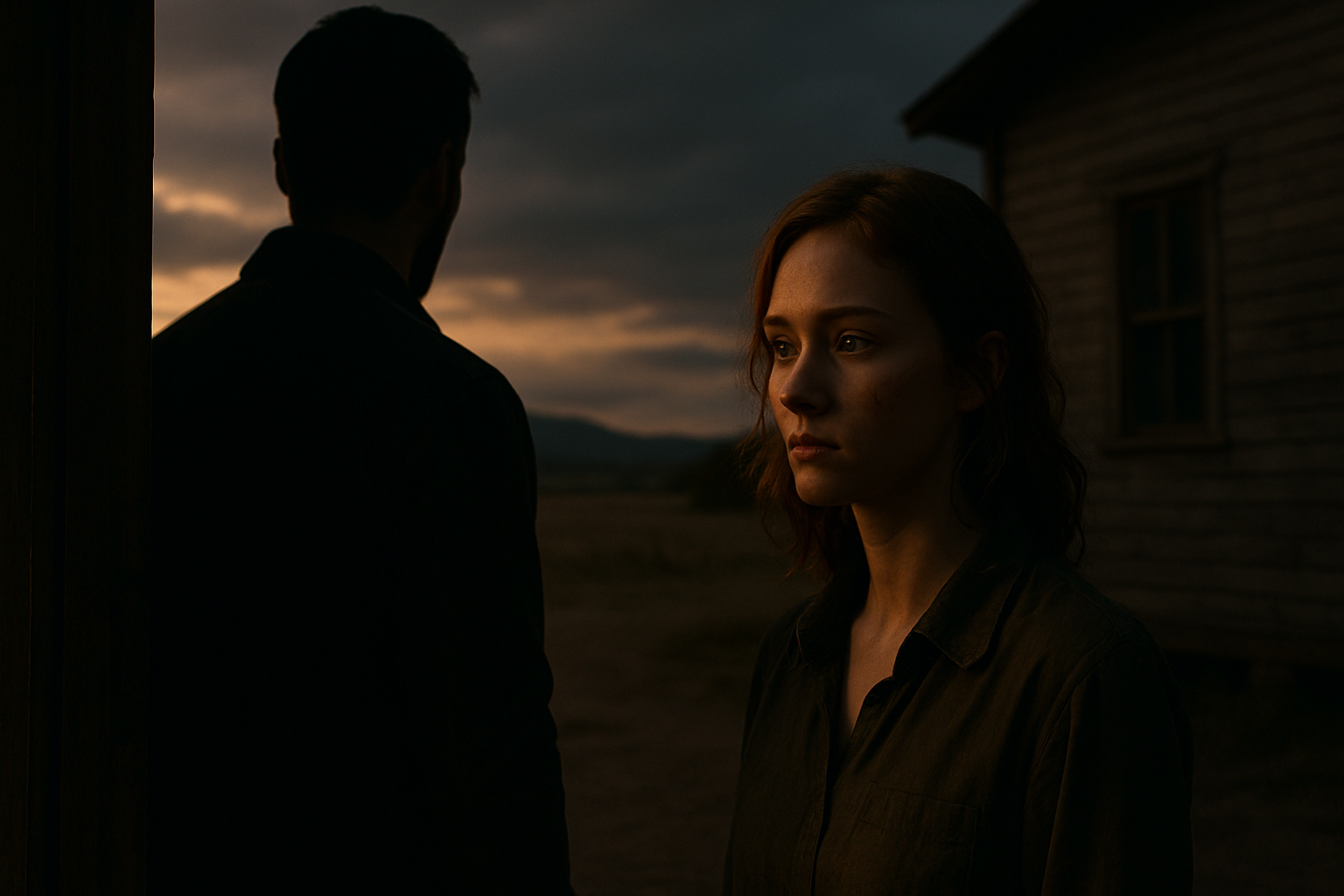
“The fire.”
He stood too quickly, anger rising because she had seen him afraid.
“You don’t know anything about that.”
Briony slipped out of bed. She was barefoot, her coat wrapped around her like armor, her face pale in the thin morning light.
“No,” she said.
Then she lifted her chin.
“But Mama did.”
Mrs. Harlan brought three coats from the back, still smelling faintly of cedar and dust. They were not fashionable coats. They were not meant for a woman walking past windows where other women measured her worth by the inches between buttons. They were thick, brown, ugly things with wool linings and strong seams.
Willa slid into one.
It fit.
For one second, before she could stop herself, relief crossed her face. Not joy. She did not seem practiced at joy. Relief, and beneath it a terrible little flicker of surprise, as if the world had performed some small kindness it had no reputation for performing.
June tried on a navy coat with frayed cuffs and turned once in front of the narrow mirror, touching the collar.
“Mama had one like this,” she said quietly.
Wyatt looked away from her reflection. He could stand blood. He could stand pain. He could stand the town’s old disgust and his own bad dreams. But he was discovering that tenderness, when it arrived too late, could knock the breath clean out of a man.
“Get gloves,” he said gruffly. “Scarves. Warm socks.”
“We don’t need all that,” Willa said.
“Yes, you do.”
“We can pay some back once we find work.”
Wyatt turned to her. “You’re not guests at a hotel.”
Her face tightened. “Then what are we?”
The question sat between them with all the weight of Caroline’s letter.
June stopped touching the coat collar.
Mrs. Harlan pretended to arrange a shelf of lamp oil, but her ears leaned toward them like thirsty animals.
Wyatt lowered his voice. “I don’t know the word yet.”
Willa’s mouth parted, but no answer came. She looked angry that his honesty had not given her anything easy to strike.
June whispered, “Maybe we don’t need the word today.”
Willa glanced at her sister, and whatever she saw there made her look back down at the gloves.
They bought enough to change the shape of the truck bed: flour, beans, coffee, salt pork, oats, apples beginning to wrinkle, molasses, soap, thread, two quilts, stockings, bootlaces, and three tins of peaches because June’s eyes had lingered on them a heartbeat too long. Wyatt added them without comment. June noticed anyway.
At the register, Mrs. Harlan counted slowly. Her gaze kept traveling from Wyatt to the sisters.
“You got kin visiting?” she asked, trying to make curiosity sound neighborly.
Willa’s shoulders went rigid.
Wyatt placed the money on the counter. “They’re with me.”
Mrs. Harlan blinked. “With you?”
“That’s what I said.”
A flush crept up the older woman’s neck. She wrapped the parcels in brown paper and tied the string too tight.
As they left, the bell over the door clanged like a warning.
Outside, Mercy Ridge had gathered itself into small pockets of judgment. A man in a black hat stood outside the feed store. Two women paused by the church steps, pretending to discuss the weather. The teenage boy who had laughed at Willa now leaned against the hitching rail with two friends, all three wearing the cowardly smirk of boys who mistook cruelty for proof of manhood.
Wyatt loaded the goods into the truck.
June climbed in quickly.
Willa stood beside the passenger door, staring straight ahead, chin lifted as if someone had tied a string from it to the gray sky. She had been stared at before. Wyatt could see that. She had learned the art of not giving strangers the satisfaction of watching her flinch.
One of the boys said something too low for the words to carry.
The other two laughed.
Willa’s fingers curled.
Wyatt shut the truck bed with a hard metal clap.
The laughter died.
He walked toward them.
The boy in the black cap straightened too late.
Wyatt stopped close enough that the boys could see every pale seam of fire damage climbing his neck. Close enough that they could smell the cold coffee on his breath and the iron patience of a man who had spent two decades being hated and had not yet died from it.
“You got something to say?” Wyatt asked.
“No, sir,” the boy said.
“That’s wise.”
Wyatt held his gaze a moment longer, then looked at the other two. They found sudden fascination in their boots.
Behind him, the feed store door opened.
“Now there’s a familiar sight,” a voice drawled. “Wyatt Calder frightening children in the street.”
Wyatt did not turn at once.
His ribs ached before his mind named the voice.
Deke Barlow stepped onto the boardwalk like a man entering a room he owned. Time had silvered his hair at the temples and thickened his waist, but it had not softened him. He still wore confidence the way some men wore a gun: polished, visible, meant to discourage challenge. His coat was fine. His boots were clean. His smile was broad enough for witnesses and sharp enough for enemies.
The street seemed to quiet around him.