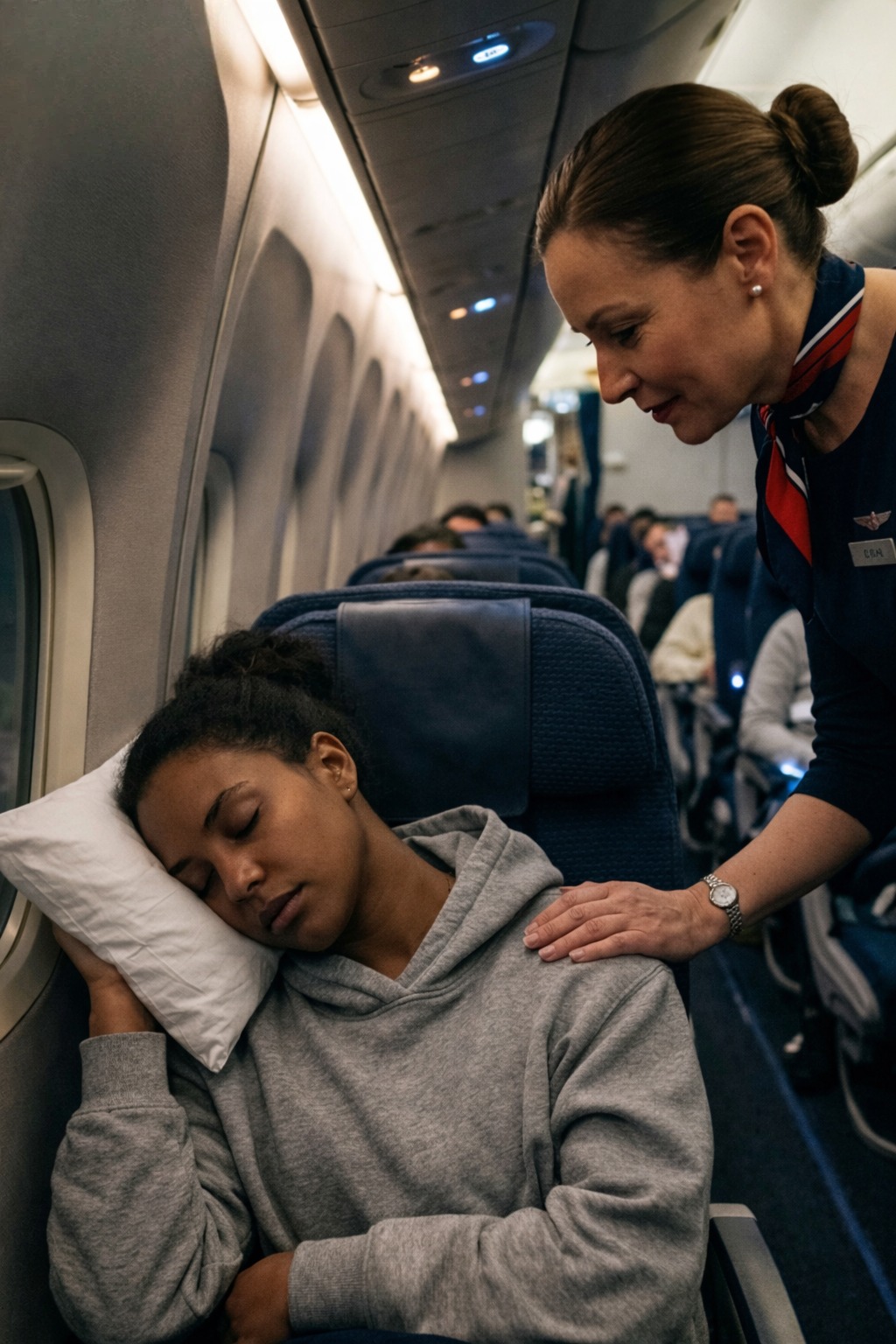
But, looking at the anxious faces around her — at the woman clutching her daughter’s hand tightly, at the elderly man who seemed to be praying, at the couple who had suddenly frozen mid-conversation — she felt something stirring inside her that had never truly gone away.
You can leave the army. You can hand in your uniform. You can go to the other side of the world.
But you cannot stop being yourself.
‘I’m a pilot,’ she said quietly. Her voice was soft but firm. ‘US Air Force. Combat training. I flew an F-16.’
The stewardess exhaled as if, for the first time in the last few minutes, she’d been able to breathe.
‘Thank God. Please, come this way. The captain is waiting.’
A muffled murmur rippled through the cabin. People turned, trying to reconcile what they’d heard with what they saw before them: an ordinary woman in a green jumper — and suddenly a former fighter pilot. Someone who could have passed for a teacher, a doctor, a neighbour on the landing, but who had in fact spent her adult life making split-second decisions in the sky.
At that moment, she ceased to be simply Mara.
She became Captain Dalton once more.
When she entered the cockpit, everything became clear almost instantly.
The captain and co-pilot looked exhausted and deeply concerned—that’s the look of people who’ve already realised that something dangerous has happened, and they might not have the skills to deal with it.
“Thank you for coming,” said the captain. “We’ve got a partial failure of the control systems. The autopilot went down about twenty minutes ago. We’re flying manually at the moment, holding on for now… but that’s not the only problem.”
He pointed to the screen.
Mara leaned forward. Her pilot’s instincts kicked in immediately: the information was coming together faster than the words could be spoken.
There was another blip on the radar.
An alien aircraft.
Too close.
“How long has it been flying alongside us?” she asked calmly. Her voice had already taken on that particular cold clarity that comes only after many years of crises.
“About fifteen minutes. The transponder’s silent. Not responding to calls. Flying at our speed and altitude. Too precisely. Almost in tactical formation.”
Mara recognised the pattern instantly. The position. The distance. The behaviour.
This was no accident. Not a navigational error. Not a mix-up in the corridors.
It was deliberate.
‘Have you contacted air traffic control?’ she asked, without taking her eyes off the screen.
‘Yes. They can’t see anything. They think the equipment is malfunctioning. They told us to reboot the systems, double-check the data. But I can see this is a real target.’
Mara remained silent for a few seconds, studying the reading.
To an ordinary civilian pilot, such aggression might not have been obvious. But she read it unerringly. She knew the tactics of military interception.
‘This isn’t a civilian aircraft,’ she said quietly. ‘And it’s certainly not friendly.’
The co-pilot’s face paled noticeably.
And at that moment, the radio crackled with static again.
The voice that cut through the cockpit was cold, precise, military.
‘Flight 417. You have deviated from your course. Immediately change your route to the coordinates being transmitted. Otherwise, there will be consequences.’
Mara didn’t hesitate. She grabbed the microphone at once.
‘This is a civilian aircraft on a scheduled international flight. Identify yourselves immediately. I repeat: identify yourselves.’
The reply came instantly:
‘Obey the order… or face the consequences.’
Then the airwaves fell silent.
The unknown aircraft suddenly closed in and made an aggressive manoeuvre, causing the airliner to shake violently. The overhead lockers rattled. Inside the cabin, glasses and belongings were probably already flying about.
“They’re putting psychological pressure on us,” Mara said calmly. “Testing our reaction. Every time we panic or start to panic, they gain the upper hand.”
The co-pilot looked at her as if he himself was barely holding it together.
‘We won’t be able to get away from them. This isn’t a fighter jet. We’re unarmed. We’ve got three hundred passengers.’
Mara was already running through her options with the speed that only comes from being in pressurised air.
“So we’re not going to run away,” she said firmly. “Do you have full manual control?”
“Yes, but…”
“Then help me. And just trust me.”
The captain looked into her eyes. He didn’t know her. He’d never flown with her before. But now he saw before him a person who understood what was happening far more deeply than he did.
‘I trust you,’ he said.
Mara sank into the co-pilot’s seat.
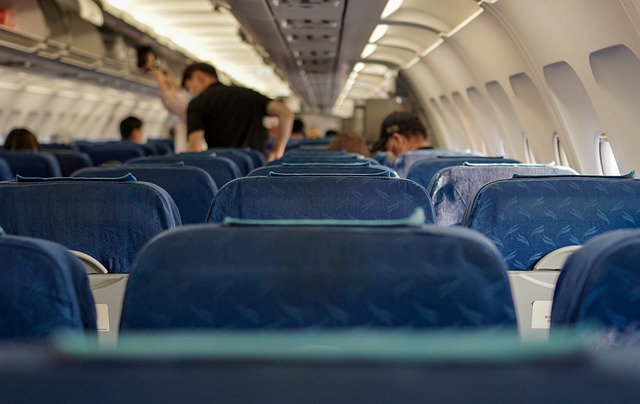
The enemy aircraft began closing in again. Its manoeuvres were designed for one thing: to impose dominance, to force the civilian airliner to play by its rules.
‘They’ve got us on their radar,’ Mara said. ‘So we need to show we haven’t lost our nerve.’