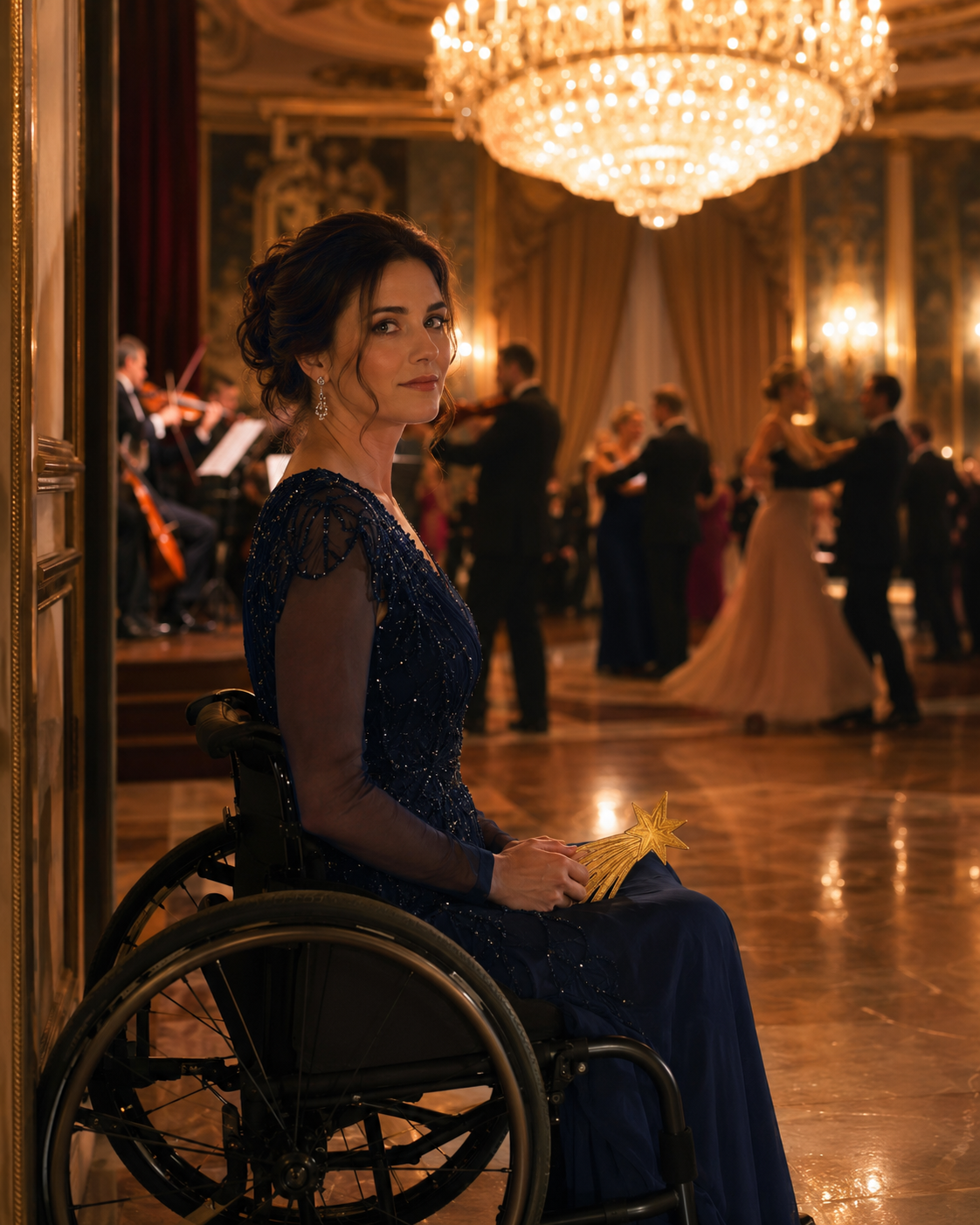
The Ellison Foundation funded rehabilitation equipment, medical transport and accessibility renovations. Its annual reports were filled with photographs of smiling recipients and sentences about overcoming limitations.
“What about it?” he asked.
“We decide what people need before we ask them.”
“We rely on medical advisers.”
“Medical advisers know what treatment people need. They don’t automatically know what kind of life people want.”
“What are you suggesting?”
“I’m suggesting we listen.”
“Mara—”
“You asked what I need.”
He stopped.
She continued.
“I want to return to music. Not as the chairman’s daughter who appears at galas. I want to work.”
“As a conductor?”
“As whatever I become when I have the chance to try.”
Richard looked toward the ballroom where Samuel Crowe was speaking with several musicians.
“Samuel would support you.”
“I know.”
“Have you already discussed it with him?”
“He wrote to me three times.”
Richard’s face changed.
“When?”
“Over the last eighteen months.”
“You never told me.”
“I knew what you would say.”
He accepted that without protest.
Mara touched the paper comet.
“I also want the foundation to create a program run by disabled artists, not merely designed for them. Music, theater, dance, visual art. Accessible spaces. Paid instructors. Real performances.”
Richard considered her words.
“That would require a new facility.”
“The hotel has an unused rehearsal wing.”
“It needs extensive renovation.”
“You just spent sixteen million restoring decorative balconies nobody can stand on.”
Despite everything, Richard laughed.
“That is an unfair comparison.”
“It is an accurate comparison.”
“What would you call the program?”
Mara looked through the glass at Theo.
“I don’t know yet.”
“You’re serious.”
“I was conducting an orchestra in the middle of your gala. How much more serious do I need to look?”
Richard smiled, but the smile faded quickly.
“I can fund it.”
“No.”
He frowned.
“You just said the foundation should create it.”
“The foundation can support it. You cannot announce it tonight, name it after me and turn one unexpected performance into a campaign.”
“I was not going to—”
“You were thinking about it.”
Richard looked toward the floor.
“I was.”
“I don’t want tonight turned into a story about a father giving his daughter a dream.”
“What should it be a story about?”
“A musician returning to music.”
Richard absorbed this.
“And a boy with a paper comet?” he asked.
“That part can stay.”
When they returned to the ballroom, the formal schedule had collapsed completely.
Guests stood in groups discussing the performance. The photographers had been instructed to lower their cameras until Mara gave permission. Vivian looked as though this decision had reduced her life expectancy.
Samuel Crowe approached Mara.
“Tomorrow,” he said.
“What about tomorrow?”
“Rehearsal. Ten in the morning.”
Mara felt Richard tense beside her.
She looked at him.
His mouth opened.
Then closed.
The effort it cost him was visible.
Samuel waited.
“Ten is early,” Mara said.
“You used to arrive at eight.”
“I used to be irritating.”
“You remain gifted.”
“I’ll come at ten.”
Samuel smiled.
Richard remained silent.
Mara looked at him.
“You can say something.”
He exhaled.
“Do you want me to arrange transportation?”
The question was cautious.
Imperfect.
Beautiful.
“Yes,” Mara said. “But I’ll choose who drives.”
“Agreed.”
Theo and Elena joined them.
Elena had removed her apron and folded it over one arm.
“We should leave,” she said.
Richard looked at Theo.
“Before you go, may I ask you something?”
Theo nodded.
“Why did you make the comet?”
The boy thought for a moment.
“My grandmother taught me. She made them from old concert programs.”
“Was she a musician?”
“She repaired instruments. She said broken things should not be hidden because people needed to see that repair was possible.”
Richard looked at Mara.
She raised one eyebrow.
“Do not turn that into a foundation slogan.”
“I wasn’t going to.”
“You were.”
“A little.”
Theo looked confused.
Mara picked up the comet.
“Your grandmother was right about repair,” she said. “But people are not instruments.”
“She said that too.”
“I think I would have liked her.”
“She would have corrected your tempo.”
“She would have been right.”
Elena touched Theo’s shoulder.
“Come. We have caused enough disruption.”
“The evening needed disruption,” Samuel said.
Elena glanced around at the wealthy guests.
“People like us are rarely thanked for disrupting rooms like this.”
Richard’s face tightened with embarrassment.
“You should not have been made to feel that way.”
Elena met his eyes.
“It is easy to say that after your daughter makes the entire orchestra listen.”