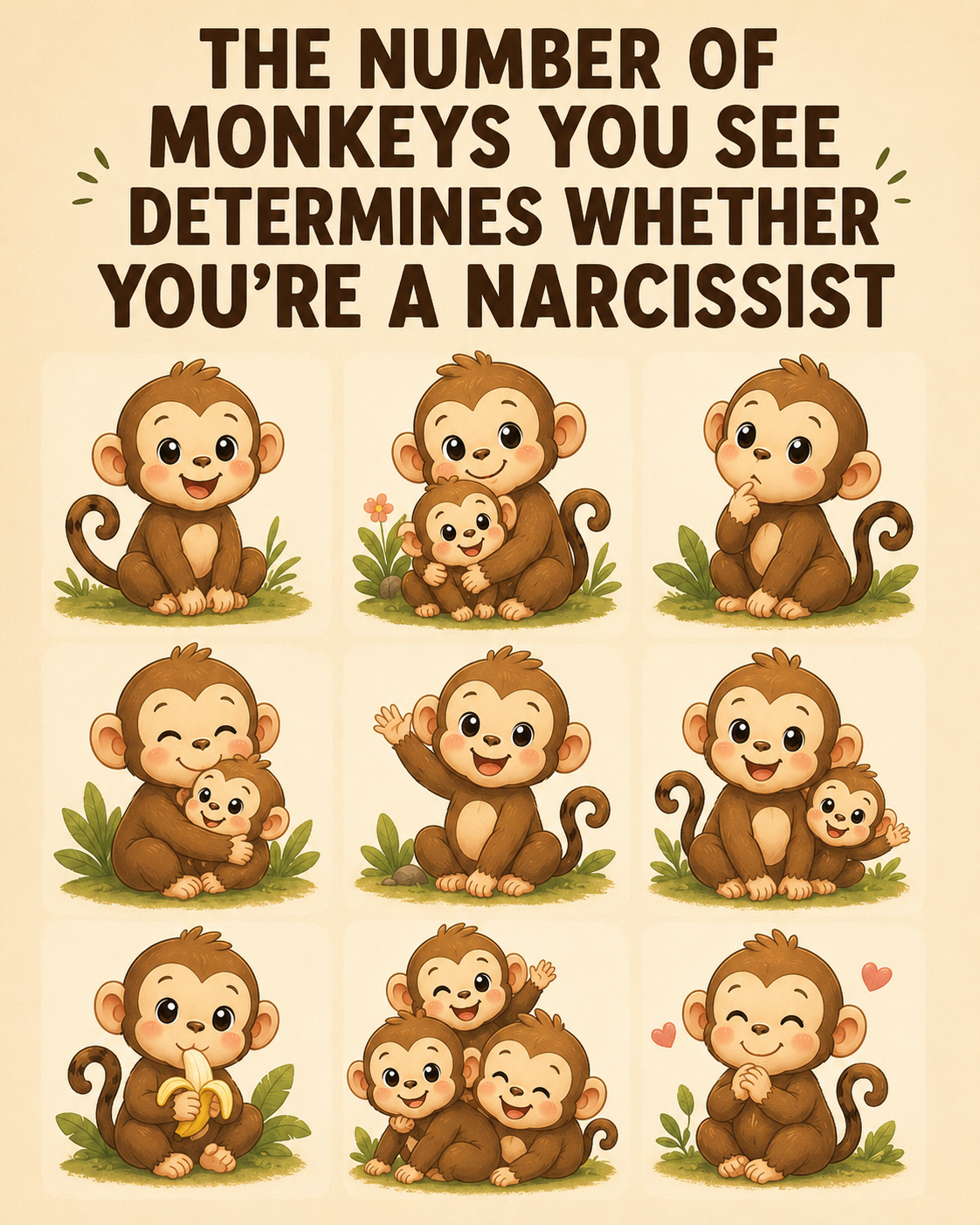
How many monkeys can you spot? The psychology of what we pay attention to
At first glance, the picture seems amusing — rows of cute cartoon monkeys neatly arranged against a plain background. But the large caption at the top makes a provocative claim: ‘The number of monkeys you see will reveal whether you’re a narcissist.’
It’s precisely phrases like this that make you pause whilst scrolling through your feed. Naturally, you immediately start counting.
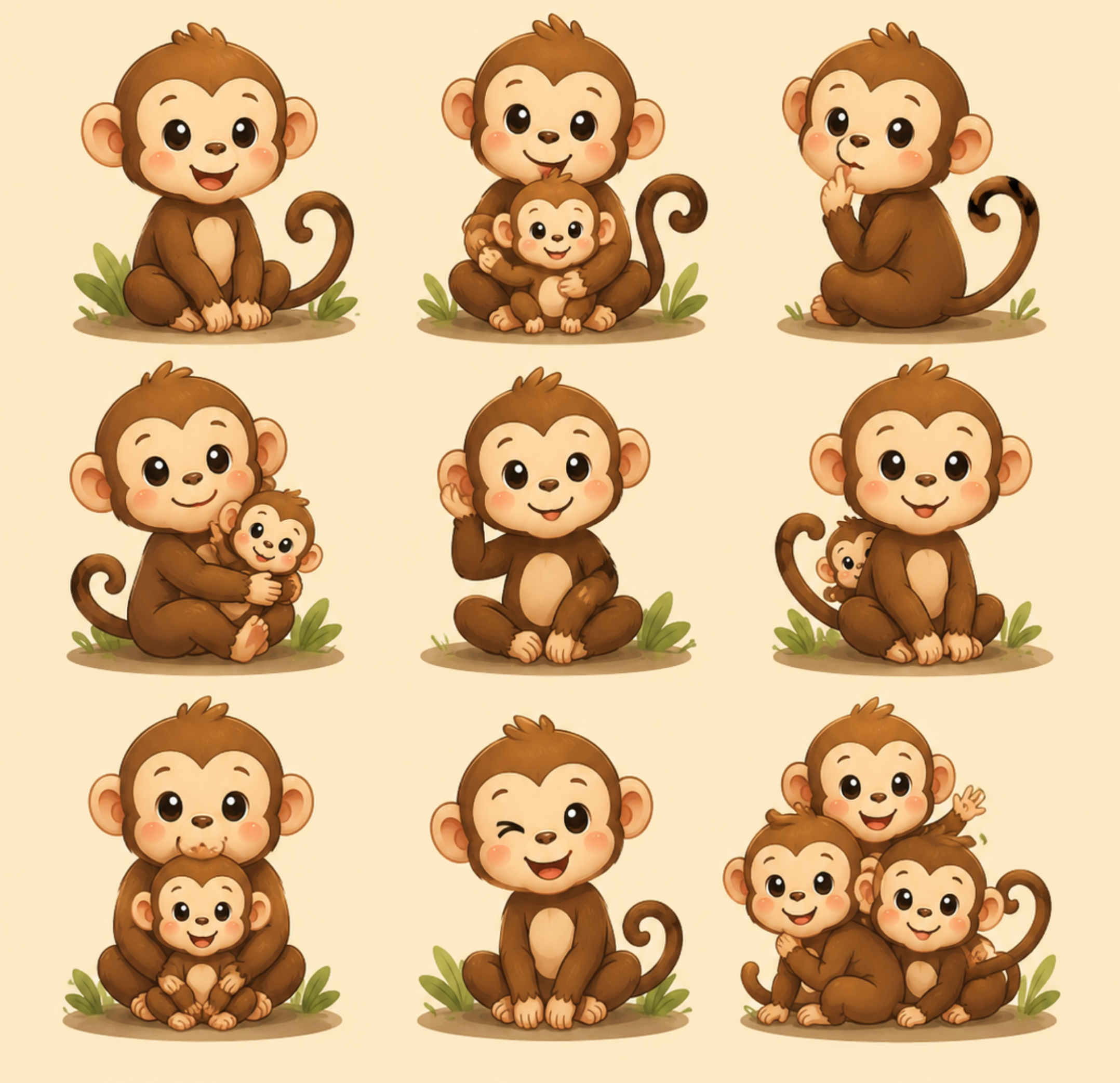
But here’s the catch: in reality, this picture isn’t about monkeys at all. It’s about perception.
What do you actually see?
Some people quickly name a specific number of monkeys — for example, counting one in each position. Others notice more: tiny monkeys hidden inside the larger ones, barely noticeable differences in their poses, or intersecting shapes that didn’t catch the eye at first glance.
And suddenly, the number changes.
This difference raises an interesting question:
why do different people see different things in the same picture?
The brain fills in the missing details itself
Human perception is not an exact record of reality, but an interpretation of it. The brain constantly filters, organises and prioritises visual information, drawing on:
- past experience
- expectations
- attention to detail
- mental shortcuts, or heuristics
In images like these, some viewers notice only the most obvious shapes, whilst others look deeper and find hidden elements.
The claim about narcissism: truth or clickbait?
Let’s be clear:
there is no scientific evidence to suggest that the number of monkeys you see can be used to diagnose narcissism.
This claim is a classic example of viral psychological bait: the content uses a sensational or slightly controversial phrase to grab attention and provoke a reaction.
Nevertheless, such illusions can still reveal something – not about personality disorders, but about exactly how you process visual information.
What this might say about you
Although the image does not determine narcissism, the way you observe it may hint at certain thinking patterns:
You see fewer monkeys
→ You may tend to look at the bigger picture and filter out minor details.
You see more monkeys, including the hidden ones
→ You probably have a more detail-oriented approach and notice subtleties that others miss.
Neither option is better than the other — they’re simply different styles of perception.
Why we love these illusions so much
Images like these go viral because they tap into three powerful human impulses at once:
- Curiosity — ‘What if I’ve missed something?’
- Self-reflection — ‘What does this say about me?’
- Comparison — ‘What did others see? ”
They transform an ordinary image into a shared psychological experience.
Final thought
The main idea here is not about narcissism, but about mindfulness.
Sometimes what we see isn’t the whole story. And sometimes it’s worth taking a closer look to discover much more than expected.
So… take another look.
How many monkeys can you see now? 🐒