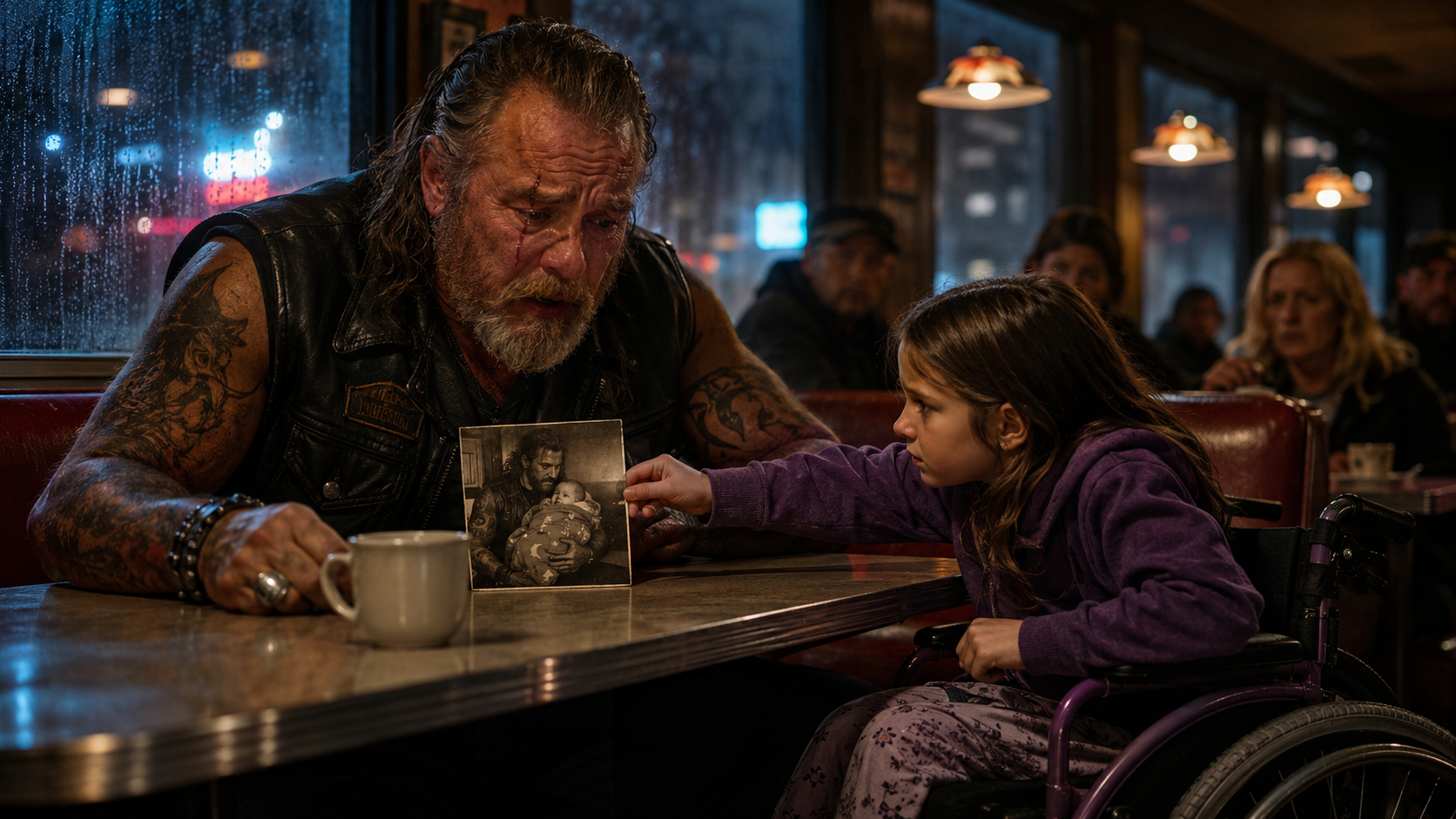
“She hated peas.”
A tear slid down his face.
“She sang in the car even when the song was bad.”
His hand turned under yours and held it carefully.
“She said thunder was just the sky dragging chairs around.”
Ryder laughed through tears.
“Maeve used to say that.”
You smiled.
The lost pieces began finding one another.
At the end of the week, the final DNA report arrived.
There was no doubt.
Ryder Hale was your grandfather.
Beatrice Wynn was placed under investigation for kidnapping, fraud, falsified records, and custodial interference. Because she was old and sick, some people expected Ryder to soften.
He did not.
He told the prosecutor, “Age doesn’t turn theft into kindness.”
But when Beatrice was arrested, he did not go watch.
He stayed with you at Mrs. Porter’s house and helped build a cardboard castle because you said every princess in a wheelchair needed wider doors.
That mattered to you.
Revenge was loud.
Love stayed and cut windows into boxes.
One month later, you moved into Ryder’s house.
It was not what you expected.
You thought it would be dark.
Scary.
Full of motorcycle parts and shadows.
It was old, wooden, and full of morning light.
There were engine pieces in the garage, books stacked in corners, tools on the kitchen counter, and a freshly painted room at the end of the hall.
The walls were pale blue.
Yellow moons and white stars had been stenciled near the ceiling.
The doorway was wider.
The bathroom had rails.
The porch had a ramp so smooth your chair rolled over it like water.
A purple quilt lay on the bed.
On the dresser stood three photographs.
Ryder holding your mother as a newborn.
Your mother smiling in a green sweater.
Maeve standing beside a motorcycle, laughing at something outside the frame.
Three generations of women who had never been given enough time together.
You touched the quilt.
“I like it.”
Ryder exhaled like he had been holding his breath for a month.
That night, he burned dinner.
Badly.
Smoke filled the kitchen.
The alarm screamed.
Four bikers rushed in from the porch because apparently every loud noise in Ryder’s house was now treated like an attack.
You laughed so hard your stomach hurt.
Ryder stood in the smoke holding a black pan and said, “Pizza?”
You nodded.
“Pizza.”
That became your first real night at home.
Not perfect.
Not soft like a storybook.
But full of smoke, laughter, and people who came running when the alarm went off.
Months passed.
You started school.
At first, kids stared at your wheelchair.
Then Ryder came one afternoon to pick you up on his motorcycle with seventeen bikers behind him because the club was “already in the neighborhood.”
After that, nobody made fun of your wheels.
But Ryder knelt beside you later and said, “You tell me if anyone bothers you. Not so I can scare them. So we can handle it right.”
You narrowed your eyes.
“You already scared them.”
He glanced toward the row of motorcycles.
“Accidentally.”
You giggled.
He did not always get things right.
Sometimes he went too quiet when you asked about your mother.
Sometimes he stood in your doorway at night after you fell asleep, and you woke to see him there, making sure you were still real.
Sometimes he cried in the garage.
You pretended not to hear until one night you rolled out with your blanket across your knees.
He was sitting beside his motorcycle, holding your mother’s photograph.
“I didn’t get to save her,” he said.
You rolled closer.
“You saved me.”
His face crumpled.
You did not know if that healed him.
But you knew he slept better after that.
The town changed too.
People who once crossed the street to avoid Ryder now brought casseroles.
Some did it from guilt.
Some did it from curiosity.
Some did it because a little girl in a purple wheelchair had made them realize the monster in their stories had been a grieving father all along.
Ryder accepted the food.
He did not forgive easily.
You learned that from him.
Forgiveness was not a door people could kick open just because they felt bad.
Sometimes it was a window.
Sometimes it was locked.
Sometimes it opened only after years.
Deputy Hank visited often.
He apologized more than once.
Ryder never said it was okay.
He said, “Do better now.”
So Hank did.
He reopened old cases.
He checked forgotten reports.
He started listening when poor women, bikers, addicts, widows, and people without polished voices said something was wrong.
You heard him tell Ryder once, “I should have believed you.”
Ryder answered, “You should have believed Maeve.”
That sentence stayed with you.
Because women like Maeve and Elise were too often treated like whispers until a man decided their pain had evidence.
You grew.