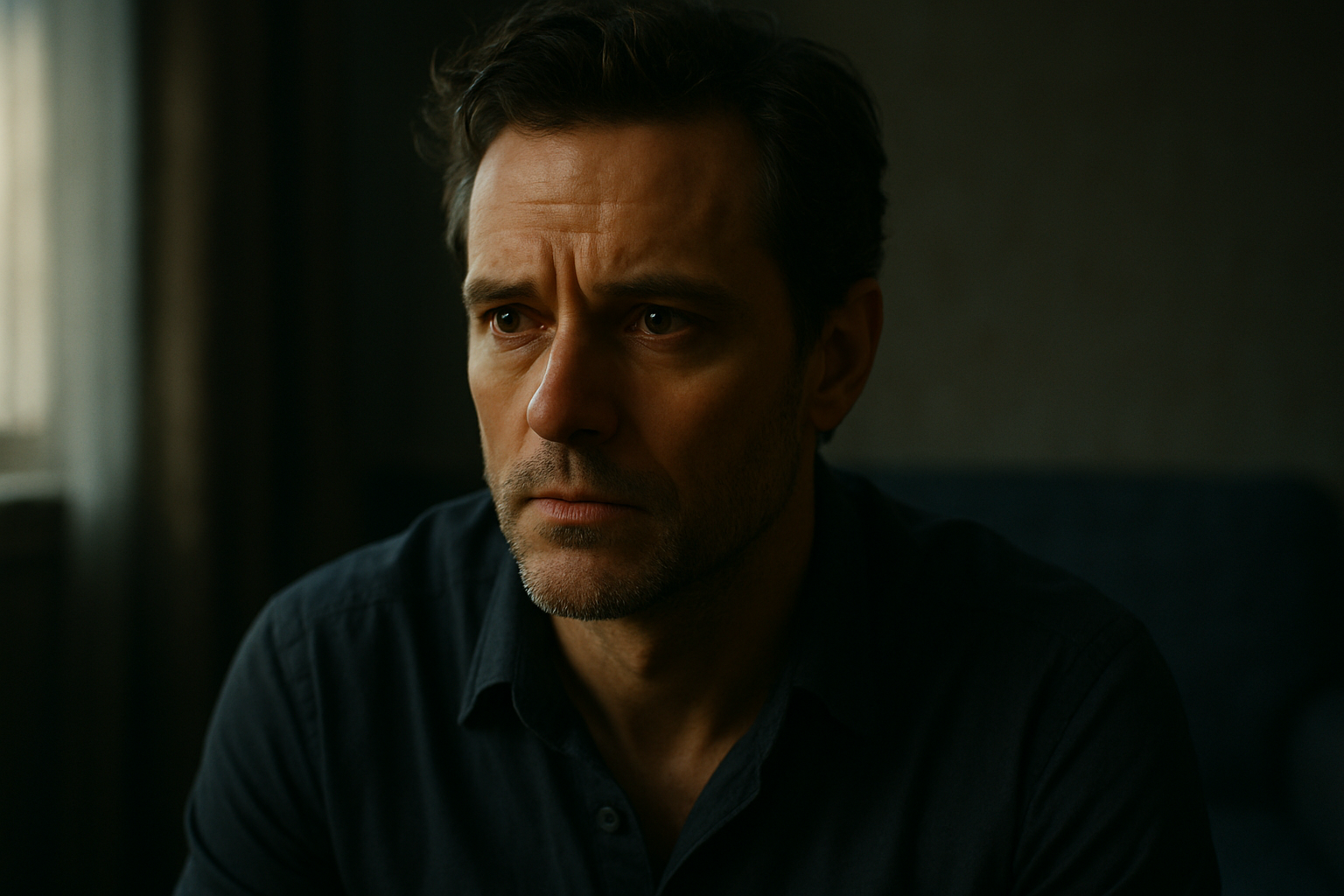
Adrian wore a dark suit. He looked thinner. His right hand was tucked in his pocket.
“I can leave,” he said immediately.
I folded the letter. “No.”
He stayed where he was.
“June said you might have read it.”
“June says a lot.”
“She does.”
The faintest smile passed between us and disappeared.
“I’m angry,” I said.
“You should be.”
“I’m grateful too. That makes the anger messier.”
“I know.”
“No,” I said gently. “You don’t get to know this one. It’s mine.”
His face changed.
Then he nodded. “You’re right.”
I looked down at the letter. “You saw me more clearly than you treated me.”
His eyes filled.
“That might be the saddest part,” I said. “You knew I was capable. You knew I was disappearing. You knew I deserved more. And somehow you still thought the loving thing was to make decisions around me instead of with me.”
“I was ashamed.”
“I know.”
“I thought if you saw me losing the thing that made me useful, you’d stay out of pity.”
“That’s insulting to both of us.”
“Yes.”
“And maybe I would have stayed for a while,” I admitted. “Maybe I would have tried to fix everything. Maybe I would have confused love with management because that’s what I do when I’m scared. But you didn’t give me the chance to become better than my pattern. You built another pattern around it.”
He looked toward the water. “I am beginning to understand that.”
The humility in his voice hurt because it was real.
For a moment, I wanted to reach for him. I wanted to say we could start again now that the secrets had names.
But wanting is not always instruction.
Sometimes it is only memory asking for one more performance.
“I leave in four weeks,” I said.
“I know.”
“I’m still going.”
“I know.”
“I think we should end this before I go. Not because I don’t love you.” My voice shook. “Because I do. And I don’t know how to learn who I am if I keep measuring my growth by whether it saves us.”
Adrian closed his eyes.
When he opened them, he looked devastated but not surprised.
“I don’t want that,” he said.
“I know.”
“But I won’t ask you to stay.”
“Thank you.”
He took a breath that shook. “Can I ask one thing?”
I waited.
“When you’re in New York and something wonderful happens, don’t hear my voice asking if it’s reasonable. Hear your own.”
The tears came harder.
“That was two things,” I said.
He laughed, and it broke in the middle.
Then he stepped forward slowly enough that I could have stopped him.
I did not.
He reached for me not with possession, not with panic, but with the care of someone approaching a door he no longer had a key to.
I let him hold me.
His arms came around me gently, mindful of my healing body.
For the first time in months, Adrian did not feel like a diagnosis, a judge, or a house I was failing to keep clean.
He felt like a man.
A frightened, flawed, loving man who had hurt me.
I held him back because both could be true.
When we separated, his face was wet. So was mine.
Neither of us apologized.
Leaving took longer than I expected.
Not the logistics. Those were manageable.
Movers came. Boxes filled. Addresses changed. My body grew stronger. Work threw me a goodbye party with grocery-store cake and speeches from people who suddenly remembered everything I had done once I was no longer available to keep doing it quietly.
The hard part was the apartment.
Every drawer held evidence.
Movie tickets. Batteries. A scarf I had borrowed during a snowstorm. A cracked mug we never threw away because it had survived three moves and seemed to deserve retirement on its own terms.
Love leaves artifacts everywhere.
That is one of its most inconvenient habits.
Adrian came the Sunday before I left to divide the last things.
We were gentle with each other by then, which was almost worse than fighting.
“You take the bookshelves,” he said.
“I can buy bookshelves.”
“I know. But you like these.”
“You like them too.”
He looked at them, then at me. “I liked watching you arrange them.”
So I took the bookshelves.
The tulip vase became a debate neither of us wanted to win. Finally, he wrapped it and placed it in my box.
“You should have it,” he said. “You’re the one who thinks tulips keep secrets.”
I smiled despite myself. “You remember that.”
“I remember a lot.”
“I know.”
There was no accusation in it this time.
Just truth.
He had moved into a short-term rental near the hospital. He was reducing surgical duties while his doctors adjusted treatment. He had started therapy, which he told me with the embarrassed pride of someone admitting he had learned to use a basic tool after years of insisting bare hands were enough.
“I don’t know what my career looks like now,” he said.
“That must be terrifying.”
“It is.”
I waited.
He smiled sadly. “See? That. I’m trying not to let your kindness become an assignment.”
“Good.”
“I’m also trying to tell the truth before it turns into strategy.”
“That’s even better.”
At the door, we did not kiss.
A kiss would have been too easy to misread.
Instead, he pressed his forehead lightly to mine for one breath.
One shared pause between what had been and what would not be.