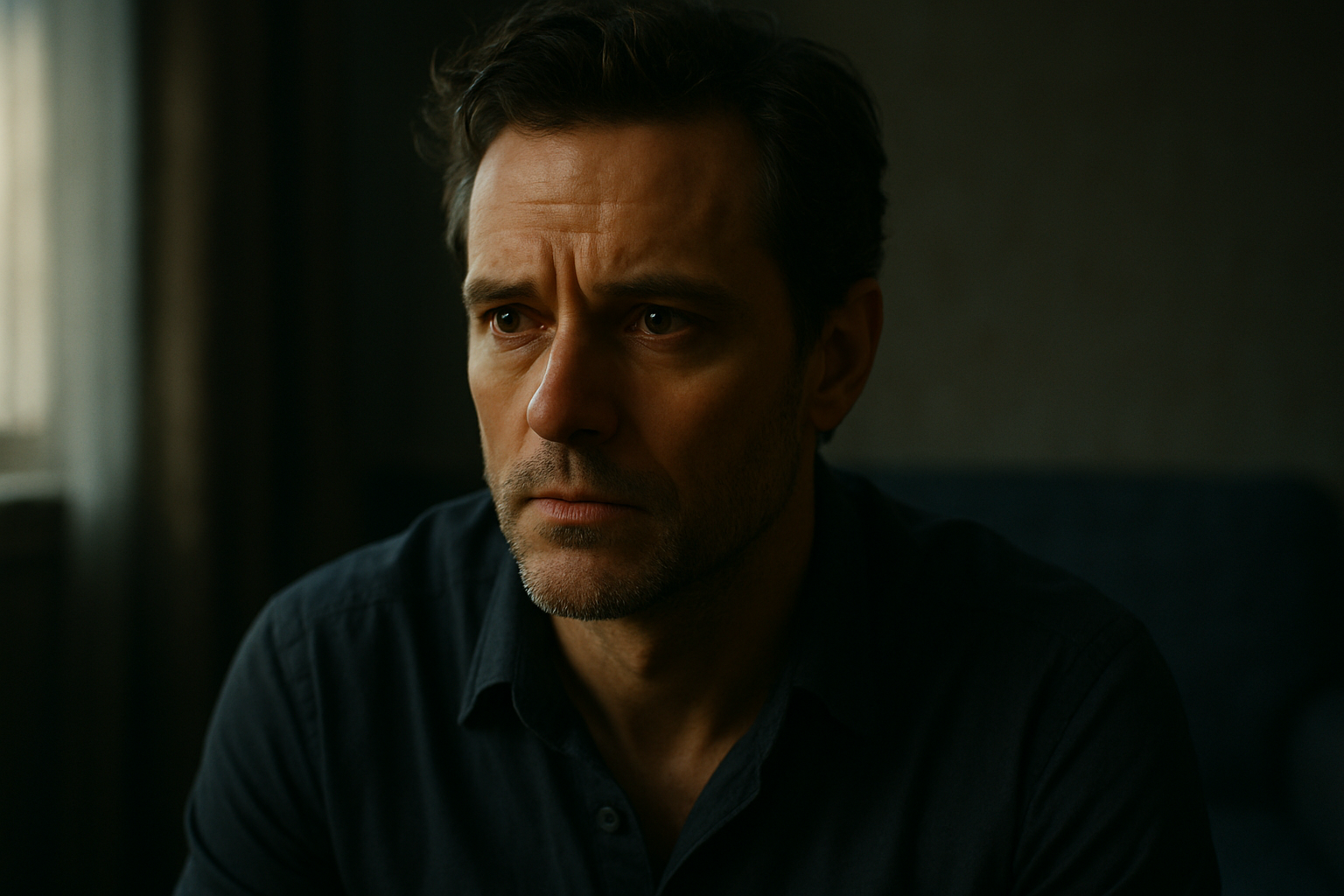
“Goodbye, Mara,” he whispered.
“Goodbye, Adrian.”
After he left, I stood in the empty apartment and listened.
For years, I thought silence meant absence.
That day, it felt like space.
New York was loud from the moment I arrived.
Horns. Voices. Subway heat. Shoes striking pavement with impatient purpose.
My temporary apartment was small, overpriced, and full of light.
The first night, I ate noodles from a cardboard container on the floor between half-open boxes. A siren screamed down the avenue.
I did not think of Adrian first.
I noticed that.
Then I kept eating.
The job did not transform me overnight.
Nothing real does.
I was still nervous in meetings. I still overprepared. I still heard an old voice asking whether I was allowed to take up so much room.
But each time, I answered with evidence.
I had moved.
I had healed.
I had accepted.
I had left.
I had survived a sadness that once would have made me bargain myself away.
One afternoon, during a budget review, a senior manager dismissed a coordinator’s concern as “emotional.”
Something old rose in me. The reflex to smooth things over.
Instead, I leaned forward.
“Emotion is data,” I said. “It tells us where people are carrying pressure the system refuses to name. Let’s not waste it.”
The room went quiet.
Then the coordinator began to speak again.
That evening, walking home through cold rain, I laughed out loud on the sidewalk.
Not because everything was fixed.
Not because I no longer missed Adrian.
I missed him in small, strange ways. When I saw tulips. When I passed a hospital and caught the smell of antiseptic. When something good happened and part of me still turned toward the person who had known earlier drafts of me.
But missing him no longer felt like instruction to go back.
In December, a package arrived.
Inside was the cracked mug, wrapped in three layers of paper, with a note in Adrian’s handwriting.
It survived another move after all. Thought it should retire somewhere with better light.
Below that, one more line.
My hands are steadier. I’m learning to ask for help before I become impossible to love.
I sat at my tiny kitchen table and read it twice.
Then I placed the mug on the windowsill beside a failing basil plant. It looked ridiculous there, cracked and stubborn, holding nothing but winter light.
I texted him a photo.
Me: It looks smug.
An hour later, he replied.
Adrian: It has always been smug.
I smiled.
There was tenderness.
Distance.
And the quiet mercy of knowing not every love has to become forever to become meaningful.
Months later, June called to tell me she was pregnant.
She cried. I cried. Miles cried in the background, because apparently that had become his primary hobby.
That spring, I flew back for the baby shower.
The city greeted me with rain, of course. June was round and glowing and bossy. Miles had developed strong opinions about stroller suspension. Their house was full of flowers, food, relatives, and the soft chaos of people preparing to love someone they had not met yet.
Adrian arrived near the end.
I saw him before he saw me.
He was carrying gifts in one arm and laughing at something Miles’s father said. He looked well. Not unchanged. Not magically healed. But well in the honest way people look when they have stopped pretending not to be wounded.
His hand still trembled faintly when he set the gifts down.
He did not hide it.
That moved me more than steadiness would have.
When he saw me, his smile came slowly.
“Mara.”
“Adrian.”
For a moment, we stood in June’s crowded living room with a whole history between us and no need to explain it to anyone.
“You look happy,” he said.
“I am.”
The answer surprised me with its simplicity.
His smile deepened, sad and warm. “Good.”
“You look lighter.”
“I’m working less in the OR. Teaching more. Apparently residents enjoy it when I explain things without terrifying them.”
“Growth.”
“Painful,” he said, “but yes.”
We moved near the window. Rain stitched silver lines down the glass.
“I’m sorry,” he said.
I looked at him. “For what part?”
A small laugh. “Still fair.”
Then he sobered. “For making love feel like a test you kept failing. For confusing being needed with being trapped. For not trusting you with the truth.”
The apology was not new.
But it was steadier now. Less desperate to be forgiven. More concerned with being accurate.
“Thank you,” I said.
“I don’t expect anything from it.”
“I know.”
And I did.
That was the difference time had made.
I could accept an apology without turning it into a bridge I was obligated to cross.
June called my name from across the room, demanding I settle a frosting dispute even though both cakes had already been eaten.
“I should go prevent a crisis,” I said.
“Life or death,” Adrian said.
“Obviously.”
Before I walked away, he said, “Mara?”
I turned.
“I’m glad you went.”
The sentence entered me gently.
No hook.
No hidden plea.
Just blessing.
“I am too,” I said.
On the flight back to New York, I watched the clouds turn pink beneath the setting sun and thought about endings.