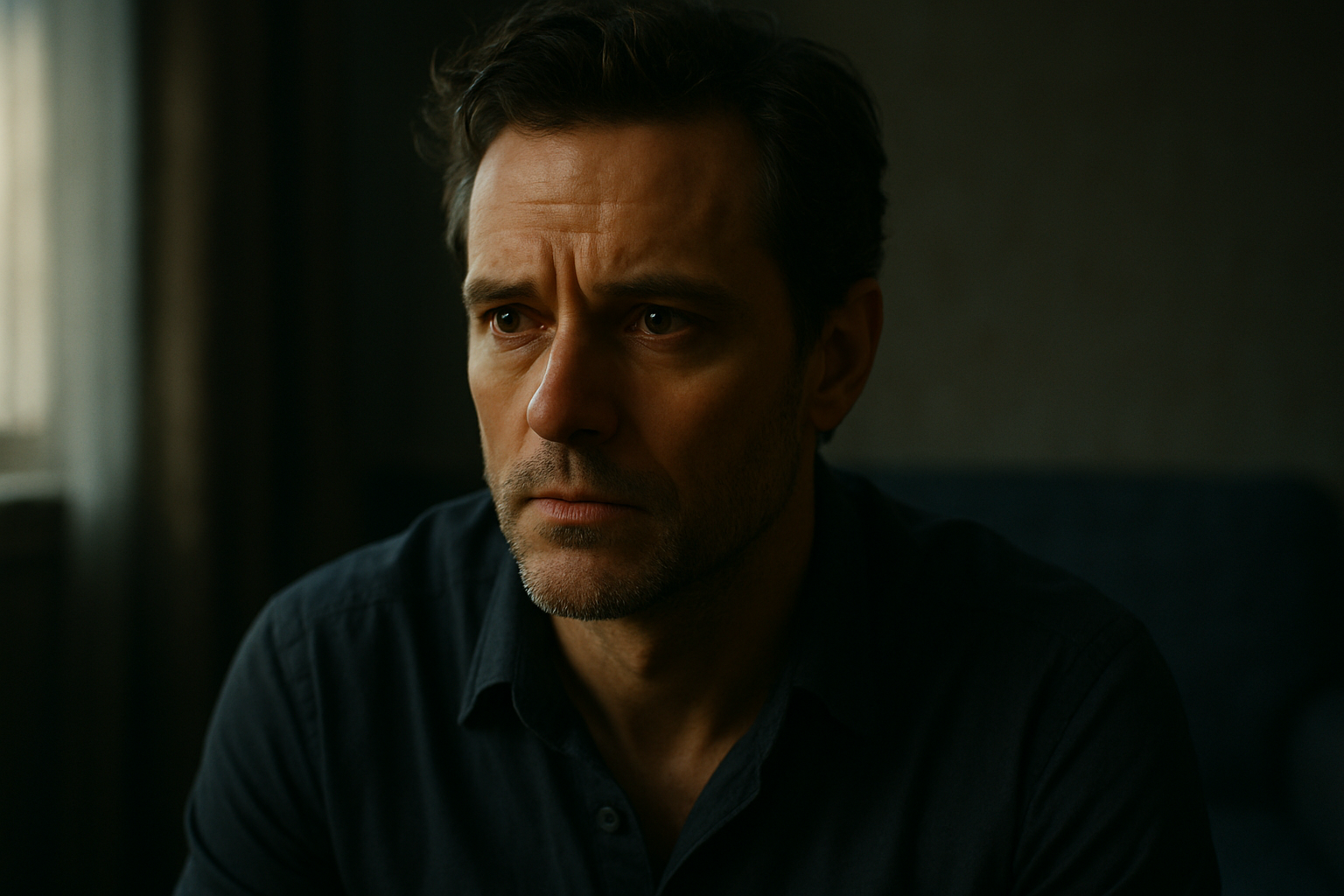
That made it harder.
It was right, but it came after so many wrong ones.
“You can’t build a bridge on the morning I’m already crossing the river,” I said.
He flinched.
“What do you want from me, Mara?”
I gave a soft, humorless laugh. “That’s the question now?”
“Yes.”
“I wanted you to notice before my silence became inconvenient.”
He rubbed both hands over his face.
When they dropped, he looked exhausted in a way sleep could not fix.
“I know,” he said.
Not, That isn’t fair.
Not, I’ve been busy.
Just, I know.
A small, treacherous part of me stepped toward him.
“What do you know?”
He looked at the tulips. “That I made you feel like needing me was a character flaw.”
My throat tightened.
“I told myself I was helping you become stronger,” he said. “I told myself you leaned on me too much. But the truth is, I liked being needed until it required something I did not know how to give.”
Outside, a car passed through a puddle.
I had imagined this conversation so many times. In my fantasies, I was fierce. I made the perfect speech. He finally understood.
But now that he stood there saying the thing I had needed, I did not feel triumphant.
I felt late.
“Why now?” I asked.
“Because you stopped asking.”
“That’s not an answer.”
“It’s the only one I have tonight.”
I picked up my laptop. “My interview is at eight. I’m going to bed.”
“Mara.”
I paused.
“I’m sorry.”
I kept my back to him because if I turned around, the apology might enter through an old unlocked place.
“I believe you,” I said. “I just don’t know what it changes.”
The interview went well.
I knew because halfway through, Vivian Hart, the senior vice president from New York, stopped sounding like she was interviewing me and started sounding like she expected me there.
She asked how I would handle a department that had been underperforming for three quarters.
“I’d stop treating morale like a side effect,” I said, “and start treating it like infrastructure.”
She smiled.
“Most people start with numbers.”
“Numbers tell you where the bleeding is,” I said. “They don’t tell you why the wound keeps reopening.”
The metaphor slipped out before I could stop it. Maybe living with a surgeon had done that to me. Maybe pain makes everyone fluent in anatomy.
“That,” Vivian said, “is exactly why your name came up.”
My name came up.
Before I could ask what she meant, we moved on.
By the end, she told me there would be a final conversation after my surgery, if I was still interested.
If I was still interested.
As if New York were waiting politely at the edge of my life.
Thursday morning, June arrived in leggings, sunglasses, and a sweatshirt that said BRIDE in rhinestones.
“I wore this so the nurses understand my authority,” she said.
“You look like you’re about to threaten someone over brunch reservations.”
“Exactly.”
The joke helped until we reached the hospital.
Then the smell of disinfectant hit me, and all the bravery I had assembled in private began to loosen.
Hospitals had always belonged to Adrian in my mind. The beeps, the rubber soles, the clipped voices. Being there without him felt like standing in a country whose language I only understood because someone had once translated it.
June took my hand.
“Still necessary?” she asked.
I nodded.
“Then we keep walking.”
In pre-op, I changed into a gown that tied badly and made me feel both exposed and anonymous. A nurse covered me with a warm blanket. Dr. Hale came by with a calm smile. The anesthesiologist explained the process, and I nodded while counting ceiling tiles.
Then my phone buzzed in the plastic bag with my clothes.
The nurse handed it to me.
It was Adrian.
Adrian: I’m downstairs.
My breath stopped.
Another message appeared.
Adrian: June told me only because the start time changed and she panicked about traffic. I’m not coming up unless you ask. I just needed to be close enough if you did.
The old Mara would have felt rescued.
The new Mara felt invaded, moved, angry, relieved, and angry about the relief.
I typed with cold fingers.
Me: Don’t come up.
After a long pause, he answered.
Adrian: Okay.
Then another message.
Adrian: I’m here anyway.
I turned the phone face down and hated him for making my heart hurt.
I hated that he respected the boundary and still stood near it.
I hated that part of me wanted to ask him upstairs.
The surgery took longer than expected.
I learned that later.
At the time, there was only the anesthesiologist telling me to think of somewhere peaceful, then darkness folding over the room.
When I woke, the world returned in pieces.
Light.
Throat pain.
Blankets.
Someone saying my name as if pulling it through water.
“Mara? You’re in recovery. Everything went fine.”
Fine was a word people used when fear needed somewhere to sit.
Dr. Hale came by. The cyst had been larger than the imaging showed. There were adhesions, and she had removed them. Nothing looked malignant, but pathology would confirm.
I nodded because nodding was easier than feeling.
When they wheeled me into the overnight room, June was waiting. Her eyes were red, but she smiled too brightly.