“You look terrible,” she said.
“You look like a rhinestone emergency.”
She laughed and cried at once. Then I cried, which hurt, which made us laugh harder, because the body has a cruel sense of humor.
Only then did I notice the second chair near the window.
Adrian was sitting in it.
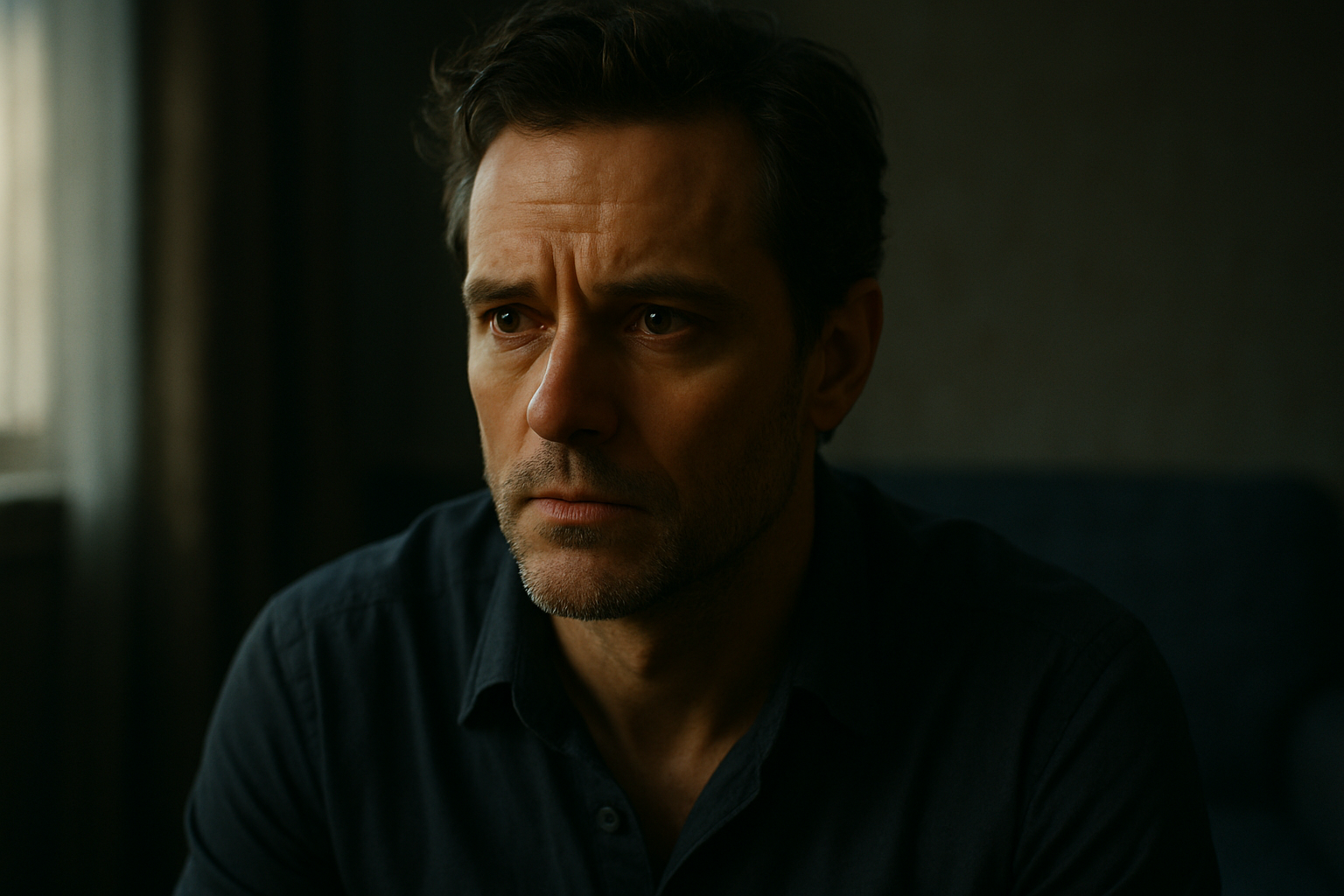
He had changed into jeans and a dark sweater, but the hospital still seemed to cling to him. His elbows rested on his knees. His hands were clasped so tightly his knuckles were pale.
“I told him he could come up after,” June said quickly. “Not before. After. The surgery ran long, and I got scared.”
“It’s okay,” I whispered.
Adrian stood but stopped at the foot of the bed.
That restraint undid me more than if he had rushed to my side.
“I didn’t talk to your surgeon,” he said. “I didn’t ask for your chart. I didn’t make decisions. June told me what she wanted to tell me, and I sat downstairs until she came to get me.”
I looked at his hands.
They were trembling.
Not enough for everyone to notice.
But I noticed. I had memorized those hands.
“You’re shaking,” I said.
He immediately clasped them behind his back.
“I was scared.”
I believed him.
That was the hardest part.
The night passed in shallow pieces. June left around midnight after I made her go home. Adrian stayed in the chair. He did not touch me without asking. When I needed help sitting up, his hand hovered near my back until I nodded.
At three in the morning, half awake and full of medication, I heard him whisper, “I’m sorry.”
I did not know if he was speaking to me or to the dark.
By morning, I was cleared to leave.
“I can drive,” Adrian said.
June looked at me.
I was tired. My body hurt. My heart hurt more because kindness, when it comes late, does not erase damage. It only makes damage harder to hate.
“I’ll go with June,” I said.
Adrian nodded.
At the door, he asked, “Can I bring food later?”
I almost said no.
Then I remembered his trembling hands.
“You can leave it at the door,” I said.
His face tightened, but he nodded. “Okay.”
That was how the strange middle began.
Not with screaming.
Not with slammed doors.
With soup left outside the apartment. With texts asking permission. With the painful discovery that boundaries can feel both cruel and merciful.
Recovery forced me into stillness, and stillness made room for memory.
For three days, I slept on the couch because getting into bed hurt too much. June came every morning before work. Her fiancé, Miles, delivered dinner at night like a man entrusted with national security.
Adrian did not push in.
Each evening, he left something outside the door. Soup. Electrolyte drinks. A heating pad. A novel I had mentioned months earlier.
The first time I found tulips wrapped in brown paper, I sat on the entryway floor and cried so hard I had to hold a pillow against my abdomen.
Not because I forgave him.
Because grief is not only for endings.
Sometimes it is for the version of love that arrives carrying proof it could have done better all along.
On the fourth day, pathology came back benign.
I read the message three times before calling June. She screamed so loudly Miles thought something terrible had happened. Then all three of us cried on speakerphone.
Afterward, I stared at Adrian’s contact.
He deserved to know.
That was not the same as needing him.
Me: Pathology is benign.
He called immediately.
I let it ring.
Then I answered, because healing, I was learning, did not always mean refusing every door.
“Mara?” His voice was rough.
“It’s benign.”
For a moment, he said nothing.
Then I heard him exhale, and the sound broke in the middle.
“Thank God.”
There were a hundred things we could have said.
Instead, we stayed on the phone, breathing across the distance between us.
Finally, he asked, “Do you need anything?”
I almost smiled. “That question is becoming a habit.”
“I’m trying to ask instead of assume.”
“I have everything I need tonight.”
“Okay.”
A pause.
“Adrian?”
“Yes?”
“Thank you for staying at the hospital.”
His silence changed. I felt it.
“Thank you for letting me.”
In a simpler story, that would have been the turning point.
Illness would have frightened us into honesty. Honesty would have become tenderness. Tenderness would have carried us back.
But real life is less obedient than fiction.
Fear can reveal love without repairing trust.
A week after surgery, Vivian called from New York.
The offer came while I stood by the window watching rain turn the streetlights silver.
Director of Strategic Operations. A twenty-two percent salary increase. Relocation support. A team that needed rebuilding. A start date in six weeks, flexible because of my recovery.
“We know it’s a significant move,” Vivian said. “Take a few days to think it over.”
I looked around the apartment.
Adrian’s books. My scarf beside his coat. Tulips on the table. The couch where I had slept. The kitchen island where I had clicked submit before remembering I had not told him.
“I don’t need a few days,” I said.
Vivian went quiet.
“I accept.”
After I hung up, I did not feel triumphant.