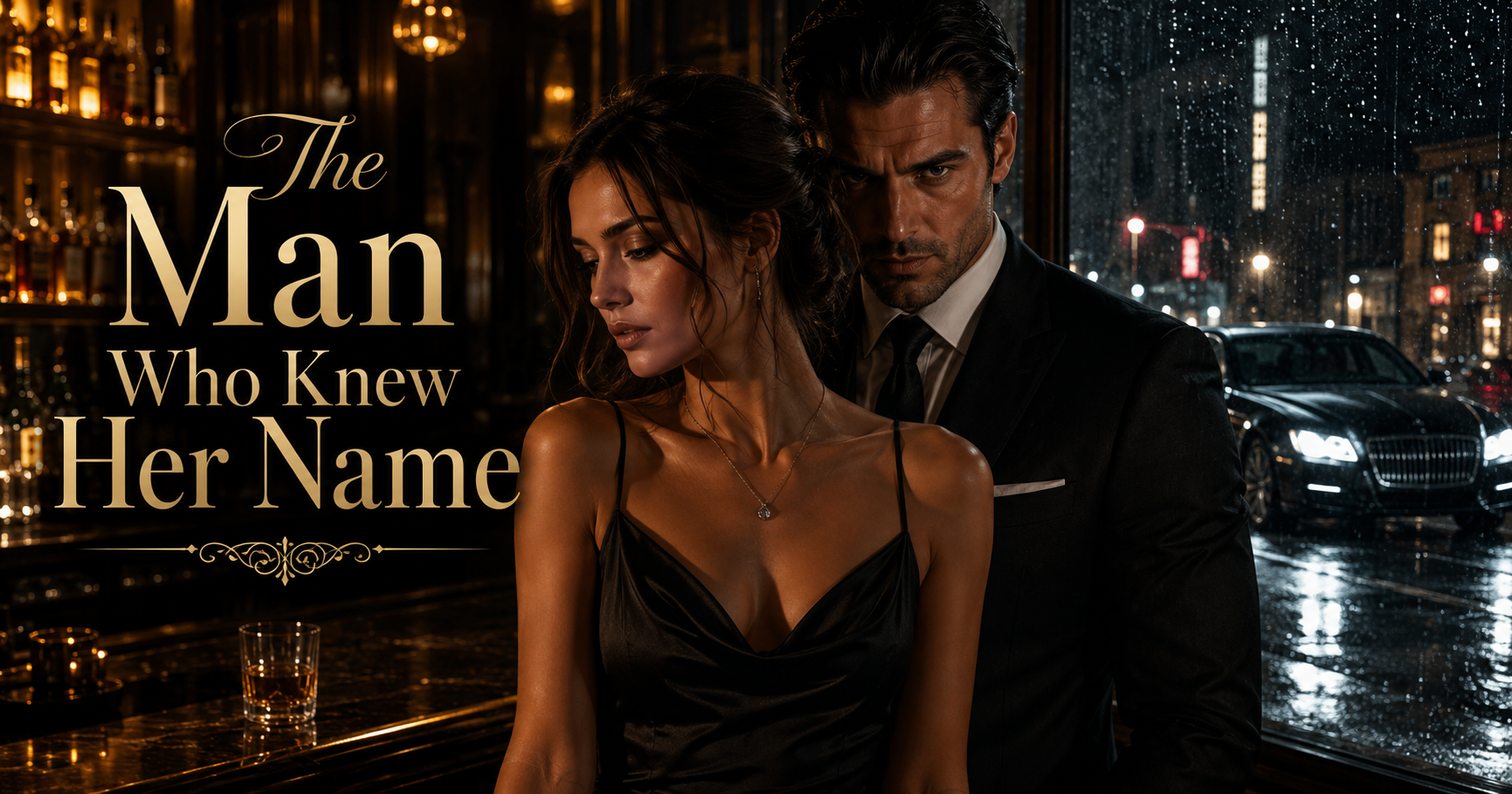
Elena Hart had not planned to get drunk in a black dress on a Thursday night.
She had planned, very foolishly, to be engaged.
By nine in the evening, the diamond ring was gone from her finger, the apartment she had decorated with soft lamps and hopeful lies felt like a crime scene, and the man she had almost married had left behind nothing but an empty closet, a half-dead orchid, and one final message that said, I’m sorry. I need a life that feels less complicated.
Less complicated.
Elena read the words three times while standing in the middle of her bedroom, still wearing the silk dress she had bought for their anniversary dinner. Then she laughed so hard her throat burned.
Nolan Pierce had never wanted a simple life. He wanted a life where someone else carried the weight, cleaned up the mess, paid the bills on time, remembered his mother’s birthday, smiled through his excuses, and forgave him before he had to ask. He did not want less complication. He wanted less consequence.
So Elena did the one thing she had always judged other heartbroken women for doing in movies.
She went out.
The bar was called The Gilded Room, though there was nothing golden about the mood inside her chest. It sat behind an unmarked door on the rain-washed corner of Mercer and Ninth, all velvet booths, low amber lights, black marble tables, and music soft enough to make bad decisions sound elegant.
Elena ordered a martini because she hated martinis and tonight she wanted everything to taste wrong.
“To forgetting,” she whispered, lifting the glass to no one.
She drank too fast.
The first sip was terrible.
The second was worse.
The third made her stop feeling the shape of Nolan’s absence in the chair across from her.
She was staring at the reflection of herself in the dark window when a man took the empty seat beside her without asking.
Not beside beside. Not close enough to be rude. Just near enough that the air changed.
Elena noticed his hands first. Clean, strong, unadorned except for a silver watch that looked older than fashion and more expensive than a car. Then his suit, tailored with the kind of quiet perfection that did not need attention because attention came to it. Then his face.
Dangerous was the first word her mind offered.
Not handsome, though he was. Not rich, though he clearly was that too. Dangerous.
He had black hair brushed back from a face built out of restraint: sharp jaw, straight nose, mouth too calm, eyes the gray of a storm before lightning decides where to strike.
He looked at her drink.
“That is not what you wanted,” he said.
His voice was low, controlled, almost bored.
Elena turned her head slowly. “You don’t know what I wanted.”
“No,” he said. “But no one orders a martini and looks that betrayed unless they are punishing themselves.”
She should have ignored him.
She should have moved seats.
She should have told him that women alone in bars were not invitations for strange men with beautiful voices and unsettling eyes.
Instead, she said, “Maybe I deserved punishment.”
His gaze moved to her left hand. To the faint pale line where her ring had been.
Something unreadable passed across his face.
“No,” he said. “You didn’t.”
The certainty in his voice irritated her more than sympathy would have.
“You don’t know that either.”
“I know enough.”
Elena laughed once. “That is the most arrogant thing anyone has said to me today, and my ex-fiancé ended a four-year relationship with the emotional depth of a weather notification.”
The man’s mouth barely moved, but somehow she knew he was amused.
“Ex-fiancé,” he repeated.
“Very recent. Practically still smoking.”
“Did he hurt you?”
The question came too quickly. Too coldly.
Elena looked at him more carefully.
Most men asked questions like that with curiosity, hunger, or the lazy hope that pain might make a woman easier. This man asked like he was taking inventory before a war.
“He disappointed me,” she said.
“That is not what I asked.”
“No, he didn’t hit me. He didn’t threaten me. He didn’t do anything dramatic enough to earn a revenge fantasy.” She picked up her glass again. “He just emptied me out slowly and left when there was nothing convenient left to take.”
For the first time, the man looked away.
The music shifted. Someone laughed too loudly at the other end of the bar. Rain scratched at the windows like fingernails.
Elena should not have said any of that to him.
She did not even know his name.
“What about you?” she asked. “Do you make a habit of interrogating sad women in expensive bars?”
“No.”
“Then what am I? A special occasion?”
His eyes returned to hers.
“Yes.”
The word landed between them with a weight she could not explain.
Elena’s pulse changed.
She told herself it was the alcohol. The lighting. The humiliation of being left. The animal need to feel wanted by someone who had not already learned how to take her for granted.
“What’s your name?” she asked.
He hesitated.
That was the first warning.
“Adrian,” he said.
“Just Adrian?”
“For tonight.”
Elena smiled without warmth. “How mysterious. Should I be impressed or concerned?”
“Both would be sensible.”
She should have left then.
Instead, she slid off her stool, stepped closer, and placed her empty glass on the bar between them.
“Adrian-for-tonight,” she said, “I am tired of being sensible.”
His eyes dropped to her mouth.
“Elena,” he said softly.
She froze.
The room did not go silent, but it felt like it did.
She had not told him her name.
Her hand tightened around the stem of the glass.
“What did you call me?”
Before he could answer, the front door opened.
Three men entered.
They did not look like guests. They wore coats too heavy for the weather, eyes too alert for drinking, and they scanned the room with the quick, ugly efficiency of men looking for a target.
Adrian stood.
The change in him was immediate. No panic. No surprise. Just a stillness so complete it frightened her.
“Elena,” he said, “walk to the back door.”
Her heart kicked hard.
“No.”
“Now.”
“You know my name.”
“I know many things. Move.”
One of the men near the door reached inside his coat.
Adrian’s hand closed around Elena’s wrist, not painfully but with absolute decision, and he pulled her behind him just as a glass exploded on the shelf above the bar.
Screams tore through the room.
Elena ducked, shards raining across the marble like ice. Adrian moved with terrifying precision, shielding her body with his own as he drove them toward a narrow hallway behind the bar.
A bartender shouted, “Mr. Cross!”
Elena heard it.
Mr. Cross.
Adrian Cross.
That name meant something. She had seen it in headlines she never clicked on, whispered in investor meetings, printed on donor plaques in museums, attached to restaurants, hotels, shipping companies, and rumors that never made it into polite conversation.
Adrian Cross, the man no one accused out loud.
Adrian Cross, the shadow behind half the city.
Adrian Cross, who had known her name before she gave it.
He shoved open a service door, and they burst into the alley. Rain struck Elena’s face, cold enough to sober her.
A black car waited with the engine running.
A large man stepped out and opened the rear door.
“Boss,” he said.
Elena stopped moving.
Boss.
Adrian looked at her, and for the first time since he had sat beside her, something cracked through his control.
Regret.
“Get in the car,” he said.
Elena backed away from him. Behind them, shouting rose inside the bar. Somewhere, another shot cracked like the city breaking its teeth.
“You know my name. People are shooting at you. He called you boss.” Her voice shook despite everything she did to steady it. “Who are you?”
Adrian’s eyes hardened, not at her, but at the truth.
“The man standing between you and the people who want you dead.”
That was how Elena Hart, abandoned bride-to-be and interior architect with a ruined heart, climbed into a crime lord’s car on the worst night of her life.
And that was only the beginning.
Adrian took her to a house built into the hillside above the city, all steel gates, rain-black glass, pale stone, and silence so expensive it felt staged. Security cameras watched the driveway. Men in dark coats moved like ghosts near the walls. Inside, the house smelled faintly of cedar, coffee, and danger pretending to be order.
Elena stood in the entryway, dripping rain onto a polished floor that probably cost more than her student loans.
“I want my phone,” she said.
Adrian removed his coat and handed it to a man waiting near the stairs.
“No.”
She blinked. “Excuse me?”
“No phone. Not until I know who is listening.”
“Do you hear yourself when you speak, or does the villain music drown it out?”
His mouth tightened.
“You are angry. Good. Stay angry. It will keep you alert.”
“It will also make me throw something.”
“Preferably not the Ming vase.”
She looked at the blue-and-white vase beside her.
Then she picked it up.
Every man in the room went still.
Adrian did not move.
Elena held it for three seconds, breathing hard, then set it back down with exaggerated care.
“I am calling the police.”
“If you call the police, Nolan Pierce dies before morning.”
The name hit harder than the gunshot.
Elena stared at him.
“What did you say?”
Adrian walked toward the windows. Rain blurred the city below into silver lines and scattered light.
“Your ex-fiancé is involved with the men who attacked us tonight.”
For one strange second, Elena almost laughed.
“Nolan?” she said. “Nolan panics when a waiter asks him to choose still or sparkling.”
“He also helped move twelve million dollars through fake renovation contracts tied to your design firm.”
The floor seemed to tilt.
“No.”
“Yes.”
“No, Nolan is selfish, vain, insecure, allergic to accountability, and once cried because a hotel gave him a room without a balcony. He is not some criminal genius.”
“I didn’t say genius.”
That sounded worse because it sounded possible.
Elena backed away.
“My firm?”
“Your project codes. Your approval credentials. Your digital signature on three contracts.”
“My signature?”
“Copied. Not written by you. Good enough to fool a busy board. Not good enough to fool me.”
Her mind flashed through memories she had not known were evidence: Nolan borrowing her laptop because his was dead, asking what kind of clients paid in stages, joking that her job was just “making rich people’s walls look expensive,” standing behind her while she logged into the firm’s system, kissing her shoulder as she typed the password.
Her stomach turned.
“You knew before tonight,” she said.
“Yes.”
“And you just watched?”
“I investigated.”
“You watched.”
Adrian said nothing.
Something inside Elena went colder than fear.
“Did you sit beside me at that bar because you were following me?”
“Yes.”
“Did you know he left me?”
“Yes.”
Her throat tightened.
“And what was the plan? Wait until I got drunk enough to confess to being a criminal?”
His expression did not change, but his voice lowered.
“Until tonight, I did not know whether you were helping him or being used by him.”
The words were not loud.
They did not need to be.
Elena felt them like a slap.
“You thought I helped him?”
“I thought you might have.”
“And now?”
Adrian’s gaze softened by a fraction.
“Now I know you were betrayed.”
That was the first time Elena almost cried.
Not because Nolan had used her. Not because someone had fired a gun near her head. Not because she was standing in a mafia boss’s house wearing a wet silk dress and one broken earring.
Because the most dangerous man she had ever met had named the wound correctly.
Betrayed.
Yes.
That was the word.
Adrian gave her a guest room with a lock on the inside. He had clothes sent in her size but left them outside the door. He sent coffee in the morning and did not knock. When she refused breakfast, he sent toast. When she refused toast, he sent an apple. When she threw the apple at the wall, no one came in to scold her.
For two days, Elena stayed inside the glass house above the city while Adrian’s people pulled apart the life Nolan had built from her trust.
She learned Adrian Cross in fragments.
He controlled the Cross family, an old criminal empire that had spent years washing itself clean in public while keeping knives beneath the table in private. He owned hotels, art warehouses, import companies, nightclubs, and enough secrets to make judges suddenly remember appointments in other rooms.
He was feared.
He was calculated.
He was not gentle in the way ordinary men were gentle.
But he never entered her room without permission.
He noticed she took her coffee with cinnamon.
He let her sit at the far end of the dining table without forcing conversation.
When she snapped at him, he did not snap back.
That annoyed her more than cruelty would have.
On the third night, Elena found him in a room lined with old books and locked cabinets. A single lamp burned on the desk. In its circle of light sat a photograph of two boys standing on a dock, one dark-haired and serious, the other laughing into the wind.
Adrian did not hide the photograph when she entered.
“Your brother?” she asked.
“Yes.”
“What was his name?”
“Julian.”
The way he said it told her Julian was dead.
Elena moved closer but did not sit.
“What happened?”
Adrian looked at the photograph for a long time.
“Nolan’s new friends happened.”
The rain filled the silence.
Adrian’s voice remained calm, but something beneath it had been broken long ago and repaired badly.
“My brother discovered they were using our ports to move synthetic drugs through medical supply shipments. He wanted to take it to federal agents. I told him to wait. I told him I would handle it inside the family.”
“And?”
“They killed him before I handled anything.”
For the first time, Adrian Cross looked less like a monster from another world and more like a man locked forever inside one terrible mistake.
Elena sat down across from him.
She did not comfort him. Not with touch. Not with soft lies. She had been softened for men before and mistaken it for love.
“I’m sorry,” she said.
He looked at her then.
Most men wanted grief to become useful. They wanted a woman to make it pretty, forgive it, turn it into a reason they could still be loved.
Adrian did not ask that of her.
He simply let her sit in the room with the truth.
Somehow, that felt more intimate than the kiss that came later.
It happened near midnight after an argument sharp enough to cut the air.
Adrian wanted to send her out of the city under another name until the investigation was finished.
Elena refused.
“I am not vanishing because Nolan used me,” she said.
“This is not about pride.”
“No. It is about my life.”
“Your life is what I am trying to protect.”
“You do not get to protect me by erasing me.”
His jaw flexed.
“I will not let them take you.”
The words came out too raw.
Elena stopped.
Adrian looked away at once, as if the sentence had escaped without permission.
But she had heard it.
Not hurt you.
Take you.
She crossed the room slowly.
“Adrian.”
“Don’t.”
“Don’t what?”
“Look at me like I am better than I am.”
Elena stood in front of him.
“I am looking at you like a man who has done terrible things and still knows there is a difference between protecting someone and owning them.”
His eyes lifted to hers.
“That difference matters to you?”
“It is the only reason I am still here.”
For a long moment, neither of them moved.
Then Adrian touched her face with the back of his fingers, so lightly it almost hurt.
“You should be afraid of me,” he whispered.
“I am.”
His hand stilled.
Elena leaned closer.
“But Nolan never scared me, and look what he did.”
The kiss was not sweet.
It was careful first, as if both of them understood they were stepping toward something with teeth. Then it became less careful. Elena gripped his shirt in both hands. Adrian kissed her like a man fighting himself and losing on purpose.
Then his phone rang.
He pulled back, breathing hard.
The moment he answered, his expression changed.
“What?” Elena asked.
Adrian ended the call.
“They found Nolan.”
Nolan Pierce was hiding in a private suite above a closed casino outside the city with his new girlfriend, Selene, two passports, and an encrypted drive containing enough evidence to either clear Elena’s name or destroy it completely.
Adrian wanted Elena to stay behind.
Elena laughed in his face.
That was how she found herself in the back of another black car before dawn, wearing borrowed boots, a dark coat, and the expression of a woman who had cried enough to become dangerous.
They reached the casino while the sky was still bruised purple.
The building had once been glamorous. Now its neon was dead, its windows dark, its carpets smelling of dust, spilled champagne, and bad luck. Adrian’s men handled the guards without noise. Elena followed him through a side entrance and down a corridor lit by emergency lights.
Suite 804.
Adrian knocked once.
Nolan opened the door with irritation already on his face.
Then he saw Elena.
The color drained out of him.
“Elena?”
She looked at the man she had once planned to marry.
He was thinner than she remembered, unshaven, eyes red with panic. Behind him, Selene stood near the window in a silver dress, clutching a handbag with both hands. She looked frightened, not glamorous. Young, not victorious.
Elena felt no jealousy.
No longing.
Only the strange grief of realizing how small the person who broke her truly was.
“You used my signature,” she said.
Nolan swallowed.
“I can explain.”
Adrian stepped into the room.
“No,” he said. “You can confess.”
Nolan’s eyes darted to him, then back to Elena.
“You don’t understand. They would have killed me.”
Adrian’s voice went cold.
“They killed my brother.”
Nolan flinched.
Selene began to cry silently.
Elena turned to her.
“Did you know?”
Selene shook her head hard.
“He told me it was taxes. Offshore accounts. Business trouble. I didn’t know about you. Not really.”
Nolan snapped, “Shut up, Selene.”
There he was.
The real Nolan.
Not charming. Not helpless. Not wounded.
Just cruel when cornered.
Elena walked past Adrian and held out her hand.
“The drive.”
Nolan gave a nervous laugh.
“Elena, sweetheart—”
Adrian moved so fast Nolan did not finish the word. He grabbed him by the collar and slammed him against the wall hard enough to knock a painting crooked.
“Do not call her that.”
Nolan’s face crumpled.
“It’s in the safe! Behind the minibar. Code is her birthday.”
Elena stared at him.
“My birthday?”
Nolan looked away.
Something inside her went very quiet.
She opened the safe herself. Inside were cash bundles, passports, a pistol, the encrypted drive, and a velvet ring box.
For a moment, Elena simply looked at the box.
Then she opened it.
Inside was her engagement ring.
The same one Nolan had taken back two days earlier with trembling apologies and wet eyes.
He had not kept it because it hurt too much.
He had kept it because diamonds were expensive.
Selene stared at the ring.
Elena started laughing.
Not because anything was funny, but because the final thread of heartbreak had snapped cleanly, and the sound that came out of her was freedom arriving badly dressed.
She handed the drive to Adrian.
Then she looked at Selene.
“You can do better.”
Selene wiped her face.
“I think I already knew that.”
Nolan began begging then.
Not apologizing.
Begging.
There was a difference.
Adrian wanted to take him. Elena could see it in the stillness of his shoulders, in the way his men waited near the door, in the old grief behind his eyes.
But she also knew something else.
If Adrian killed Nolan, part of Elena’s life would always belong to this room.
So she put her hand on Adrian’s arm.
“No.”
Adrian looked at her.
“He goes to the authorities,” she said. “Alive.”
Nolan sagged with relief.
Elena turned to him.
“Not because you deserve mercy. Because I deserve peace.”
By noon, Nolan Pierce was in federal custody. By evening, three men tied to Julian Cross’s murder were arrested. The drive did not make Adrian innocent, but it cleared Elena’s name.
The city called it a financial scandal.
The news called Nolan a disgraced consultant.
No one mentioned Adrian Cross.
Three weeks later, Elena stood on the roof of the design firm that had almost fired her, looking out over a city washed clean by rain.
Adrian stood beside her with his hands in his coat pockets.
“You can still leave,” he said.
Elena looked at him.
“You keep saying that.”
“You should keep knowing it.”
She smiled faintly.
“My apartment is mine again. My work is mine again. My name is mine again.” She looked across the skyline. “For the first time in years, I am not staying because I am afraid to go.”
Adrian was quiet.
“And if you stay?” he asked.
She turned to him.
“Then it will not be because you saved me.”
His eyes searched hers.
“Why, then?”
“Because when I was falling apart, you did not ask me to become easy to love.”
Something moved across his face, small and unguarded.
Elena took his hand.
Adrian Cross was not a prince. He was not redeemed by a kiss. Life was not that simple, and Elena had stopped trusting simple stories.
But he was trying.
Quietly. Seriously. Day by day.
He gave names to prosecutors. He cut old alliances. He moved clean money into real projects and dirty secrets into daylight. Not because Elena demanded it, but because Julian had once wanted a better world, and Adrian had finally run out of excuses for refusing to build one.
Months later, Elena opened her own studio.
Her first major project was a youth arts center near the waterfront, funded anonymously through a foundation named after Julian Cross. On opening day, children ran through halls full of glass, sunlight, paint, and noise. Selene sent flowers with a card that read, You were right. I did better.
Adrian stood near the back, away from cameras, watching Elena as if the room had only one person in it.
That evening, after everyone left, she found him beneath the skylight.
“You’re hiding,” she said.
“I’m observing.”
“You’re brooding.”
“I have been told it suits me.”
She laughed, and he smiled for real.
Not briefly.
Not secretly.
For real.
Elena walked into his arms.
A year earlier, she had thought heartbreak was an ending. She had thought humiliation meant she had lost.
But sometimes the life that falls apart is only the decoy.
Sometimes betrayal is the door.
And sometimes a woman goes out drinking to forget the wrong man…
Only to meet the dangerous one who already knows her name.
Adrian kissed her beneath the skylight, gentle and certain.
Outside, the city glittered after rain.
And for the first time in a long time, Elena did not feel rescued.
She felt free.

