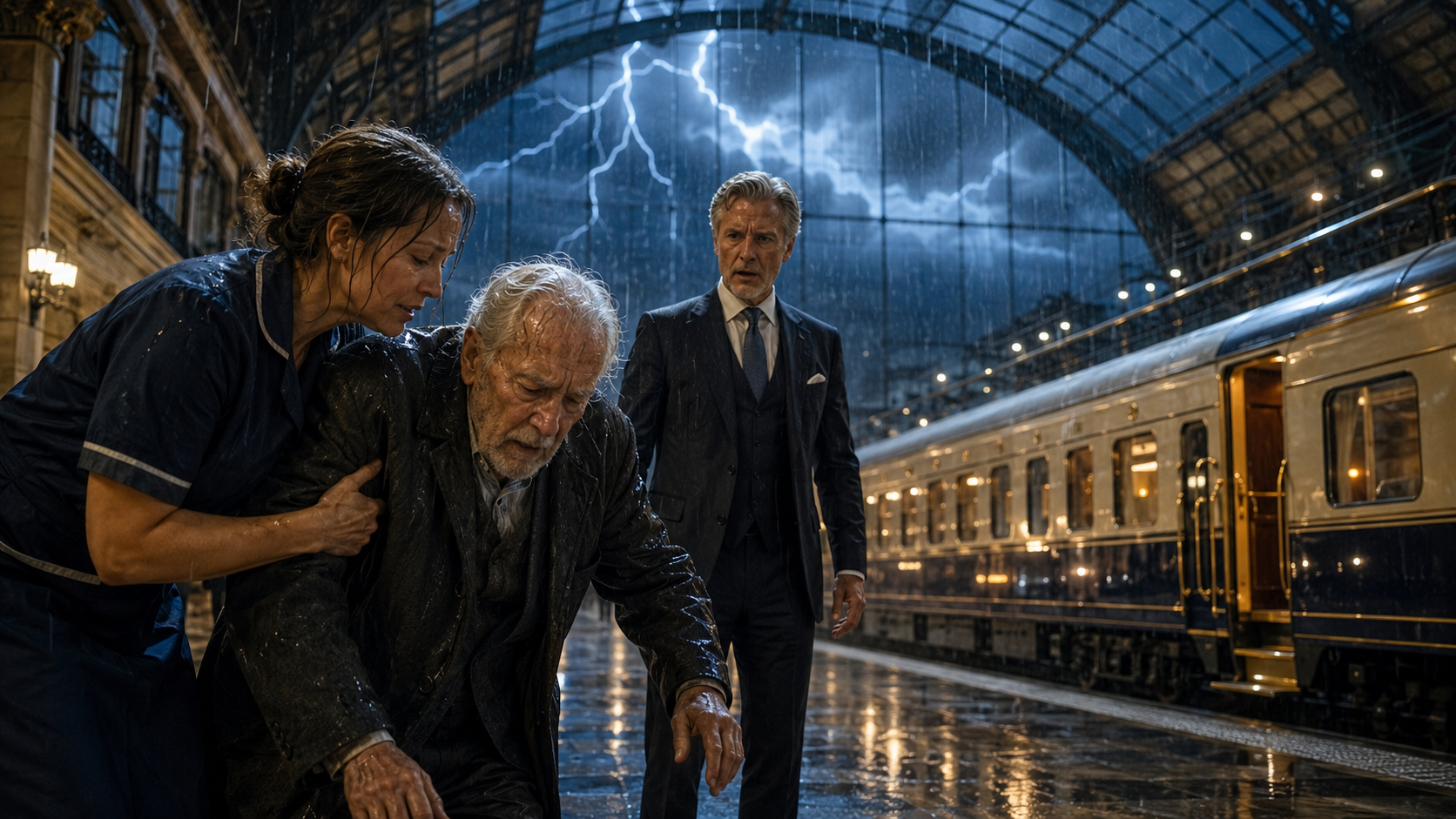
Gideon shifted in his wheelchair.
Bennett looked at him.
“My father has been identified.”
Workers turned toward Gideon.
Franklin continued.
“His medical condition raises further concerns.”
“My father’s illness does not erase his expertise.”
“It may affect the reliability of his statements.”
“The data confirms his warning.”
“After an unauthorized employee intervention.”
Bennett looked toward Elena.
“Yes. An employee intervened.”
Franklin folded his hands.
“Miss Marquez abandoned her assigned position, used restricted communications, entered a maintenance facility, and participated in an emergency override without certification.”
“That is correct.”
“Then she should be terminated.”
“No.”
“Rules cannot disappear because the outcome was fortunate.”
Bennett stepped closer to the microphone.
“The outcome was not fortunate. It was earned by the only person in this company who treated uncertainty as a reason to investigate instead of an excuse to ignore someone.”
He looked across the employees.
“Elena Marquez saw a sick man in our terminal. She did not know he had railway knowledge. She did not know he was my father. She believed he had nothing to offer her, and she helped him anyway.”
Elena lowered her gaze.
“She risked money reserved for her daughter’s medicine because our company had created a culture in which no manager believed a helpless person deserved inconvenience.”
Franklin’s voice sharpened.
“This is becoming a moral performance.”
“No. It is an operational diagnosis.”
Bennett pointed toward the employees.
“These people see failures before executives do. Cleaners see leaking ceilings. Porters see broken ramps. Conductors hear strange wheels. Kitchen workers notice failing refrigeration. Dispatchers recognize patterns long before an annual report does.”
He faced the board screens.
“We trained them to remain silent because silence protects schedules. Then we congratulated ourselves for efficiency.”
Another director spoke.
“What are you proposing?”
“Immediate independent review of every safety alert dismissed during Victor’s tenure. Employee authority to stop service without retaliation when credible danger is observed. A medical emergency fund. Paid safety training for hourly workers. Direct reporting channels outside operations management.”
Franklin shook his head.
“The cost would be enormous.”
“The cost of Raven Cut would have been measured in coffins.”
Silence spread beneath the glass roof.
Bennett continued.
“I am also canceling the Harrington expansion agreement.”
The terminal erupted in whispers.
One board member stood from his chair.
“You cannot do that unilaterally.”
“The agreement requires us to reduce inspection delays by forty percent. After last night, that target is indefensible.”
“We will lose hundreds of millions.”
“Yes.”
“Our share price will collapse.”
“Possibly.”
Franklin stared at him.
“You are sacrificing the company.”
Gideon raised one hand.
Dr. Nand tried to stop him from standing, but he insisted.
Elena helped him reach the microphone.
His voice was weak, yet the terminal became quiet.
“I built warning systems because a friend died when men decided repairs were too expensive.”
He looked toward the board screens.
“Years later, I drove away my son because I believed his ambition would destroy everything I protected.”
Bennett watched him.
“I was wrong about my son,” Gideon said. “But I was right about one thing. A railway is a promise made to strangers. They enter your train believing you care whether they arrive.”
He turned toward Bennett.
“Money can purchase steel, leather seats, polished stations, and names carved into clocks. It cannot purchase trust after you teach people their lives are less important than your schedule.”
Gideon’s breathing became uneven.
Elena steadied him.
He continued.
“This woman believed me when I looked worthless. My son believed me only after memory proved what pride would not. I do not say that to shame him.”
Bennett’s eyes filled.
“I say it because listening late is still better than never listening.”
Workers began applauding.
Not the board.
The workers.
The sound grew beneath the station roof until mechanics, cleaners, drivers, cooks, and conductors were standing.
Franklin waited for the noise to fade.
“The board will vote on temporary leadership.”
Bennett nodded.
“Proceed.”
He did not leave the platform.
The votes appeared one by one.
Three supported his removal.
Two abstained.
Six voted for him to remain.
Bennett released a breath.
Franklin’s face disappeared from the screen.
The terminal clock struck seven.
For the first time in his career, Bennett Ashford had saved his company by accepting that he might lose it.
9. AFTER THE LAST DEPARTURE
Change did not arrive as a ceremony.