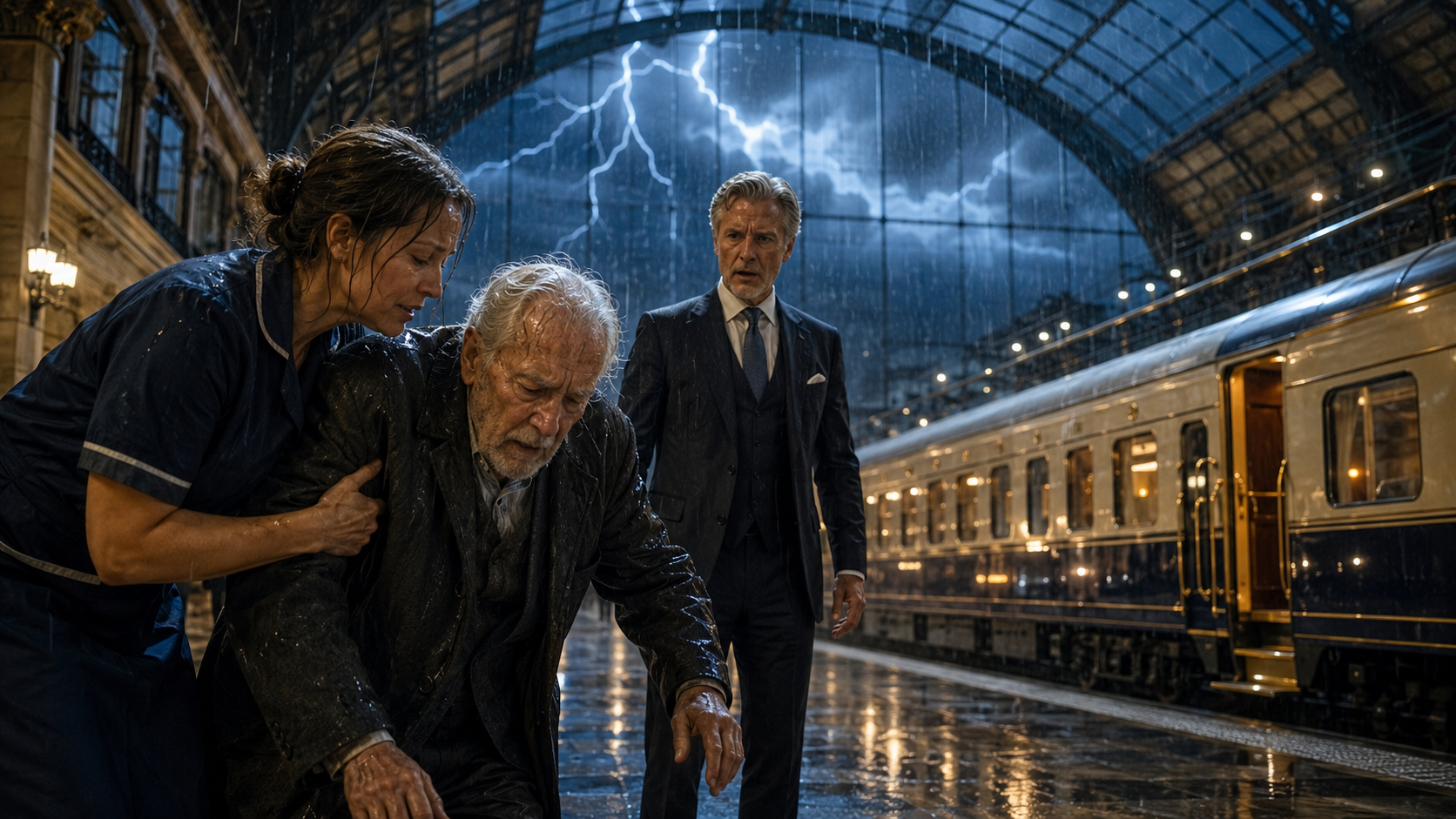
It arrived as paperwork, arguments, canceled routes, angry investors, and engineers working through the night.
Aurora Meridian’s share value fell thirty-two percent during the following month.
Three expansion projects were postponed.
Two directors resigned.
The Harrington group sued.
Bennett sold his private aircraft and one hotel division to finance safety repairs without cutting wages.
Newspapers declared that his empire was shrinking.
He agreed.
Some things needed to become smaller before they could become better.
Elena did not accept the first job he offered her.
“Director of Passenger Compassion?” she said, reading the title.
Bennett sat across from her in his office.
“You dislike it.”
“It sounds like I’ll be paid to smile beside sick people in photographs.”
“That was not the intention.”
“Then choose a title with authority.”
“What do you suggest?”
“Passenger Safety and Human Response.”
He changed it.
She also rejected the salary.
“This is less than the operations managers earn.”
“You have not managed a department before.”
“Then why are you giving me one?”
Bennett adjusted the number.
She rejected the office on the executive floor.
“My staff works near the platforms.”
“You are permitted an office with windows.”
“I need an office near the people who report problems.”
A former baggage room beside Platform Four was renovated instead.
Elena hired a retired paramedic, two dispatchers, a disability-access specialist, and a former dining-car attendant who spoke five languages.
She created training for dementia, seizures, panic attacks, homelessness, trafficking indicators, and medical emergencies.
She also created a rule Bennett disliked.
Any employee could stop a train.
The authority required a documented reason, but no manager could punish an employee for using it in good faith.
“Someone will abuse this,” Bennett warned.
“Then investigate afterward.”
“A false stop could cost hundreds of thousands.”
“A failure to stop could cost lives.”
He approved the rule.
The company’s first medical emergency fund was named the Walter Pike Fund, after the track inspector who died at Raven Cut.
Bennett had suggested naming it after Gideon.
Elena refused.
“Your father is alive.”
“That is usually considered an advantage.”
“Then honor him by listening to him, not by turning him into a plaque.”
Gideon moved into a small restored stationmaster’s cottage beside the terminal gardens. Nurses rotated through the house, but Bennett visited every morning before work and most evenings after the final departure.
Some days Gideon remembered everything.
Other days he believed Bennett was still seventeen.
Once, he demanded that Bennett finish his mathematics homework before touching the signal equipment.
Bennett sat at the kitchen table and completed three pages of equations.
Gideon graded them.
“You have become careless.”
“I run a railway.”
“That is not an excuse for bad fractions.”
On difficult mornings, Gideon asked where Abigail was.
Bennett stopped telling him she had died.
Instead, he said, “She loved the rain.”
Gideon would look through the window and smile.
Sophie became a regular visitor.
She built model bridges across the cottage floor and asked Gideon questions no adult would ask.
“Do you know when you forget something?”
“Sometimes.”
“Where does it go?”
“I imagine it waits in another room.”
“Can you go get it?”
“Not always.”
“Then I’ll remember it for you.”
She began carrying a notebook called Gideon’s Other Room.
Whenever he told her a story, she wrote it down.
Most words were misspelled.
Gideon claimed that improved them.
Bennett and Elena learned to work beside each other before they learned anything else.
They disagreed in meetings.
She accused him of announcing decisions before listening.
He accused her of treating budgets like moral failures.
She reminded him that numbers represented choices.
He reminded her that choices without money remained wishes.
Neither won often.
Both kept returning.
One evening, almost a year after the landslide, they stood alone beside the Northstar Limited.
The train had finally been approved for service after months of testing.
Its first route would avoid Raven Cut until the corridor was completely rebuilt.
Elena ran one hand along the blue carriage.
“You kept the name.”
“It cost too much to repaint.”
“That may be the least romantic statement ever made beside a luxury train.”
Bennett looked at her.
“Was romance expected?”
“No.”
“Good.”
They stood in silence.
Then he said, “Have dinner with me.”
“We have dinner in meetings twice a week.”
“Without reports.”
“We would still argue about work.”
“Probably.”
“Would Sophie come?”
“If she wants.”
“She will.”
“Is that a problem?”
“No.”
Elena studied him.