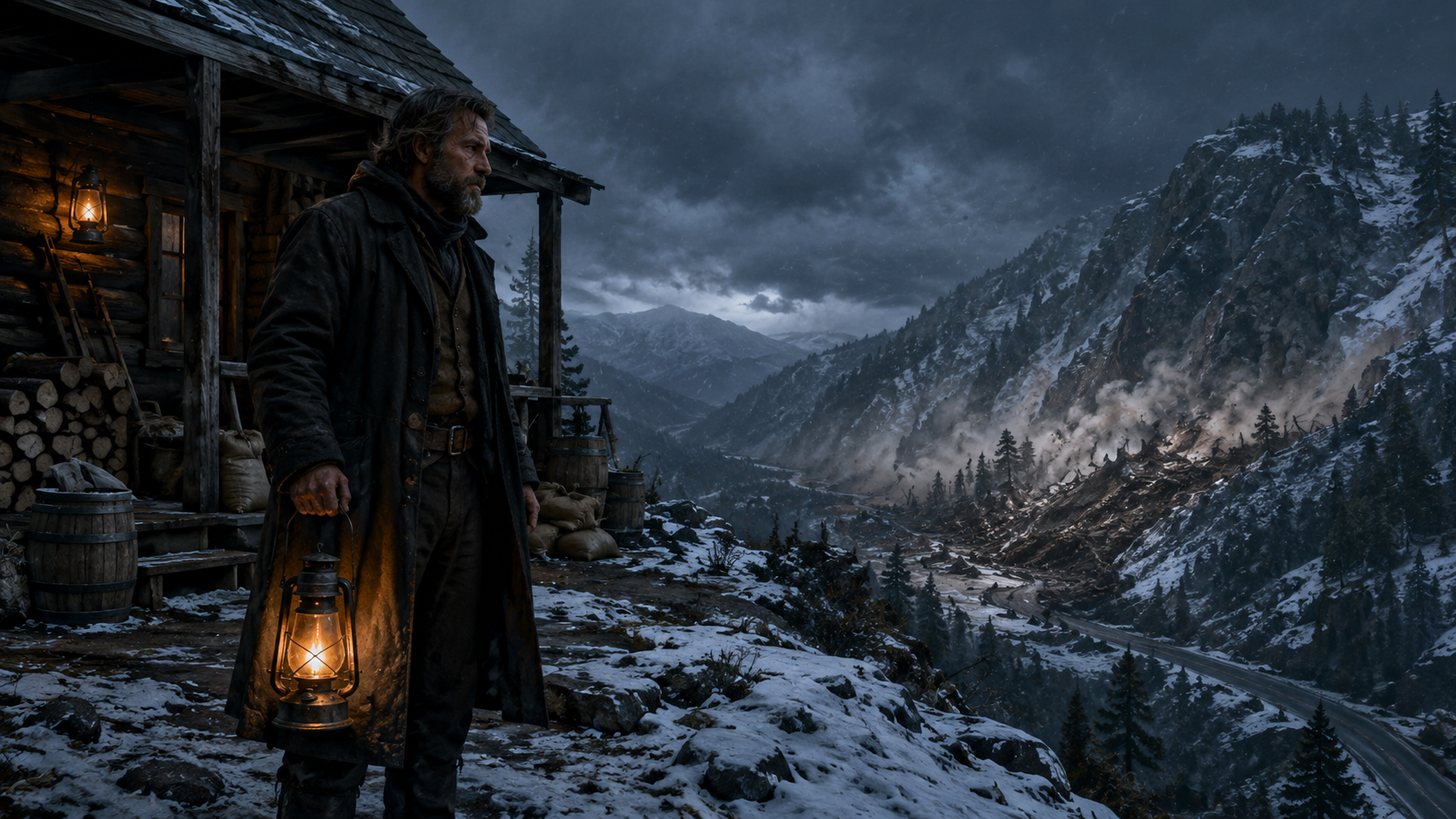
Nathaniel looked at the mayor’s hands. No calluses. No cracked nails. A ring on one finger set with a red stone like a drop of blood.
“You want the upper spring,” Nathaniel said.
Vane’s smile thinned. “Everyone wants clean water, Mr. Crowe. Civilization is built by men who understand value.”
“Civilization dies when men confuse value with ownership.”
The mayor’s cane tapped once against the desk.
“You have become dramatic since Clara died.”
Nathaniel went still.
There were men who struck with fists, men who struck with knives, and men like Elias Vane who learned where a wound lay and pressed it politely.
“She always liked practical men,” Vane continued. “It surprised me when she chose you.”
“She chose a life,” Nathaniel said.
“She chose poverty.”
“She chose freely.”
Vane’s mouth hardened before the smile returned.
“You know,” he said, “I have tried to be generous. I offered to buy that ridge claim twice. I offered enough to put your daughter in a proper house. A school. A society. Instead you keep her among traps, smoke, and jars like some wild thing.”
“She reads better than half your council.”
“She needs people.”
“She has people.”
“No, Crowe. She has you. And whatever ghosts still sit at your table.”
Nathaniel’s hands closed once, then opened.
“You hear me now,” he said. “If that slope comes down, Briar Hollow will have no road, no freight, no doctor from Mercy Crossing, no medicine, and no grain after the store empties. Tell your council. Tell folks to put by food.”
Vane gave a soft sigh, as if Nathaniel were a child he had grown tired of correcting.
“Your grief has turned into a weather vane.”
“My grief buried three people. It knows the cost of being late.”
For the first time, Vane’s voice lost its velvet.
“Get out of my office.”
Nathaniel did.
By sundown, the whole town knew Mad Crowe had warned the mayor that the mountain was about to fall.
By breakfast the next day, the story had grown teeth.
At Bell’s Store, Amos set a jar of beans on the counter and laughed.
“Maybe we ought to sell him the whole barrel before doom arrives.”
“Don’t joke,” said Delia Pratt, whose twin boys had chased Nathaniel’s wagon once. “He might dig a tunnel under the church next.”
One man slapped his knee. “I heard he’s been counting acorns.”
Another said, “I heard he keeps bones in the cellar.”
Amos leaned forward. “I heard he sleeps with flour sacks so he can feel less lonely.”
Everyone laughed.
Not everyone.
Dr. Miriam Holt stood near the door holding a paper-wrapped packet of bandages. She was young for a physician, plain-spoken, and disliked by half the town for refusing to flatter fools. She had treated Juniper’s fever years ago from outside the shed door, passing instructions through Nathaniel because he would not let anyone cross the threshold.
She remembered the child surviving.
She also remembered the neighbors calling him cruel until they needed him to be right.
“Has anyone looked at the western slope?” she asked.
Amos shrugged. “The mayor says it’s nonsense.”
“The mayor is not a mountain.”
The laughter faded just a little.
Then someone coughed and changed the subject.
That evening, Miriam rode toward Wolfpine Ridge.
She found Nathaniel behind the cabin, hanging strips of venison inside a smokehouse he had built with stone walls and a low iron door. Juniper, now thirteen, sat on the porch with a slate in her lap. Birch slept beside her with his scarred ear twitching at flies.
“You came about the slope,” Nathaniel said without turning.
“I came because everyone else is laughing.”
“That isn’t a reason.”
“It is when people laugh instead of check.”
He glanced at her then. “You believe me?”
“I believe water, gravity, and old mine scars don’t care what Mayor Vane says.”
That almost made him smile.
Almost.
He wiped his hands on a cloth and pointed toward the ridge beyond the pines.
“Cracks widened after the last storm. Springs are showing where ground should be dry. Elk are bedding low. Birds left the cliff. You know what that means?”
“I know enough to be worried.”
“Worried is useful. Panic isn’t.”
Juniper looked up from her slate. “Papa says panic is fear with no chores.”
Miriam’s eyes softened. “Does he?”
“He says plenty of things people don’t listen to.”
Nathaniel looked away.
Miriam stepped closer to the smokehouse. “How much food do you have?”
“Enough for us.”
“That was not my question.”
“No,” he said. “But it was my answer.”
She studied him. “If the pass closes, people will come here.”
“People came when Clara was dying. They came with advice. Not wood. Not broth. Not blankets. Advice.”
“Children will come too.”
That reached him.
He resumed tying meat to the drying rods. His fingers moved carefully, but his face had gone hard.
“I know.”
Miriam heard the pain behind those two words and did not press it.