But this was different.
The governor was in the room.
The attorney general’s seal was on the table.
His dead daughter was alive, holding a child, and standing before witnesses.
The truth had not merely returned.
It had arrived documented.
“This is a family attack,” Charles said at last.
But his voice had lost authority. It sounded thin, almost petulant.
“She has always resented us.”
Claire nodded.
“I did resent you,” she said. “Then I outgrew it. This is evidence.”
The distinction seemed to disturb him more than hatred would have.
Hatred he understood. Hatred could be dismissed as emotional. Evidence could not.
Vanessa stepped forward, her composure finally splitting.
“This cannot happen tonight,” she said.
Her voice shook with outrage, but beneath it was terror. Not terror for her father. Not even terror for the stolen public money or the ruined communities or the people who might suffer when infrastructure failed because men like Charles had siphoned safety into profit.
No, Vanessa’s terror was social.
This was not the setting she had chosen. This was not the story she had arranged.
Her eyes darted toward Senator Marlowe, then Ethan, then the guests who had begun whispering behind raised hands.
“Ethan’s father is here,” she said. “We were going to announce—”
“Announce what?” Ethan asked.
His voice was flat, but Claire heard what lay beneath it. He already knew. Perhaps not the details, but the shape of it. Vanessa had orchestrated the evening too carefully. The guest list had not been random. The seating chart had not been accidental. Senator Marlowe’s presence at Charles Bennett’s birthday dinner had always meant something more than courtesy.
Vanessa turned toward Ethan.
For the first time all night, desperation cracked through her perfect posture. Her chin trembled before she lifted it. Her eyes shone, not with tears of remorse, but with the fury of a woman whose stage had been seized before her grand entrance.
“Our engagement,” she said.
Ethan stared at Vanessa as though he were seeing her for the first time, not as the woman in the red dress he had allowed himself to choose, but as someone standing in the wreckage of a lie and still trying to arrange the broken pieces into something flattering.
“You wanted to announce our engagement at your father’s birthday dinner,” he said slowly, each word sharpening as it left his mouth, “while your sister was secretly alive?”
Vanessa’s chin lifted, but her eyes flickered. “I didn’t know she was coming.”
“But you knew she was alive.”
The music from the quartet had stopped. No one had told them to stop playing, but some instinct for catastrophe had taken over, and now the ballroom was filled with the kind of silence that made every breath sound like testimony.
Vanessa said nothing.
That silence answered more cleanly than a confession.
Ethan took a step back from her. It was not dramatic. He did not fling his glass or curse or make a scene. He simply moved away as if proximity itself had become contaminating.
“My God,” he whispered.
Vanessa’s face hardened.
For a moment, Claire saw the old Vanessa—the girl who used tears as weapons when softness worked, and cruelty when softness failed. The sister who had learned early that beauty made people forgive her before she apologized. The daughter who had watched Diane long enough to master the art of making herself the victim in any room.
“Don’t you dare act innocent,” Vanessa snapped. “You believed it because it was convenient. You moved on because I was easier. You liked being told you were still a good man.”
A murmur passed through the guests.
Claire almost admired the precision of it.
Vanessa might have been selfish, vain, and cruel, but she was not stupid. Her words found the wound because she had helped make it.
Ethan’s face changed. Shame did not arrive all at once. It gathered slowly, dimming him from the inside. His gaze moved from Vanessa to Claire, then to Lily clinging to her mother’s skirt, cheeks wet and eyes wide.
“Claire,” Ethan said, voice low. “I am sorry.”
Claire looked at him.
Years ago, she would have wanted that apology like oxygen. She would have turned it over in her hands, inspected it for sincerity, pressed it against every bruise his betrayal had left. She would have needed him to understand what he had done, needed him to regret it loudly enough to make the past feel less lonely.
But time had changed the shape of need.
Her eyes stayed cool.
“I know.”
“I mean it.”
“I know that too.”
He swallowed. “Is there anything I can do?”
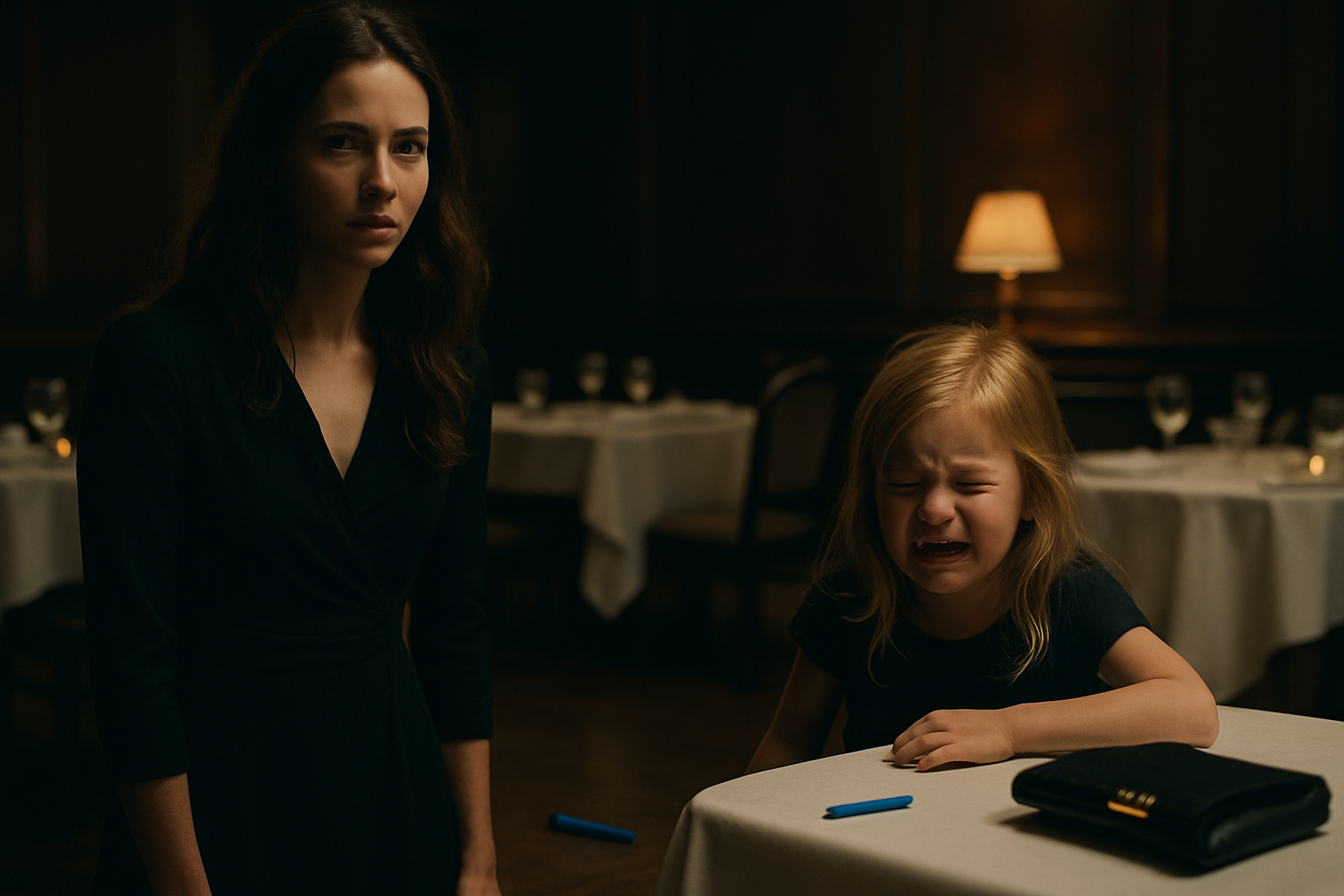
Claire looked down at Lily. Her daughter had stopped crying, but one hand was still tangled in the fabric of Claire’s dress, clutching so hard her knuckles had gone pale. Around them stood the people who had toasted Charles Bennett, admired Diane Bennett, envied Vanessa Bennett, and accepted Claire’s death because the living truth had been inconvenient.
“Yes,” Claire said. “Leave us alone.”