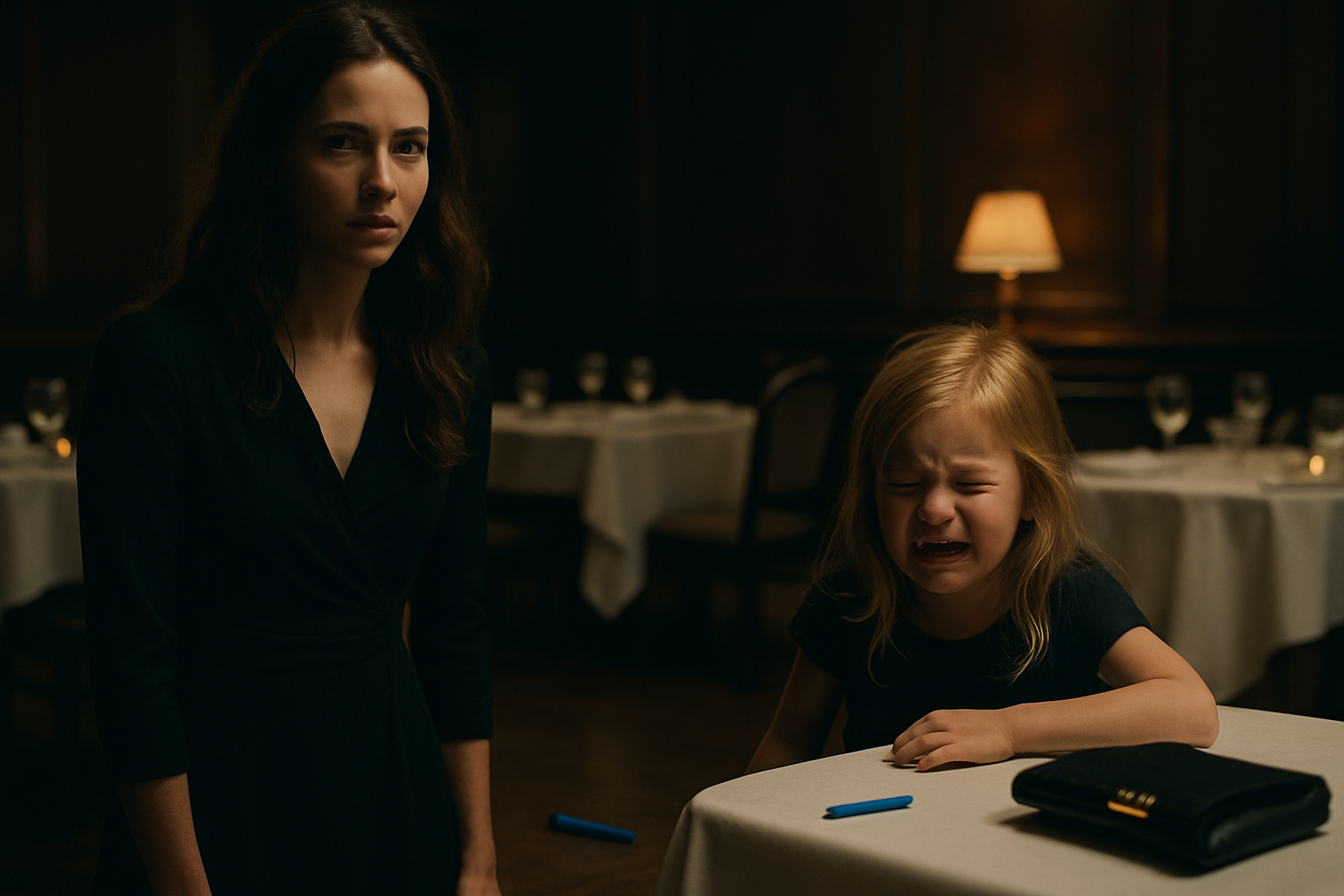
Ethan’s expression folded inward. For once, there was no argument left in him. No defense, no explanation, no noble gesture that could redeem the years. He accepted it because there was nothing else left to take.
Twelve minutes later, the first police officer arrived.
There were no sirens. No doors thrown open. No swarm of flashing lights reflected in the crystal chandeliers. The interruption came quietly through a side entrance, as though the law itself had dressed for the occasion and learned discretion.
One officer entered first, accompanied by one of Governor Pierce’s security officers. Then came another officer, and behind them a woman in a navy suit with a leather portfolio tucked under one arm. Claire recognized her immediately: Marisol Keene, a representative from the attorney general’s office.
She had been waiting in the building across the street for nearly an hour.
Claire had known there was a chance the confrontation would accelerate everything. She had hoped for it, in fact. Public lies had a way of forcing private crimes into the open faster than legal memos did.
Charles saw the officers, and in the space of one breath he seemed to age ten years.
His shoulders, which had always seemed designed for tailored tuxedos and handshakes, dropped as if someone had cut the invisible strings holding him upright. The color drained from his face. Even the expensive silver in his hair looked suddenly dull beneath the ballroom lights.
Diane whispered, “No. No, no, no.”
It was not a plea. It was denial dressed as prayer.
The first officer approached with professional calm. “Mr. Bennett, we need you to step outside with us for a conversation.”
Charles stiffened. “Absolutely not.”
“Sir—”
“I will not be questioned in the middle of my birthday dinner.”
“You’re welcome to call your attorney.”
That sentence frightened him more than handcuffs would have.
Claire saw it land.
Charles Bennett was a man who understood tone. For decades, he had lived inside the small differences between invitation and warning, negotiation and threat, delay and defeat. The officer’s sentence carried no uncertainty. It did not ask for cooperation. It merely allowed him one last piece of procedure before the machinery began moving without his permission.
The guests watched in stunned fascination as Charles reached for his phone with fingers that were not quite steady.
Diane grabbed his sleeve. “Charles.”
He did not look at her.
“Charles,” she said again, this time smaller.
Still, he did not look at her.
The woman from the attorney general’s office stood nearby, expression unreadable. Governor Pierce remained at Claire’s side, her face composed but not triumphant. Claire understood why. There was no joy in watching a powerful man cornered by the consequences of his own greed. There was only necessity.
At last, Charles was escorted from his own birthday dinner.
He walked past the orchids, their white petals arranged in expensive abundance along the edges of the room. He walked past the untouched cake, five tiers of sugar and gold leaf waiting beneath a spotlight. He walked past the framed slideshow of his achievements projected above the bar—groundbreakings, awards ceremonies, ribbon cuttings, charity galas.
Just as Charles passed beneath it, the slideshow changed.
A photograph from twenty years earlier appeared on the screen.
Charles stood smiling at a family beach house in the Outer Banks, one arm around Diane, the other lifted in a wave toward whoever had taken the picture. Vanessa was beside them in a sundress, flawless even then. Claire was sixteen, sunburned across the bridge of her nose, laughing with her head tipped back, wind whipping her hair across her face.
She looked unbearably young.
Unaware.
Still believing that family love was imperfect but real. Still believing obedience could earn safety. Still believing fathers protected daughters, mothers softened fathers, and sisters remained sisters even when rivalry made them cruel.
Claire watched the image until it changed again.
Then her daughter tugged at her.
“Mommy?”
Claire looked down.
Lily’s eyes followed the path Charles had taken. “Is Grandpa in trouble?”
The word Grandpa hit the room differently now. A title innocent enough to ache.
Claire bent and kissed Lily’s forehead. “Grandpa made choices.”
“Bad choices?”
“Yes, baby,” Claire said. “Bad choices.”
Across the ballroom, Diane sank into a chair.
Without Charles beside her, she looked altered. Less like a queen presiding over a social court, more like an aging woman abandoned in the middle of a room she no longer knew how to command. Her face was gray beneath the expensive makeup. The pearls at her throat seemed suddenly too heavy. Her hands gripped the arms of the chair as if the world had become unsteady.
For years, Diane Bennett had lived as though consequences were things hired people handled elsewhere. Bills were paid by assistants. Reputations were managed by publicists. Messes were cleaned before guests arrived.