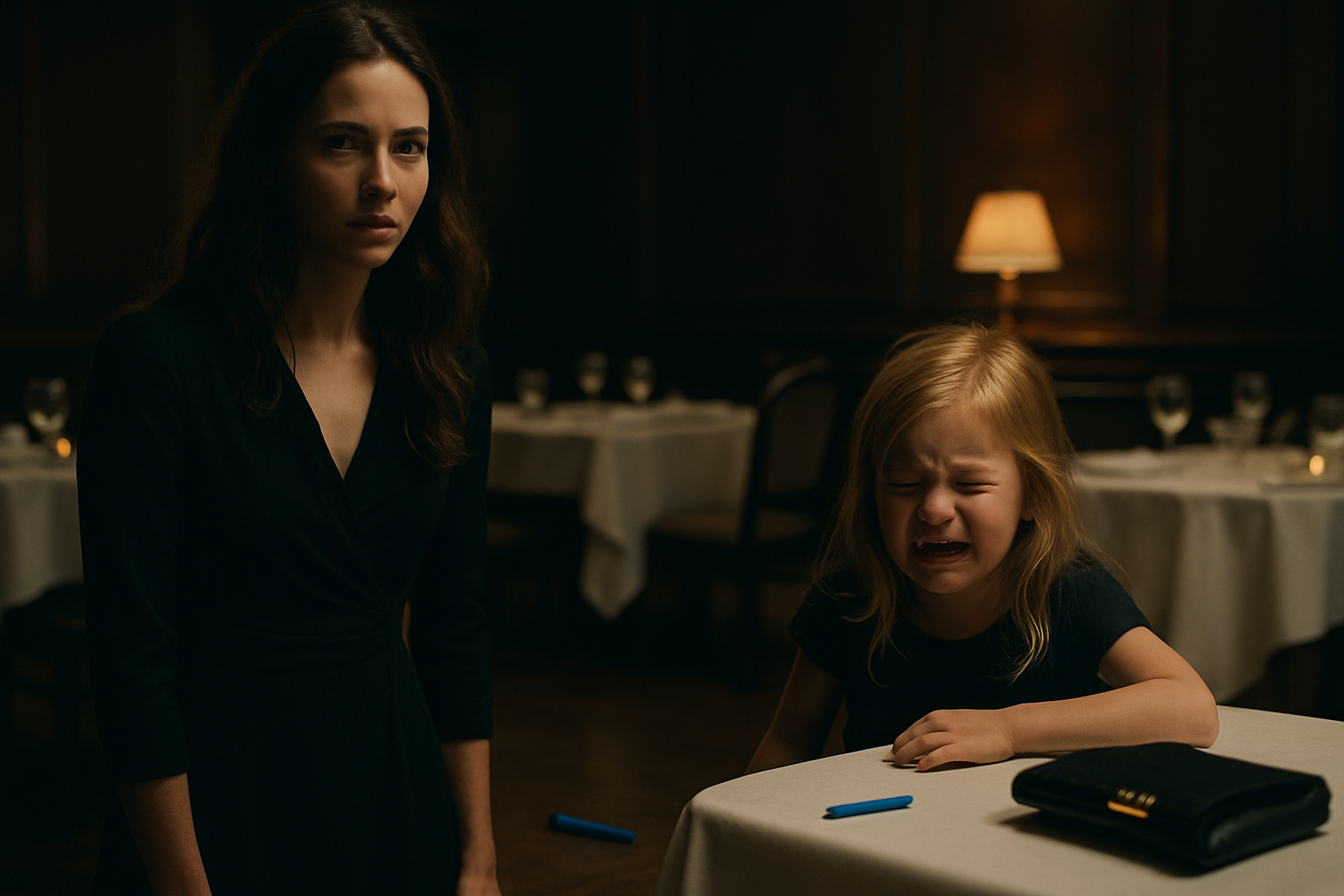
Diane’s face softened in a way Claire had never seen before—not polished, not performative, not arranged for admiration.
“Yes,” Diane said softly. “They are.”
They walked for forty-seven minutes.
Claire counted without meaning to.
Lily asked Diane if she liked dogs. Diane said she had always been afraid of large dogs but was trying to become less ridiculous about it. Lily informed her that fear was not ridiculous unless you made it everyone else’s problem. Diane accepted this correction with humility.
They sat by the fountain. Diane did not ask to hold Lily’s hand. She did not ask for photographs. She did not ask Claire if this meant she could come for holidays.
When Lily’s piano lesson approached, Claire stood.
Diane stood too.
“Thank you for meeting me,” Diane said.
Lily hugged the book to her chest. “Bye, Diane.”
Something flickered in Diane’s eyes at the name, but she did not correct it.
“Goodbye, Lily.”
It was not a movie ending.
Nobody ran into anyone’s arms. No music swelled. Claire did not suddenly become a daughter who needed her mother’s approval, and Diane did not transform overnight into someone safe. There was no magical healing, no clean erasure, no tearful reunion that made the years of damage seem necessary because it led to a pretty scene in a garden.
But the meeting ended without harm.
For Claire, that was enough.
Years later, people would still ask about the night at Archer & Vale.
They wanted the dramatic version.
They wanted the slap.
The governor rising from her chair.
The fake obituary unfolded beneath chandelier light.
The envelope sliding across the table.
Charles Bennett, red-faced and furious, escorted from his own birthday dinner while the cake melted untouched beneath golden candles.
They wanted to hear how the room went silent. How the donors stared. How the dynasty cracked in public. How the daughter everyone had been told was dead stood alive in a black dress and refused to disappear.
Claire understood why.
People loved the moment a lie was exposed.
Exposure had theater. It had villains and witnesses and consequences sharp enough to see. It gave people a clean place to point and say, There. That was when everything changed.
But that was not the real story.
The real story came after.
It came in mornings when nobody clapped.
It came when Claire woke before dawn to answer emails from state offices and still had to pack Lily’s lunch because the world did not pause for a woman’s resurrection. It came in courtrooms where lawyers said words like misappropriation and fraud while men in expensive suits tried to look surprised by crimes they had helped hide. It came in therapy offices where Claire learned that anger could be a compass but not a house.
It came in school drop-off lines, budget meetings, quiet kitchens, and grocery store aisles where she bought strawberries on sale and realized she no longer heard Charles’s voice telling her what kind of women looked for discounts.
It came when Lily had nightmares and Claire sat beside her bed, smoothing her hair until dawn, understanding that children inherited the weather around them even when no one explained the storm.
It came when Diane’s letters arrived on schedule, some better than others, and Claire read them only when she felt strong enough.
It came when Vanessa sent a postcard from Chicago with a picture of Lake Michigan and the words, I saw this and thought Lily would like the color of the water. There was no apology in it. There was also no demand. Claire kept it on the refrigerator for three weeks, then placed it in a drawer.
It came when Claire stopped organizing her life around the people who had rejected her and started building something they could no longer enter without permission.
The blue-door house changed as Lily grew.
The porch steps were repainted twice. The lavender spread stubbornly along the walk. The ceramic frog remained by the door, weathered and smug. A pencil mark chart on the pantry wall recorded Lily’s height in uneven increments, each line labeled with the date and whatever obsession she had at the time: horses, space, volcanoes, detective novels, lemon cake, civil engineering for reasons Claire never fully understood.
On Lily’s twelfth birthday, Claire hosted a small party in the backyard.
Not grand. Not impressive by Bennett standards.
Just bright paper lanterns strung between trees, a folding table covered in a yellow cloth, sandwiches cut into triangles, lemonade in glass pitchers, and a cake Lily had decorated herself with purple icing and a lopsided horse that looked, according to Governor Pierce, “like it had survived a minor diplomatic incident.”
Lily was delighted.
Governor Pierce came with a gift wrapped so badly that everyone knew her husband had done it. The paper sagged on one side and was held together with an unnecessary amount of tape.
“I was told this is charming,” the governor said.
“It is evidence,” Claire replied.
“Of affection?”
“Of incompetence.”