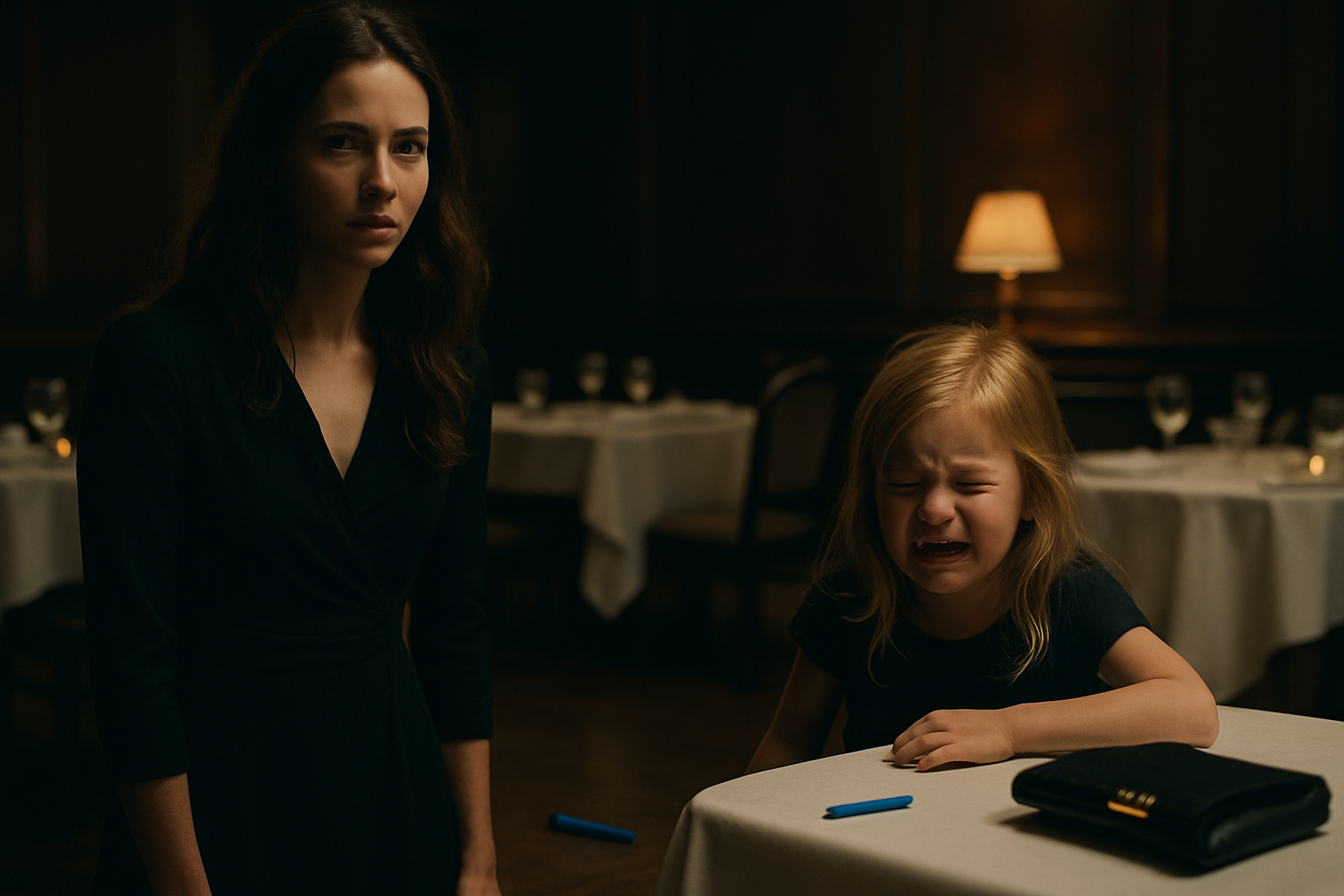
Lily tore it open and found a set of watercolor pencils so beautiful she gasped.
Diane came too.
She had been invited for one hour.
She arrived five minutes late, apologizing once, and did not overstay.
That restraint meant more to Claire than flowers would have.
Diane brought no dramatic gift, no heirloom jewelry, no attempt to purchase belonging. She gave Lily a small notebook with a pressed-flower cover and said, “For thoughts you do not want adults improving.”
Lily smiled at that.
“Adults do improve too many things,” she said.
“I am learning that,” Diane answered.
Claire watched them from beside the lemonade table, aware of the ache in her chest. Not pain exactly. Not peace exactly either. Something more complicated. The feeling of looking at a bridge still under repair and choosing, for now, not to cross it too quickly.
Vanessa did not come.
But a card arrived from Chicago two days before the party. It had Lily’s name printed neatly on the envelope.
Inside were three sentences.
Happy birthday, Lily. Your mother is the bravest person I have ever known. I hope twelve is kind to you.
There was no return address.
Lily read it twice, then handed it to Claire.
“Do I have to feel sad?” she asked.
“No,” Claire said.
“Do I have to feel happy?”
“No.”
Lily nodded, relieved. “Good. I feel curious.”
“That’s allowed.”
Charles, still in federal prison, sent nothing.
Claire did not know whether he had tried and failed, or whether pride had finally swallowed even the performance of fatherhood. Either way, the mailbox stayed quiet.
She was grateful.
As the sun went down on Lily’s birthday, the backyard glowed gold. Children chased one another through the grass. Someone knocked over a cup of lemonade. Governor Pierce argued with a twelve-year-old about whether dragons should be considered reptiles. Diane sat in a lawn chair with a paper plate balanced on her lap, listening more than she spoke.
Then Lily climbed onto a chair.
Claire turned sharply. “Lily—”
“I’m fine!” Lily announced, wobbling only a little. “I want to make a toast.”
The backyard quieted.
Lily lifted a plastic cup of lemonade. Her cheeks were flushed from running, and one braid had come almost entirely undone.
“To Mom,” she said, grinning. “For saving Virginia with boring math and for not letting mean people ruin pancakes.”
For one breath, nobody moved.
Then Governor Pierce burst out laughing.
The others followed.
Even Diane laughed, one hand pressed to her heart.
Claire laughed too, but her eyes burned so suddenly she had to look down.
Lily hopped off the chair and ran to her, colliding into her waist with all the careless force of being loved without fear.
Claire held her.
The moment passed into the ordinary noise of the party—cake being sliced, children bargaining for corner pieces, someone asking where the trash bags were. But Claire kept it folded inside her, another proof, another piece of evidence that the life she had fought for had become real enough to spill lemonade on.
Later, after the guests had gone and Lily had dragged her presents upstairs, the house settled into the soft disorder of celebration.
Dishes waited in the sink.
Birthday ribbons trailed across the living room floor.
A deflated balloon leaned in the corner as if exhausted by joy.
The refrigerator was covered with drawings of winged horses, crooked stars, and one picture of a woman in a cape holding a calculator. Lily had titled it MOM SAVES THE BUDGET UNIVERSE.
Claire stood in the kitchen doorway for a while, smiling at it.
Then she stepped out onto the porch.
Richmond hummed softly beyond the trees. The night was warm and damp, the air smelling of cut grass, melted birthday candles, and rain gathering somewhere west of the city. The porch light cast a golden circle over the boards. The ceramic frog watched from its post with official suspicion.
On the small metal table beside Claire sat an old folded paper.
She had taken it from the locked drawer in her bedroom that morning.
The fake obituary.
For years, she had kept it.
Not because she wanted the pain.
Not because she enjoyed touching the wound.
But because there had been a time when she needed proof. Proof that the cruelty had been real. Proof that she had not imagined the betrayal. Proof that the world had once been asked to accept her death, and that she had survived anyway.
Now she unfolded it one last time.
The paper had yellowed slightly at the creases. The ink was still sharp.
CLAIRE ELIZABETH BENNETT, 29, PASSES AFTER LONG PRIVATE STRUGGLE.
Below the headline was the photograph they had chosen—not her favorite, not one she would have approved, but one from a charity event where she had looked elegant, quiet, useful. A daughter suitable for mourning. A woman already arranged for public consumption.
Claire read the lie without shaking.
There was no roaring in her ears now. No nausea. No trembling hands.
Only recognition.
This had once been a weapon.
Then it had become evidence.
Now it was only paper.
She took the matchbox from her pocket.