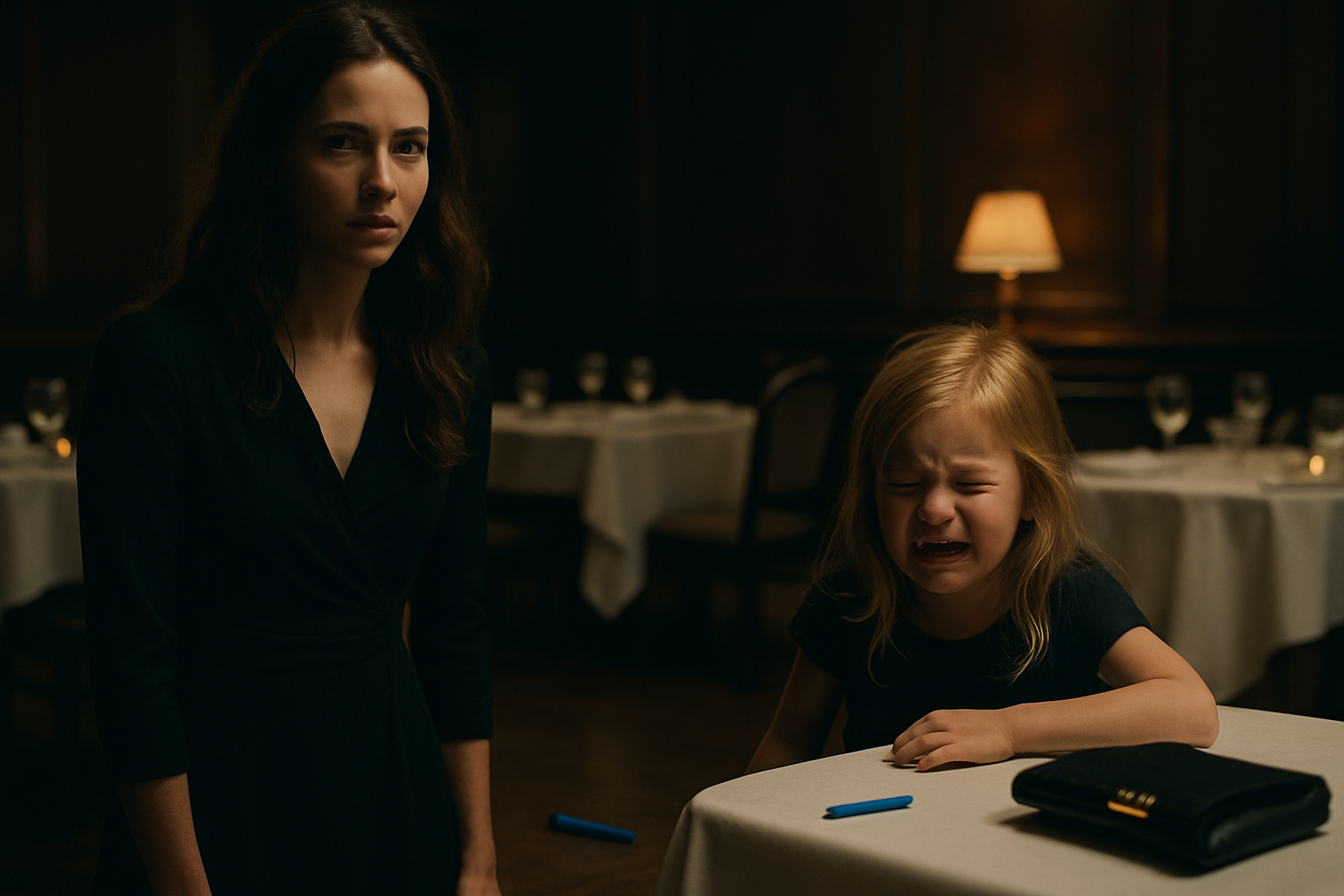
A flush crept up Diane’s throat.
People were passing through the lobby now, elegant couples wrapped in winter coats, a waiter carrying a tray of champagne flutes toward another private room. The world did not stop for old wounds. Claire had learned that. The world kept moving, which was both cruelty and mercy.
Diane looked toward the dining room doors as if hoping no one important could hear.
There it was, even now.
The instinct.
Not regret first.
Reputation.
Claire saw it and felt something in her finally settle.
“I am not going to perform forgiveness for your comfort,” she said.
Diane flinched.
“I’m not asking you to perform anything.”
“Aren’t you?”
Her mother’s fingers tightened on the clasp of her purse. “I came here for dinner with a friend. I did not come to be attacked.”
Claire almost laughed, but there was no humor in it. “That is the difference between us. You can still call the truth an attack.”
Diane looked away. In the golden lobby light, the lines at the corners of her mouth seemed deeper than they had three years before. Claire remembered that mouth issuing instructions: stand straight, smile softer, don’t contradict your father, don’t make this hard, don’t shame us.
Once, Diane’s disapproval had felt like weather.
Now it felt like an old photograph left too long in the sun.
Faded. Recognizable. Powerless unless Claire chose to frame it again.
“I was afraid,” Diane said at last.
Claire watched her carefully.
“Of what?”
“Of losing everything.”
“You did lose everything.”
Diane’s eyes flashed. “You think I don’t know that?”
“No,” Claire said. “I think you know you lost the house. The invitations. The committee seats. The friends who were never friends. I don’t know if you understand what else you lost.”
Her mother swallowed, and for one brief second something unguarded moved across her face. Not elegance. Not control. Something rawer.
“My daughter,” Diane whispered.
Claire’s chest tightened despite herself.
She hated that. Hated that some part of her still responded to that word in Diane’s mouth. Daughter. A word that should have been a shelter and had so often been a leash.
“You lost me years before that dinner,” Claire said. “That night was just when everyone else found out.”
Diane blinked quickly, once, twice.
“I wrote to you.”
“You wrote to explain yourself.”
“I didn’t know how to do anything else.”
“That was always the problem.”
The door to the private dining room opened behind Claire, spilling warmth and laughter into the hallway. She turned just enough to see Lily slip through, her dark hair half fallen from the clips she had insisted made her look “like a junior senator but cooler.”
Lily stopped when she saw Diane.
The laughter from the room vanished behind the closing door.
Claire stepped slightly in front of her daughter without thinking.
Diane saw the movement. Pain crossed her face, but Claire did not apologize for it. A body remembered danger before the mind had time to be polite.
Lily looked from Claire to Diane.
“Is that her?” she asked softly.
Claire did not lie to her daughter. She never had, not when the truth could be made gentle enough to carry.
“Yes,” Claire said. “This is Diane.”
Not Grandma.
Not your grandmother.
Just Diane.
Diane noticed. Her face tightened.
“Hello, Lily,” she said.
Lily’s expression was not afraid now. Curious, maybe. Guarded. She had been five the last time she had seen Diane Bennett, small enough to be frightened by raised voices and adult hands. Now she was nine and beginning to understand that adults could be wrong in ways more complicated than breaking rules.
“You look like your mother,” Diane said.
Lily considered that. “People keep saying that.”
“It’s a compliment.”
“I know.”
Claire nearly smiled.
Diane’s eyes shone. “I’ve thought about you often.”
Lily tilted her head. “Why didn’t you say sorry then?”
The question landed with the clean force only a child could deliver.
Diane’s mouth opened and closed.
Claire felt the old instinct to rescue her mother from discomfort rise in her like a bad reflex. She crushed it.
“I should have,” Diane said finally.
Lily nodded, not forgiving, not condemning, simply recording.
“You made my mom bleed,” she said.
Diane closed her eyes.
“Yes.”
“And you let everybody be mean to her.”
“Yes.”
“And you said we weren’t family.”
Diane inhaled shakily. “I was wrong.”
Lily looked up at Claire, as if checking whether wrong was enough.
Claire said nothing.
Because it wasn’t.
Not yet.
Maybe not ever.
But it was more than Diane had managed before.
Governor Pierce emerged from the dining room then, pausing as soon as she saw the three of them. Her gaze moved from Claire to Lily to Diane, taking in the architecture of the moment with the precision that had made her both feared and trusted in public life.
“Claire,” she said, not intruding, only offering presence.
Diane stiffened. Old habits again. Recognition of rank. Adjustment of posture. The automatic calculation of how she appeared before power.
“Governor Pierce,” Diane said.