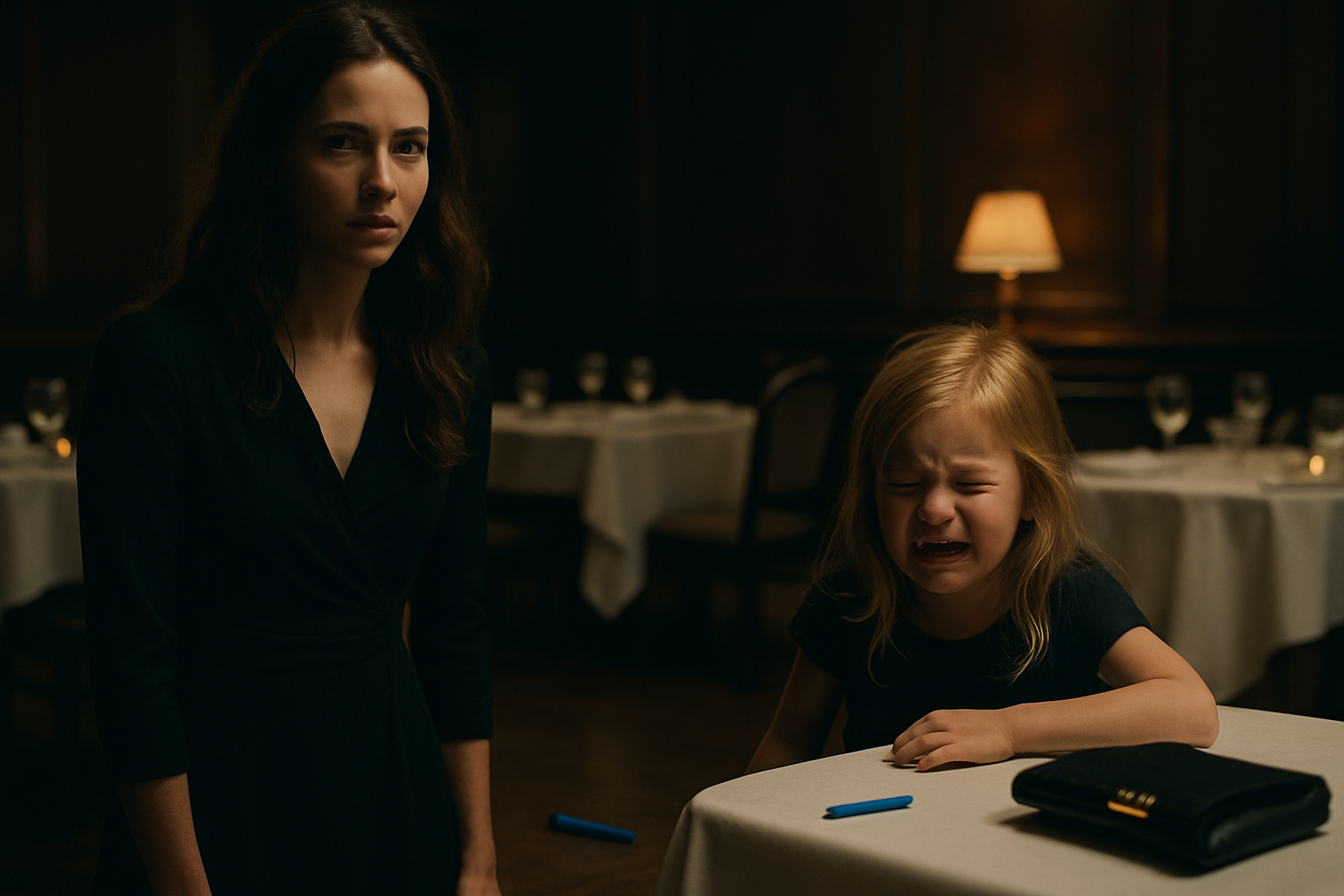
“Diane.”
The governor’s voice held no warmth, but it held discipline. She did not gloat. Claire loved her for that.
Lily slipped her hand into Claire’s.
“I came out because they’re arguing about whether cake with fruit counts as healthy,” Lily said, still watching Diane. “It does not.”
Governor Pierce’s mouth twitched. “A serious policy debate.”
“Exactly.”
Diane stared at Lily’s hand in Claire’s. There was a grief in her face now that seemed almost honest, and Claire hated that too, because honest grief did not erase dishonest years.
“I won’t keep you,” Diane said.
“No,” Claire replied. “You won’t.”
Diane drew herself together as if gathering loose threads. “May I write again?”
Claire did not answer immediately.
The old Claire would have said yes to soften the moment. The old Claire would have gone home and regretted it in the dark. The old Claire would have offered a door because she had been trained to believe closed doors were cruel.
The woman standing in Archer & Vale’s hallway had learned better.
“You may write,” Claire said. “I may not answer.”
Diane nodded once.
It was not what she wanted.
It was what Claire was willing to give.
“And Lily?” Diane asked.
Claire’s voice cooled. “Lily is not available for you to ease your conscience.”
Diane looked as if she had been struck, though no one had raised a hand.
Lily squeezed Claire’s fingers.
Diane looked at her granddaughter one last time.
“I am sorry,” she said.
Lily studied her. “Okay.”
Not I forgive you.
Not it’s fine.
Just okay.
A place to put the apology until it proved it deserved more.
Diane turned and walked back toward the entrance. A valet opened the door for her, and the winter air rushed in, sharp and clean. For one second, Claire saw her mother framed against the night: elegant, diminished, alone.
Then she was gone.
Claire stood still.
Governor Pierce waited.
Lily leaned into her side. “Are you okay?”
Claire looked down at her daughter, at the serious eyes and stubborn chin, at the child who had once sobbed in this same building and now stood as if no chandelier, no old money, no Bennett ghost could intimidate her.
“Yes,” Claire said, realizing as she spoke that it was true. “I am.”
Lily nodded. “Good. Because they saved us cake. I told them you needed extra because of emotional labor.”
Governor Pierce let out a laugh.
Claire pressed a hand to her forehead. “You cannot just say things you hear me say on the phone.”
“I used it correctly.”
“You did.”
“Then I stand by it.”
They returned to the room together.
For the first time in three years, Claire sat inside Archer & Vale after seeing her mother and did not feel as though the floor had opened beneath her.
She ate the cake.
It did have fruit.
It was not healthy.
It was perfect.
That night, after the dinner, Claire drove home through streets washed silver by rain. Lily fell asleep in the passenger seat halfway through a detailed explanation of why the foundation should adopt a therapy dog named Justice. Claire listened to her daughter’s breathing, soft and even, and felt the quiet fullness of a life no longer arranged around fear.
Their little brick house waited with its blue door shining beneath the porch light.
Inside, Claire helped Lily out of her coat, guided her upstairs half-asleep, and tucked her into bed. Lily opened one eye as Claire pulled the blanket to her chin.
“Do you hate Diane?” she murmured.
Claire sat on the edge of the mattress.
The room smelled faintly of lavender detergent and colored pencils. On the wall above Lily’s desk hung a framed photo of the two of them at the beach in Norfolk, hair whipped wild by the wind, both laughing with their mouths open. Claire had once disliked the picture because she thought she looked tired.
Now she loved it because she looked alive.
“I don’t know,” Claire said honestly.
Lily frowned sleepily. “Is that bad?”
“No. Feelings don’t have to be tidy.”
“Mine are never tidy.”
“I’ve noticed.”
Lily gave a small offended hum.
Claire brushed hair from her forehead. “I think I spent a long time wanting Diane to become someone who would protect me. And tonight I realized I don’t need to wait for that anymore.”
“Because you protect you.”
“Yes.”
“And me.”
“Always.”
Lily thought about that. “Can people be sorry and still not safe?”
Claire’s throat tightened.
“Yes,” she said. “They can.”
Lily nodded as if filing that away for later, then closed her eyes. “Then maybe she’s a sorry cactus.”
Claire stared at her.
“A what?”
“A sorry cactus. Like, sad, but still pokey.”
Claire laughed softly despite the ache behind her ribs. “That is disturbingly accurate.”
“I’m wise,” Lily whispered.
“You’re dramatic.”
“I can be both.”
Within seconds, she was asleep.
Claire remained beside her a moment longer, hand resting on the blanket, letting the steady rise and fall of Lily’s breathing anchor her.
Downstairs, the house was quiet. The kitchen still held the faint scent of morning coffee. Lily’s latest drawing hung crooked on the refrigerator: Claire in a cape, holding a briefcase in one hand and a stack of pancakes in the other. Above her head, in careful purple marker, Lily had written: MOM, DEFENDER OF DOCUMENTS.