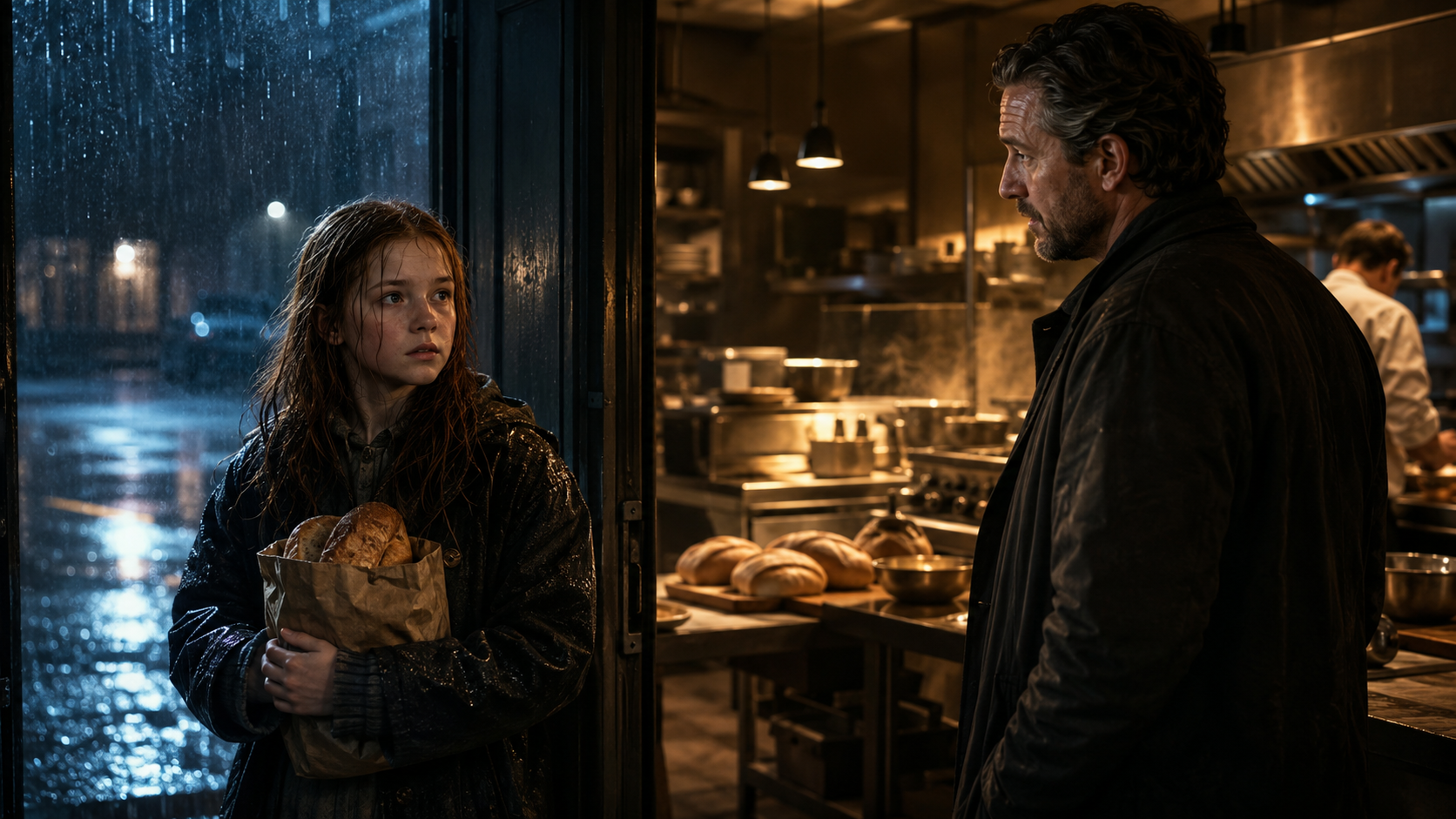
Officials objected.
Adrian argued.
They mentioned regulations.
He hired specialists.
They requested inspections.
He arranged them before lunch.
By the end of the week, an emergency placement had been approved.
Lena remained suspicious.
“This house belongs to the school?” she asked.
“It belongs to a charitable trust.”
“Your trust?”
“For now.”
“And when you get bored?”
“I rarely get bored.”
“When you get angry, then?”
Adrian considered the question.
“The house will still be yours.”
“You could be lying.”
“Yes.”
She studied him.
“But I’m not.”
Toby recovered slowly. When he was released from the hospital, all five children moved into the small brick house behind the school.
It had four bedrooms, a bright kitchen, a fireplace, and an apple tree in the garden.
For the first month, Lena slept on the floor beside the front door.
She did not trust beds that could disappear.
She did not trust cupboards that remained full.
She especially did not trust Adrian.
He visited every Sunday afternoon.
At first, he arrived with practical things: winter coats, school supplies, medicine, and boxes of food from his restaurants.
The children thanked him politely but kept their distance.
Then, one Sunday, Adrian brought a chessboard.
Jonah defeated him in twelve minutes.
“You let me win,” Jonah said.
“I absolutely did not.”
“Then you’re bad at chess.”
“I own eleven restaurants.”
“That doesn’t make you good at chess.”
The following week, Adrian brought three books about strategy and demanded another match.
Lena watched from the kitchen doorway.
“You hate losing,” she said.
“I consider losing an educational emergency.”
For the first time, she smiled at him.
Months became years.
Jonah developed a gift for engineering and spent his evenings repairing radios and bicycles. Mae loved music and learned to play the cello. Iris filled notebooks with drawings of imaginary cities. Toby grew stronger and became the fastest runner at school.
Lena read everything she could find about business law.
She never forgot the night in the restaurant kitchen.
At sixteen, she asked Adrian for a job.
“You already have an allowance,” he said.
“I don’t want an allowance.”
“What do you want?”
“To earn money.”
He offered her a position in one of his offices.
She refused.
“I want to work in the kitchen.”
“Why?”
“Because that’s where you caught me.”
Adrian looked at her for a long moment.
“You’ll start by washing dishes.”
“I expected to.”
“You will receive no special treatment.”
“I was hoping you’d say that.”
Lena became one of the hardest workers at the Hearth Crown.
She washed plates, peeled vegetables, cleaned floors, and carried deliveries. Later, the chefs taught her to prepare sauces and bread.
One evening, an elderly pastry chef noticed the way Lena shaped a loaf before placing it in the oven.
“Who taught you to fold dough like that?” he asked.
“My mother.”
The chef stared at her hands.
“What was her name?”
“Elena Marrow.”
The bowl slipped from his fingers.
It struck the floor and cracked.
Adrian was called into the kitchen.
The old chef sat beside the ovens, his face drained of color.
“Tell her,” he said when Adrian arrived.
“Tell her what?”
“About Elena.”
Adrian’s expression changed.
Lena noticed it immediately.
“You knew my mother?”
Adrian dismissed the kitchen staff and locked the door.
For several seconds, only the ovens could be heard.
Then he said, “Yes.”
Lena stepped closer.
“How?”
Adrian pulled out a chair but did not sit.
“When I was nineteen, I worked in a factory canteen near the harbor. I had no money and nowhere permanent to live. Your mother was the assistant cook.”
Lena waited.
“She gave me meals when I couldn’t pay. She taught me how to make bread. Not ordinary bread—the winter loaf we still serve here.”
“The Hearth Loaf?”
Adrian nodded.
It was the signature dish of his restaurant empire. Food critics had written entire articles about it. Customers traveled from other cities to taste it.
“My mother created that recipe?”
“Yes.”
“Then why is your name attached to it?”
Adrian’s face tightened.
“Because I took it with me.”
The words seemed to change the air in the room.
Lena stared at him.
“You stole it.”
“I told myself it was only a recipe.”
“You built your company around it.”
“Not the entire company.”
“But it opened the first restaurant.”
“Yes.”
“And you never gave her credit.”
“I tried to find her years later.”
“After you were rich?”
“Yes.”
“After it was safe?”
Adrian looked away.
Lena’s voice became quieter.
“You knew her name all this time.”
“I knew Elena. I didn’t know she had children.”
“You never asked?”
“She disappeared after the factory closed. I was told she had moved overseas.”
“She didn’t.”