A little girl stood outside the burning east wing, holding a toddler wrapped in a blanket. Her nightdress was blackened with soot. Blood ran down one arm. Her hair had been burned short on one side.
Nora took one step closer.
Her own childhood face looked back at her.
Not Celeste.
Nora.
Elias’s voice softened slightly.
“You carried my nephew out through the servant corridor. You broke your arm forcing the nursery door open. You inhaled so much smoke that the hospital warned your parents you might never breathe properly again.”
Nora could not speak.
Her mother had told her the scars on her arm were from falling through a glass cabinet.
Her father had told her the nightmares were inventions.
Celeste had worn the praise like a crown.
Elias laid down a second photograph.
Celeste, clean-faced and wrapped in a blanket, standing beside Vivienne while photographers arrived.
“They put your sister in front of the cameras,” Elias said. “They called her brave. They called you unstable. Then your father accepted money to keep silent about why the fire started.”
Roland whispered, “It was complicated.”
Elias turned on him. “No. It was profitable.”
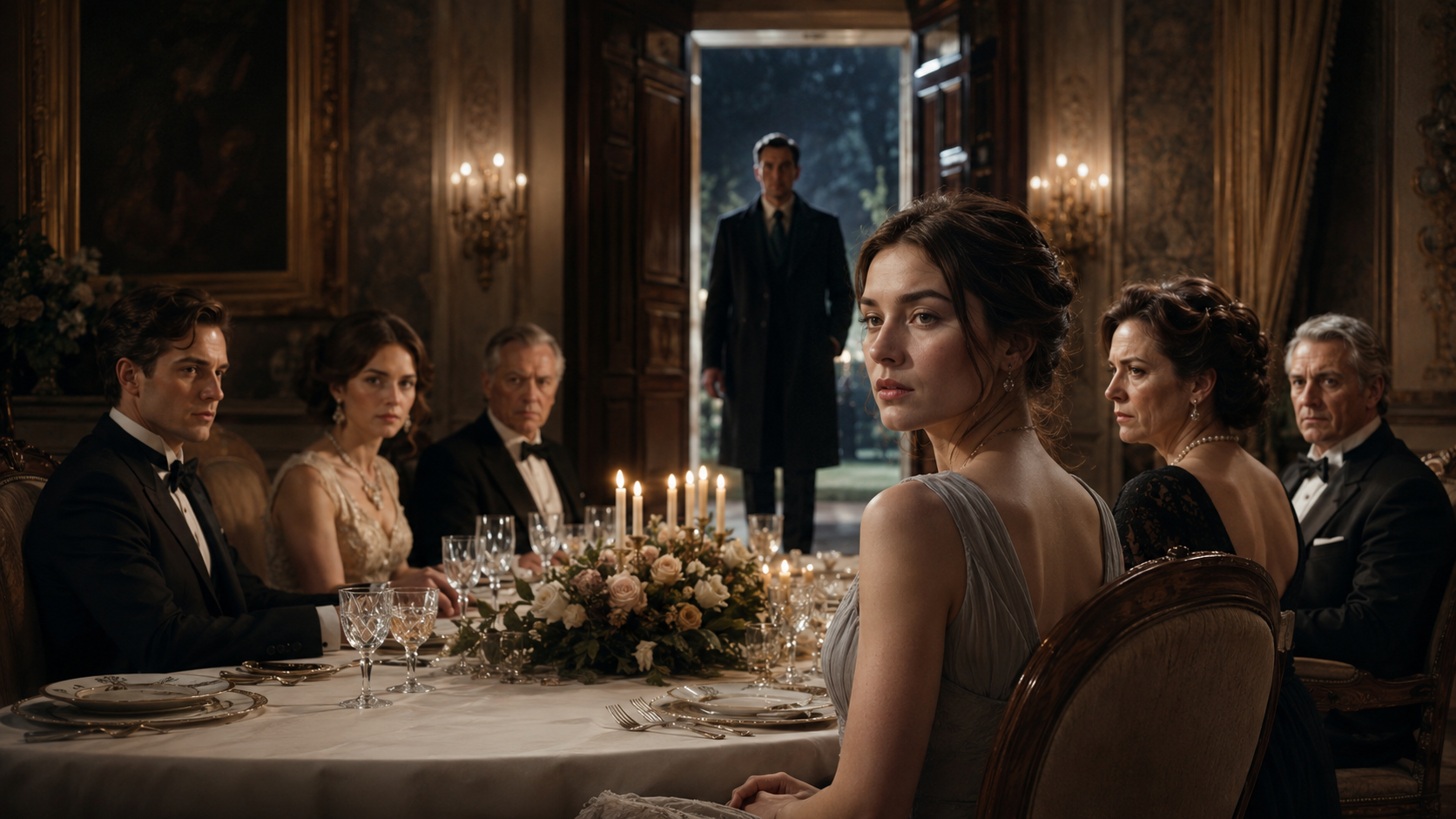
Nora felt the dining room move around her as if she were underwater.
All those years.
Every ceremony where Celeste had been praised.
Every charity event built on the story of the brave little girl who saved a child.
Every time Nora had been told she imagined her pain because she wanted attention.
It had all been stolen.
Not misunderstood.
Not forgotten.
Stolen.
Celeste rose from her chair. “I was a child.”
“So was she,” Elias said.
Celeste’s face twisted. “I didn’t ask them to do it.”
“No,” Nora said quietly.
Everyone looked at her.
Her cheek throbbed. Her mouth bled. Her voice shook, but it held.
“You only kept it.”
Celeste stared at her.
Nora continued, “You kept the praise. You kept the scholarships. You kept the charity foundation named after your courage. You kept every room that opened for you because people thought you were brave.”
Celeste’s lips trembled. “You don’t know what it was like being loved for something I didn’t do.”
Nora looked at her sister for a long moment.
“No,” she said. “I know what it was like not being loved for something I did.”
That broke something in the room.
Marcus sank back into his chair, face gray.
Adrian whispered, “Mom?”
Vivienne was crying now, but Nora knew those tears. Her mother wept for exposure, not remorse.
Elias removed the final item from the folder.
A small recorder.
He pressed play.
Roland’s voice filled the dining room.
“If Voss ever learns the child survived because of Nora, everything collapses. Keep Celeste as the face of the story. Nora is easier to dismiss. She always has been.”
Vivienne’s voice answered.
“And if Nora remembers?”
“She already remembers too much. We’ll call it hysteria.”
The recording clicked off.
No one breathed.
Nora looked at her father.
Roland could not meet her eyes.
“Say something,” she whispered.
He opened his mouth.
No words came.
Vivienne reached for Nora’s hand. “Darling, we were trying to protect the family.”
Nora stepped back.
“You mean the name.”
Vivienne flinched.
“The family was never me,” Nora said.
Elias closed the folder.
“Here is what happens now,” he said. “By dawn, every donor who built Celeste Carrow’s reputation will receive the evidence. Every partner in Roland Carrow’s company will know he paid arsonists and buried witness statements. Every society paper that praised Vivienne’s perfect daughter will learn which daughter she erased.”
Roland staggered. “You’ll ruin us.”
Elias’s expression did not change.
“You ruined a child and served dessert over the grave of her truth.”
Celeste grabbed Marcus’s sleeve. “Please. Don’t listen to them. I love you.”
Marcus looked at her hand as though it belonged to a stranger.
“You watched her be slapped for telling the truth.”
Celeste sobbed. “I was scared.”
Nora looked at Marcus.
“And you?”
He turned slowly.
His eyes were wet.
“Nora, I didn’t know.”
She nodded once.
“You never tried to.”
That was the sentence that ended them.
Not with shouting.
Not with revenge.
Just a truth too clean to survive denial.
Nora picked up the handkerchief Elias had placed beside her plate and pressed it gently to her mouth.
Then she turned toward the door.
Vivienne lunged after her. “You cannot walk out of this house.”
Nora paused.
For the first time all evening, she smiled.
It was not warm. It was not cruel.
It was free.
“I’m not walking out of a house,” she said. “I’m leaving a lie.”
She stepped into the hallway.
Behind her, the dining room erupted.
Vivienne screamed at Roland. Roland shouted for lawyers. Celeste cried Marcus’s name. Adrian demanded answers no one wanted to give. Guests hurried out with pale faces and shaking hands, carrying the scandal into the night like sparks from a burning roof.