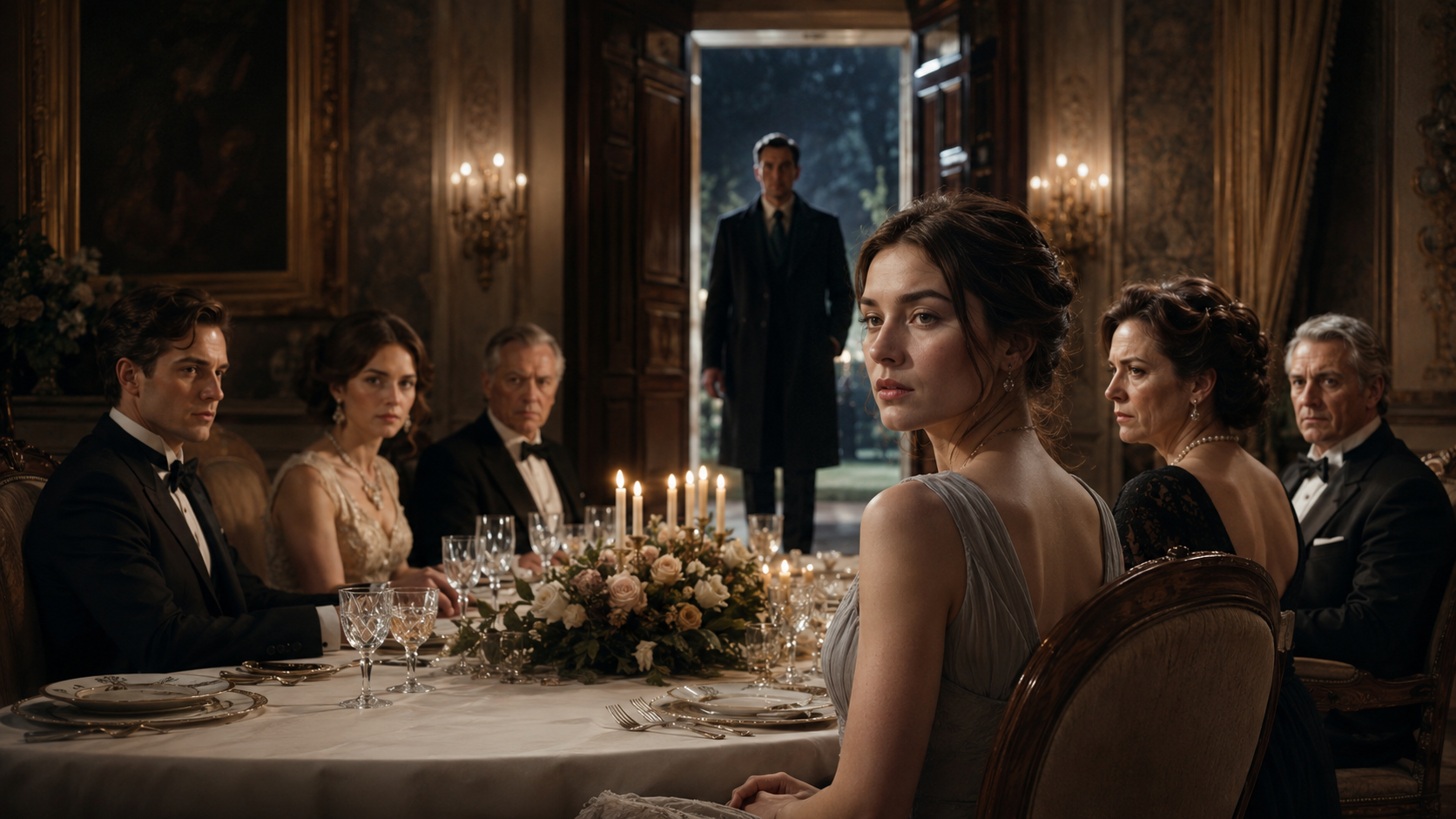
Nora stared at him.
“I haven’t spoken.”
“You don’t need to,” he said. “Your face says enough.”
Celeste covered her mouth, shoulders shaking.
To anyone else, she might have looked wounded.
Nora knew better.
Vivienne reached toward a velvet box placed beside Celeste’s plate. “Perhaps this will improve the mood. Celeste, darling, show everyone the gift you restored for Marcus.”
Celeste brightened at once.
She opened the box.
Inside lay a pocket watch.
The room murmured appreciatively.
It was an old watch, gold-cased and engraved with a pattern of laurel leaves. The hands had been replaced. The glass had been polished. A tiny mechanical bird, once broken, now lifted from a hidden compartment when the latch was pressed.
Nora stopped breathing.
That watch had been on her workbench for six months.
It had arrived in pieces from Marcus’s late grandfather’s estate. Marcus had given it to Nora during their engagement, embarrassed by its condition, and asked if she could repair it.
“You’re the only person I know who can make dead things move again,” he had said.
Nora had worked on it through sleepless nights. She had found a missing spring no larger than an eyelash. She had rebuilt the little bird mechanism by hand. She had engraved a private mark beneath the inner hinge so Marcus would know it had been restored by someone who had loved the work, and once, loved him.
Three nights ago, the watch had vanished from her studio.
Now Celeste pressed the latch.
The bird rose.
Everyone applauded.
Marcus stared at the watch in amazement. “Celeste… you did this?”
Celeste blushed beautifully. “It took a long time. But you deserved something meaningful.”
Nora’s chair scraped the floor before she realized she had moved.
Celeste’s smile flickered.
Vivienne’s eyes sharpened.
Nora’s voice came out low. “That was mine.”
Silence.
Celeste blinked. “What?”
“I restored that watch,” Nora said. “It was taken from my studio.”
Adrian groaned. “Here we go.”
Vivienne’s expression filled with disgust. “Must you do this?”
Nora looked at Marcus. “Open the back plate.”
Marcus hesitated.
Celeste’s breathing changed.
Nora said, “There’s a small mark beneath the hinge. N.C.”
Vivienne stood so suddenly her chair struck the floor behind her.
“You selfish little parasite.”
The words landed harder than a slap because Nora had heard them before. Not often. Only when her mother forgot that cruelty was more effective when dressed as disappointment.
Celeste’s tears spilled over.
“I knew she would do this,” she whispered. “I told you she couldn’t let me have tonight.”
Marcus closed the box without opening the watch.
Nora felt something inside her fold in on itself.
“You don’t even want to know?” she asked him.
Marcus looked away.
Vivienne stepped around the table slowly, every eye following her.
“You were born with that hunger in you,” she said. “Always reaching. Always grabbing. Love, attention, praise, men who do not want you. And when your sister receives what she earned, you bare your teeth.”
Nora stood very still.
“You know she didn’t repair it.”
“I know,” Vivienne said, voice rising, “that Celeste has spent her entire life trying to survive your jealousy.”
Nora almost laughed.
Survive.
Celeste had survived by being believed.
Nora had survived by learning not to beg.
Roland stood. “Apologize to your sister.”
Nora turned to him. “For telling the truth?”
“For humiliating this family.”
“The family humiliated itself years ago,” Nora said.
The words slipped out before she could stop them.
Vivienne’s face changed.
For one second, Nora saw fear.
Then her mother lifted her hand and struck her across the mouth.
The sound cracked through the dining room.
Nora’s head turned with the force of it. Pain burst along her cheekbone. A metallic taste spread beneath her tongue.
No one moved.
Celeste let out a soft, satisfied breath.
Vivienne leaned close enough for only Nora to hear.
“You should have stayed gone.”
Nora touched her bleeding lip.
Then the doors at the far end of the dining room opened.
Not quietly.
They struck the walls with a force that killed every whisper.
A man in a black overcoat walked in as if the estate belonged to him and everyone inside had merely been permitted to breathe there temporarily.
Two men followed behind him.
No one asked who he was.
They knew.
Everyone in the city knew Elias Voss.
Not because his name appeared in newspapers. It rarely did. Not because he gave interviews. He never had. But his shadow lay across docks, private banks, luxury clubs, shipping routes, and whispered debts. Men with older fortunes than the Carrows spoke carefully when Elias Voss entered a room.
Vivienne’s face went pale.
Roland set his glass down with shaking fingers.
“Mr. Voss,” he said. “We weren’t expecting you.”