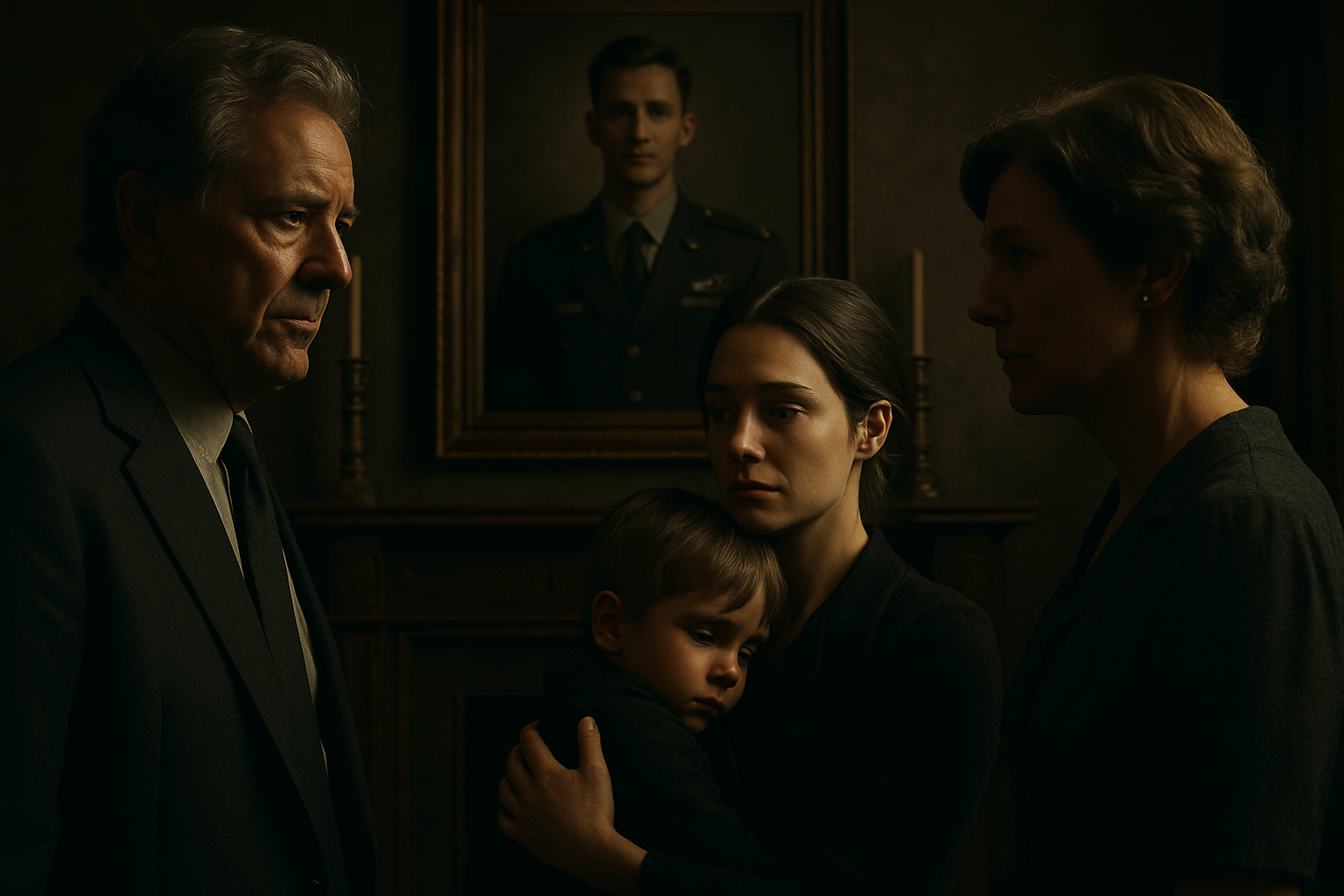
Gideon knew Marjorie would blame Lila.
She always blamed the person with the least power.
But this time, Lila was not standing alone.
At the board meeting, Gideon placed Rowan’s letter on the table.
“My son served this country,” he said. “He died in uniform. Before his death, he protected his wife and child in writing because he feared exactly what happened while I was overseas.”
No one spoke.
“My sister used a decorative position in this foundation to intimidate that widow, remove her from trust property, and attempt to cut a child off from his father’s home. She used foundation resources for private purposes and exposed this institution to damage we are now legally required to repair.”
A trustee cleared his throat.
“Are you recommending criminal review?”
Gideon looked at Price.
“Yes.”
Marjorie had expected embarrassment.
She had not expected consequences.
A week later, she arrived at Gideon’s office without an appointment.
She looked different without the estate behind her. Still elegant. Still wearing pearls. But strained around the eyes.
“You are enjoying this,” she said.
Gideon did not rise.
“No.”
“You always resented my place in the foundation.”
“You had a place because I allowed you to have one.”
“Our father would be ashamed of you.”
Gideon looked at her then.
“Our father would ask why you bought centerpieces with charity money while veterans’ widows waited for housing help.”
She flinched.
“It wasn’t that simple.”
“It was exactly that simple.”
Marjorie sat down though he had not invited her.
“I made mistakes.”
“Yes.”
“I was grieving Rowan too.”
Gideon’s expression changed.
“No. Do not use his name as shelter.”
Her eyes filled. With Marjorie, tears and theater had long ago learned to hold hands.
“He was my nephew,” she whispered.
“And you threw out his son.”
She looked down.
For the first time, something like shame entered the room.
Not enough.
But some.
“I wanted the family to go back to what it was,” she said.
Gideon leaned back.
“That family never existed. It was only everyone arranging themselves around your comfort.”
“What happens to me now?”
“There will be an investigation. The board will decide on civil action. Price will handle the legal side.”
“And you?”
Gideon looked at the photograph of Rowan on his desk.
“I am going home to my grandson.”
Marjorie laughed bitterly.
“She won.”
Gideon stood.
“No. Lila survived you. There is a difference.”
Three months later, the Vale Foundation released a public statement.
It acknowledged misuse of funds, promised restitution, and announced a new program for military widows, surviving spouses, and children of service members.
The Rowan Vale Family Support Initiative.
Its director would be Lila Mercer Vale.
Lila almost refused.
“I’m not qualified,” she told Gideon.
They were sitting in the Lake Placid kitchen before sunrise. Finn was at the table coloring airplanes while snow moved past the windows.
Gideon poured coffee.
“You know exactly how it feels when people treat grief as if it makes you disposable.”
“That does not make me a director.”
“No,” he said. “But compassion, discipline, and a refusal to let another widow sit in an airport holding a one-way ticket might.”
A small smile touched her mouth.
“I’m frightened.”
“Good,” Gideon said. “Arrogant people rarely are. That is why they hurt others so easily.”
So Lila accepted.
At first, donors watched her with careful smiles. Some thought she had been given a symbolic role. A young widow with a touching story. Someone to stand at luncheons while older, richer people made the real decisions.
They underestimated her.
That was their first mistake.
Lila read every file.
She called widows herself.
She asked what they needed before announcing what the foundation could offer. She simplified applications, removed humiliating requirements, created emergency travel funds, and built a housing network so no spouse of a fallen service member would ever be told, after a funeral, that they no longer belonged.
Within a year, her program became the foundation’s most respected work.
Finn began laughing again too.
Not all at once.
Grief does not leave a child simply because adults finally behave decently.
But slowly, he returned to himself.
When they visited Lake Placid, he slept in Rowan’s old room. He wore his father’s Air Force cap around the house. He asked Gideon to tell stories about “Daddy above the clouds,” and Gideon told them, even when his voice broke halfway through.
One evening, Finn stood before Rowan’s portrait.
“Did Daddy know we would come back?”
Lila froze.
Gideon knelt beside him.
“Your daddy made sure you always could.”
Finn touched the frame.
“Then Aunt Marjorie was wrong.”
Gideon looked at Lila.
“Yes,” he said. “She was.”
Marjorie’s fall was not the dramatic ruin people expected.
There was no screaming arrest. No sudden prison sentence. No scandal that shattered society overnight.
There were audits. Repayments. Legal settlements. Board expulsions. And the slow, humiliating disappearance of invitations.