I used to think the worst part of making wedding dresses was battling clouds of tulle and surviving frantic last-minute fittings. Turned out, the real nightmare began when the bride was my best friend—and from there, everything that could go wrong did.
For as long as I can remember, I’ve loved fabric. As a kid, my grandmother would save leftovers from worn-out curtains, old dresses, frayed tablecloths, and we’d spend whole afternoons turning those scraps into something “new.”

Most of what we made was ridiculous—lopsided doll clothes, tiny bags no one could actually use, a “scarf” with two random sleeve holes—but what mattered was what I was learning: that flat fabric could become three-dimensional, that thread could organize chaos, that patience and hands could turn nothing into something meaningful.
That feeling never left me. I followed it into art classes, into unpaid hours stitching costumes for community theater, into endless evenings hunched over a secondhand sewing machine in my cramped apartment.
While my friends were out at brunches or crowded bars on weekends, I sat at home with pins between my lips and fabric draped over every spare chair.
One of those friends was Marissa. We met in university, two nervous, wide-eyed first-years, wandering a maze of corridors and expectations.
She was bold and bright—loud, beautiful, buzzing with excitement about everything. I was more reserved, watching and listening, more at ease soaking things in than taking up space. Somehow, we balanced each other.
Over time, I became the person she confided in. I heard about her first serious heartbreak, the ongoing tension with her mother, and the quiet terror she carried about living a small, “ordinary” life.
I helped her move three times, sat beside her through breakups, polished her résumés, and squeezed her hand outside interview rooms. I loved her the way you love family.
So when she called one night, practically screaming into the phone, “He proposed! I’m getting married!” my whole chest flooded with happiness for her.
I must have congratulated her a hundred times before she finally slowed down enough to breathe.
“That’s incredible,” I said. “So when’s the big day?”
“Early autumn,” she gushed. “We’re thinking the last Saturday in September.”
“That’s pretty soon,” I joked. “You’d better start planning.”
“Oh, I’ve already got something in mind,” she replied, her voice slipping into that sugary tone she used when she wanted a favor. “Honestly, I’ve dreamed about this since we were in college.”
The pause on the line stretched.
“I want you to make my wedding dress.”
The words rang through me like a warm bell. “You’re serious?”
“Of course I’m serious. You’re insanely talented, and it would mean so much more if my dress came from you instead of some random boutique.”
My heart swelled with pride and affection. “I’d be honored.”
“You’re the BEST,” she sang. “It’s going to be perfect.”
The one word she didn’t say was payment. I didn’t push for it. She was my best friend. I assumed she’d at least cover materials or offer something in return. I told myself we’d figure out the money part later.
For the next several weeks, my entire schedule revolved around that dress. We spent afternoons studying sketches and design references, flipping through faded bridal magazines, and scrolling endlessly through photos online.
She wanted something classic but current, elegant yet daring, light enough for dancing but dramatic enough to turn heads.
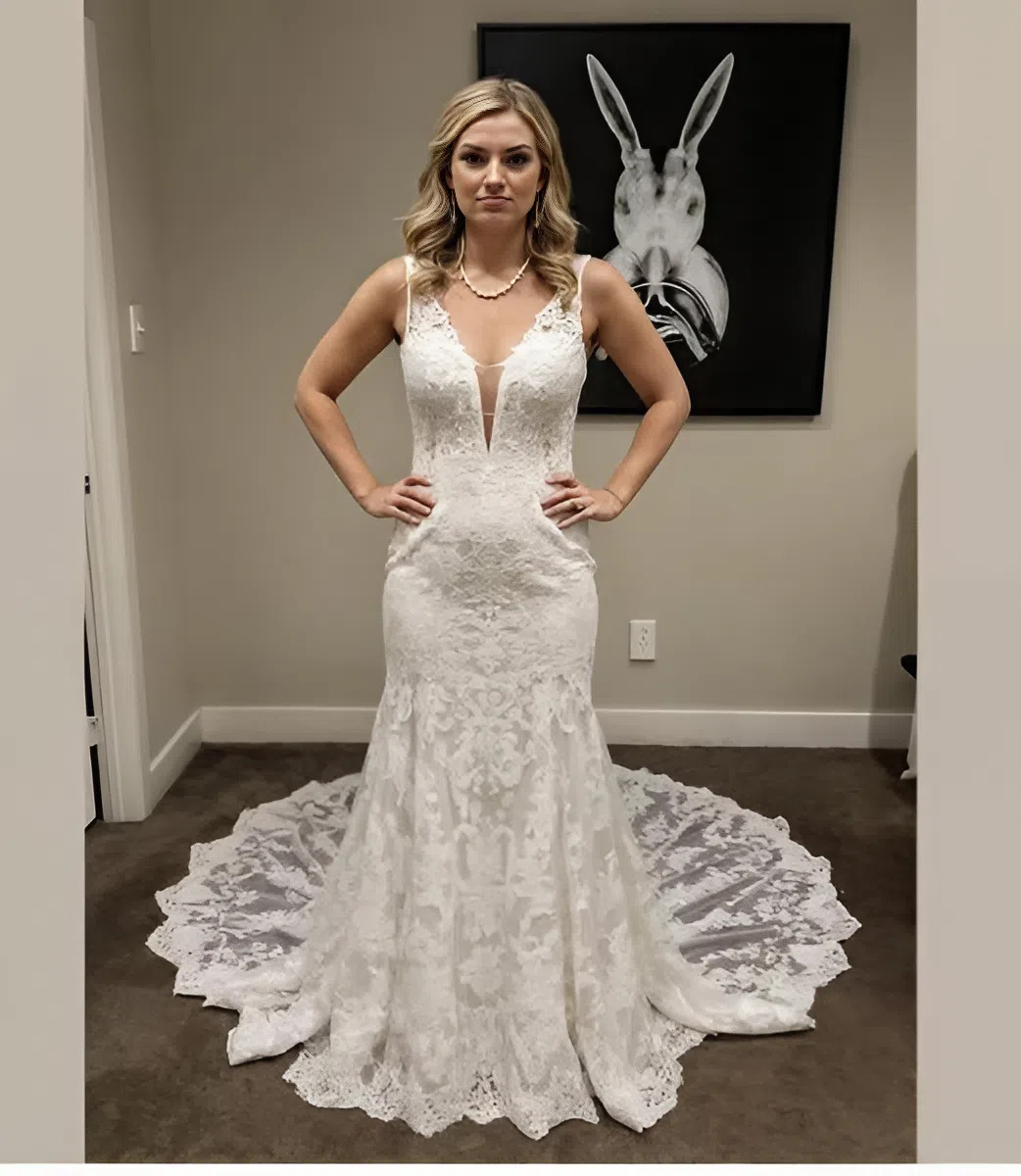
Eventually, we landed on an ivory silk A-line gown, with soft lace sleeves and a hand-embroidered bodice. It was easily the most ambitious dress I’d ever agreed to make.
“Are you sure this isn’t too much?” I asked one evening, eyeing the complexity of the design.
“It’s exactly right,” she said. “If anyone can pull this off, it’s you.”
The praise warmed me, and I threw myself into the work.
Almost every spare minute went into that dress. After finishing my full-time job, I’d rush home, skip dinner, and sew late into the night.
My fingers blistered from needles. My back throbbed from leaning over fabric for so long. I watched tutorials to learn new embroidery techniques and practiced until the movements felt natural.
I ordered special silk from overseas and tracked the package obsessively, like a child waiting for a birthday present.
Every tiny stitch felt like a small act of love.

During fittings, she would gasp and turn in front of the mirror. “I finally feel like a real bride,” she whispered once, eyes shining. “You’re literally making my dream come true.”
I smiled through my exhaustion. “That’s the idea.”
By the time the dress was complete, I had poured more than two hundred hours into it and spent several hundred dollars of my own money on top-tier materials.
A week before the wedding, I finally gathered the nerve to bring up the cost.
“Hey, do you want me to send over the receipts for the fabric and lace?” I asked, aiming for a light tone.
There was the slightest pause. “Receipts?”
“Yeah. For the materials. I can itemize everything for you.”
“Oh…” She flicked her hand dismissively. “I just assumed you were doing this as my wedding present. You know, because we’re best friends.”
The silence between us shifted.
“I planned to gift you my time and labor,” I said carefully, “but the materials alone were over six hundred dollars.”
She gave a small, airy scoff. “You’d have spent that on some sewing project anyway.”
“Not all at once,” I replied. “And not on silk this high quality.”
Her smile tightened. “I’m already over budget. Weddings are insane. You never told me it would cost that much.”
“I also never said it would be free,” I said quietly.
“Well, it’s a bit late to bring it up now, isn’t it? The dress is already finished.”
Her words hit like a bucket of cold water.
I looked over at the gown hanging on my mannequin, the fabric glowing softly, each detail made with care, and suddenly it felt unfamiliar.
“It’s not just about the money,” I said, though the money did matter. “It’s about respect.”
She rolled her eyes. “Oh, don’t be dramatic. You offered. I accepted. That’s it.”
Except it wasn’t. It was the first thread loosening.
Two days later, I handed over the dress with a strained smile, swallowing disappointment that tasted metallic. She squealed with delight, spinning in front of her mother and bridesmaids. No one asked how long it took. No one wondered what it cost me.
From that point on, she barely acknowledged me. I wasn’t invited to the bachelorette party, wasn’t included in getting-ready plans, and wasn’t part of the bridal party at all. I’d gone from best friend to convenient vendor.
On the morning of the wedding, I almost decided not to go.
But in the end, I put on a simple navy-blue dress, pinned my hair back, and went to the venue—an old garden estate lined with roses, flickering lights, and soft music drifting through the air.
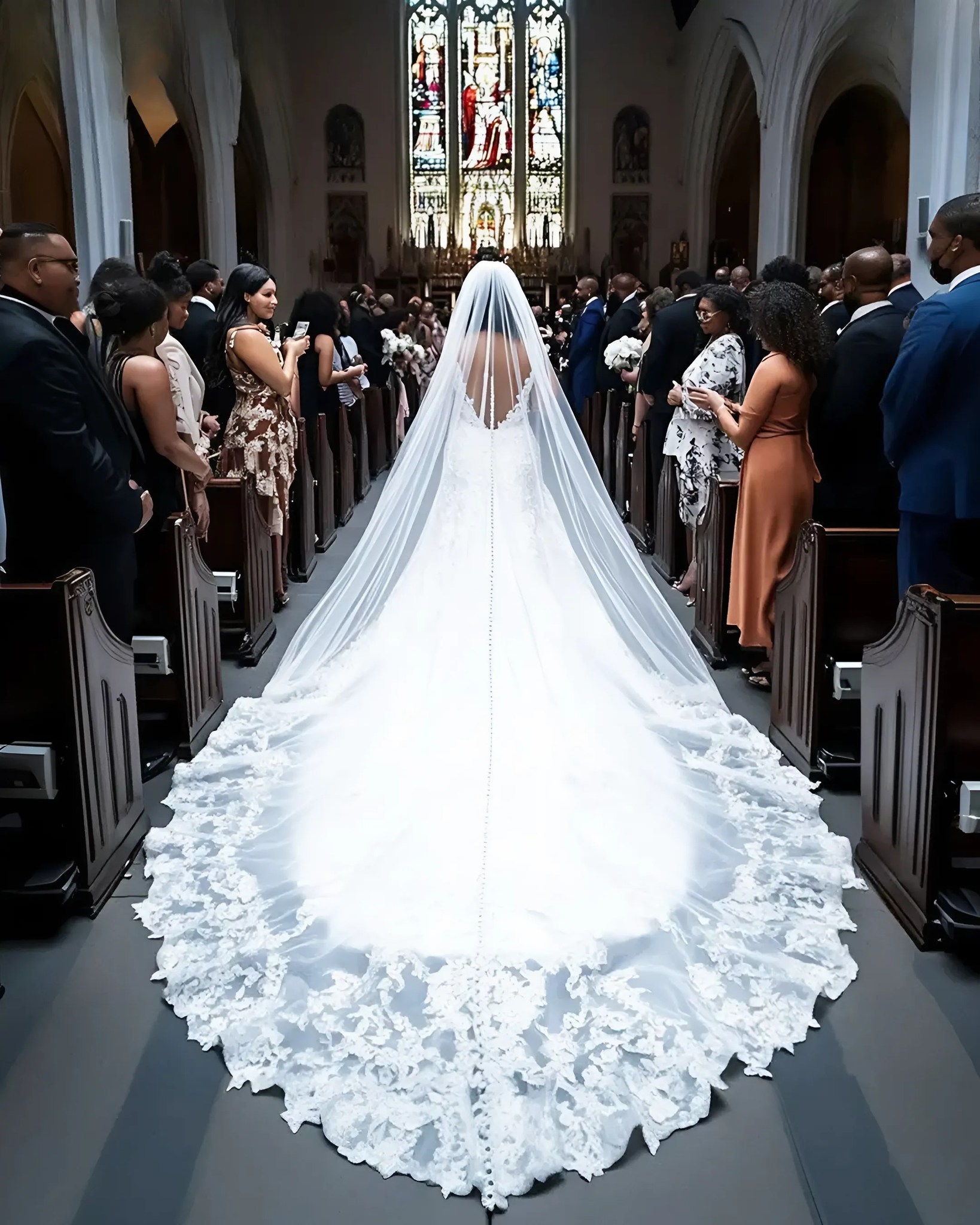
The ceremony began beautifully. Guests sighed as the doors opened. Everyone turned to watch the bride.
Watch my dress.
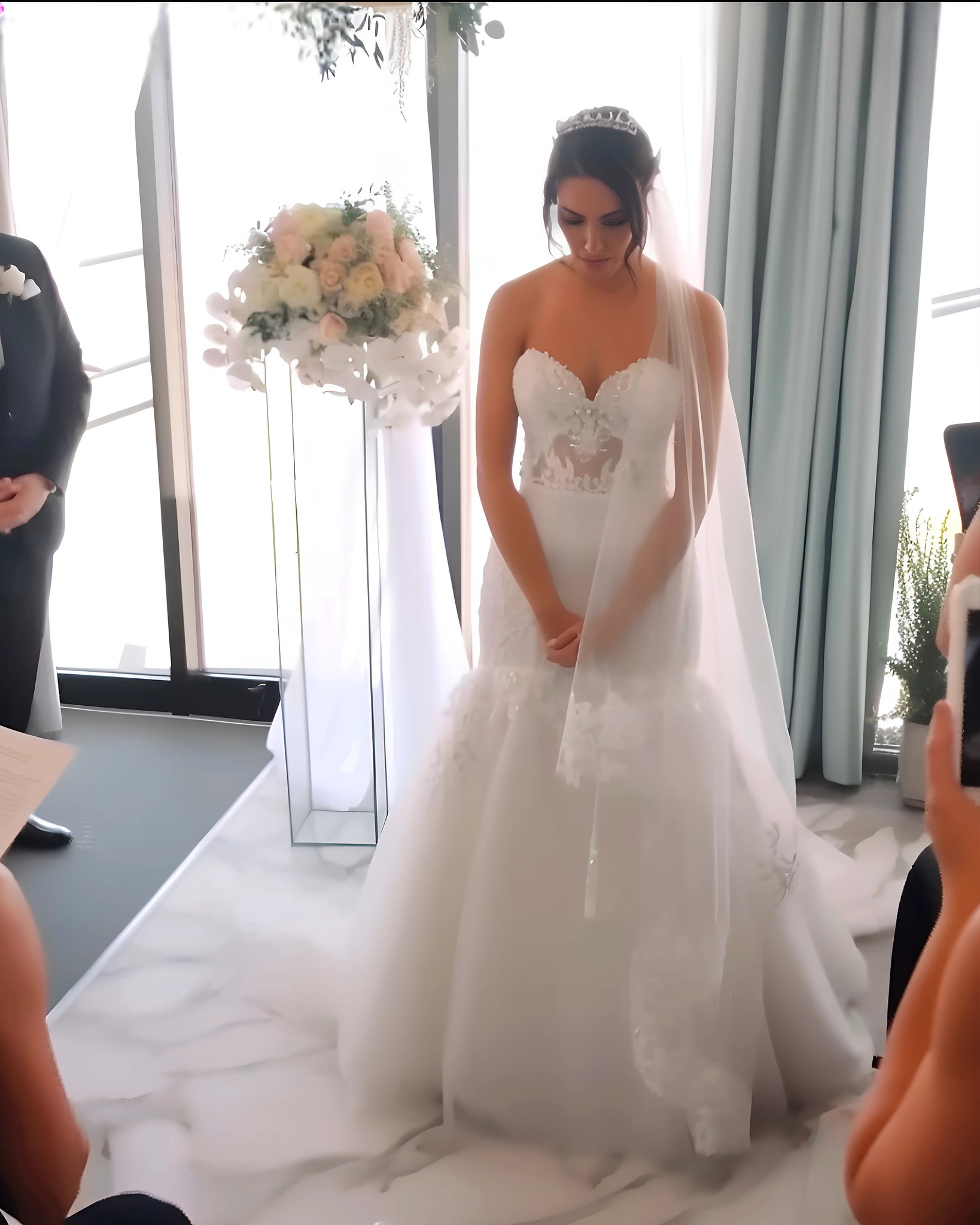
It fit her perfectly. The silk shimmered with each step. The lace sleeves caught the sunlight just right. Her face was lit with joy.
For a brief moment, I pushed the hurt aside and felt a faint, fragile pride.
Then, without warning, karma made its entrance.
Halfway down the aisle, I heard it—a tiny, unmistakable sound near the back hem.
Rip.
It was soft, just a breath of fabric tearing, but I knew that sound instantly. A few more steps, and the small tear began to spread. Someone in the front sucked in a breath. Another soft rip followed.
Her smile faltered as she sensed the pull at her feet. The hem kept catching on the uneven stone path. With every step, the silk strained until a long tear climbed up the back of the skirt, loud enough for people in the first rows to hear.
Gasps and murmurs rippled through the crowd.
She stopped.
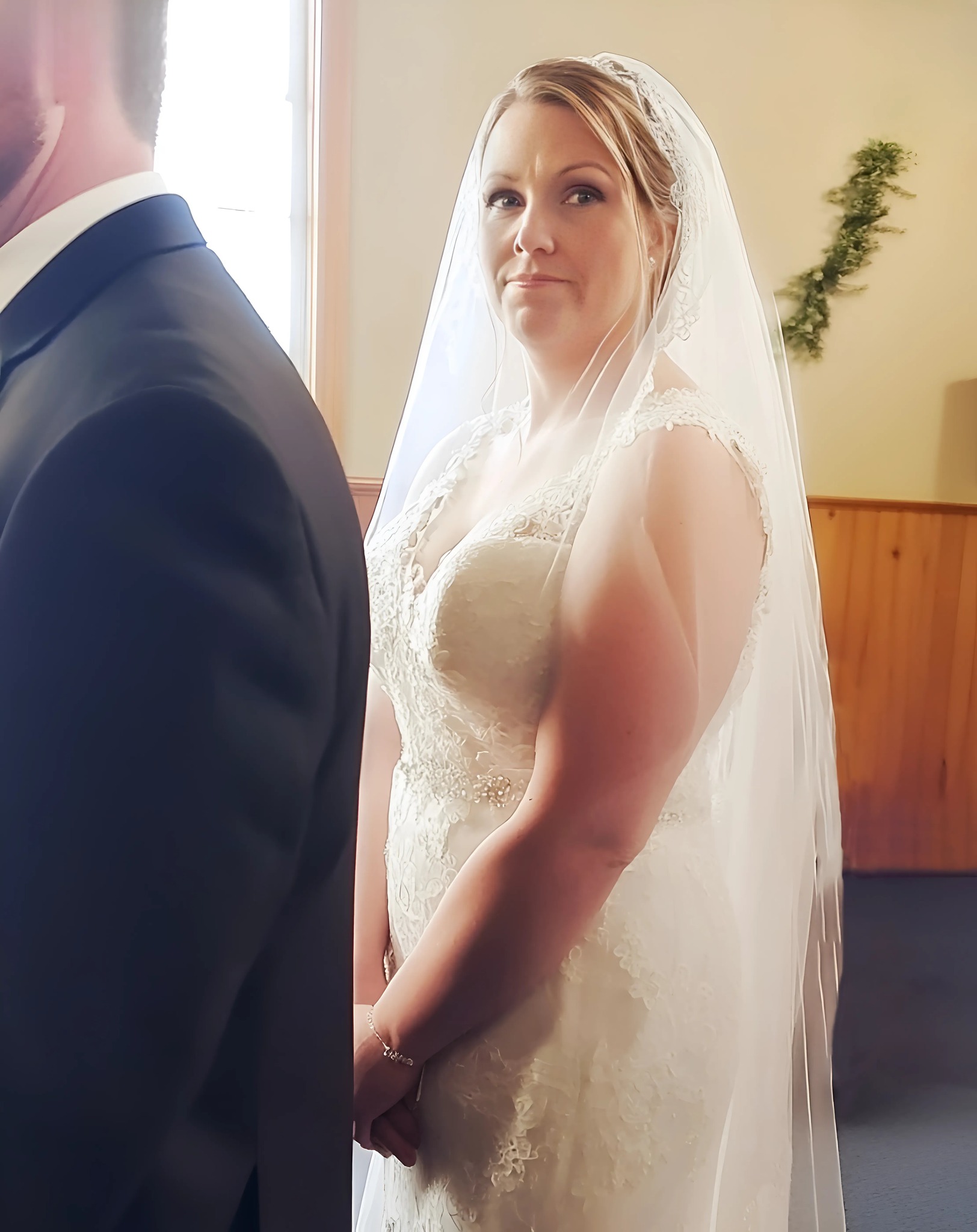
Her maid of honor hurried over to her, speaking in a frantic whisper. Panic flared in Marissa’s eyes. She clutched the torn fabric while photographers hovered uncertainly.
Then, as if the universe wanted to underline the point, one of the delicate back straps snapped.
The dress I had carefully constructed—now weakened by last-minute tailoring changes she’d insisted on, changes she never told me about, changes she’d handed off to another seamstress who hadn’t reinforced the seams—started to give way.
In that moment, it clicked. After I’d delivered the finished gown, she’d taken it somewhere else for “minor adjustments,” and whoever worked on it had used cheap thread and damaged the structure.
All the gentle warnings I’d given her came back to me. Don’t overfit silk. Don’t mess with the tension. Let me handle final alterations.
She’d ignored all of it.
The ceremony halted as attendants wrapped her in a shawl and whisked her inside. Guests whispered in confusion.
I stayed in my seat, fingers laced together, strangely calm.
I didn’t feel glee. I didn’t revel in her embarrassment. What I felt was quieter, sadder, and yet undeniably satisfying.
It felt like the natural result of everything that had come before. A consequence.
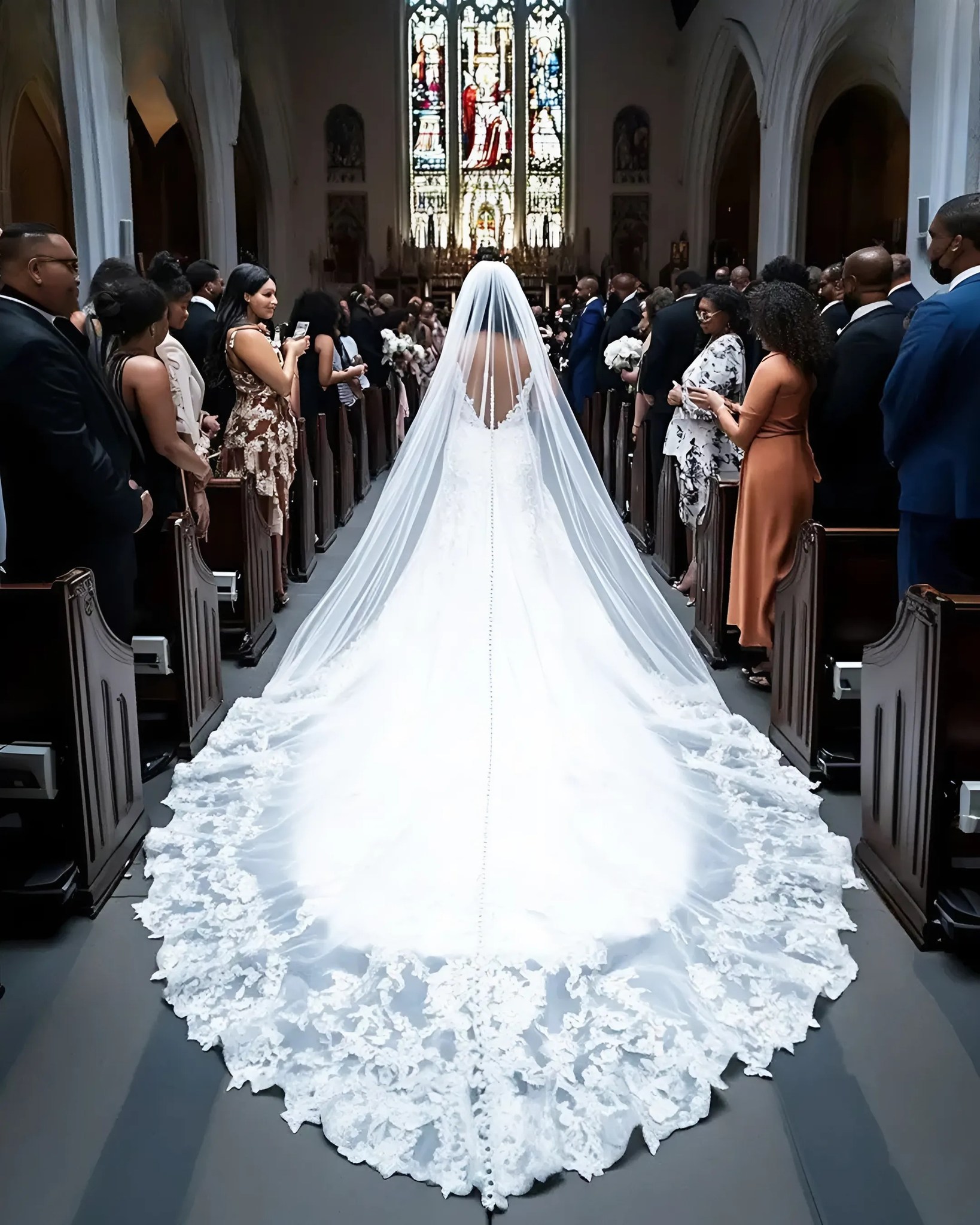
Almost forty minutes later, she reappeared. The ceremony resumed, this time with a hastily pinned, imperfectly fixed gown. The photographs afterward were tense and rushed. The fairy-tale smoothness she’d wanted was cracked.
During the reception, she finally approached me.
Her eyes were swollen from crying, her voice tight. “Did you know that was going to happen?”
“What do you mean?” I asked.
“The dress. Did you sabotage it?”
The accusation was sharp, ridiculous—and very on-brand for her when cornered.
I slowly shook my head. “No. I made it with care. With love. Exactly the way it was meant to be worn.”
“Then why did it fall apart?”
“Because it was altered after I finished it,” I said. “Because you didn’t respect the work that held it together.”
Her shoulders drooped, and I watched realization spread across her face.
“And maybe,” I added softly, “because when something is built on disregard, it doesn’t stay intact.”
For a long moment, she said nothing.
“I never meant to hurt you,” she murmured. “I just… assumed you’d understand.”
“I did understand,” I replied. “I just hoped you’d value me as more than someone you could use.”
The silence between us stretched. Around us, laughter and clinking glasses filled the warm night, but it all sounded distant.
“I’m sorry,” she whispered.
“I know,” I said. And for the first time in a while, I genuinely meant it when I added, “I forgive you.”
But forgiveness doesn’t always mean things go back to the way they were.
When I left that night, stars glimmered above the dark garden paths. With every step toward the exit, I felt a little lighter, as though I’d finally set down a weight I’d carried for years without realizing.
In the days that followed, she texted several times—apologies, explanations, promises to cover the material costs. In the end, she transferred the full amount and more, along with a short message: You deserved more kindness from me. Thank you for giving it anyway.
We never went back to being inseparable.

Instead, I went back to my sewing room.
On my mannequin, I began a new dress.
Not for a bride. Not for a friend.
For myself. Deep midnight blue silk, strong seams, honest stitching, and a quiet resilience sewn into every thread.
For the first time in a very long time, it felt like everything—my work, my boundaries, and myself—was exactly where it was meant to be.