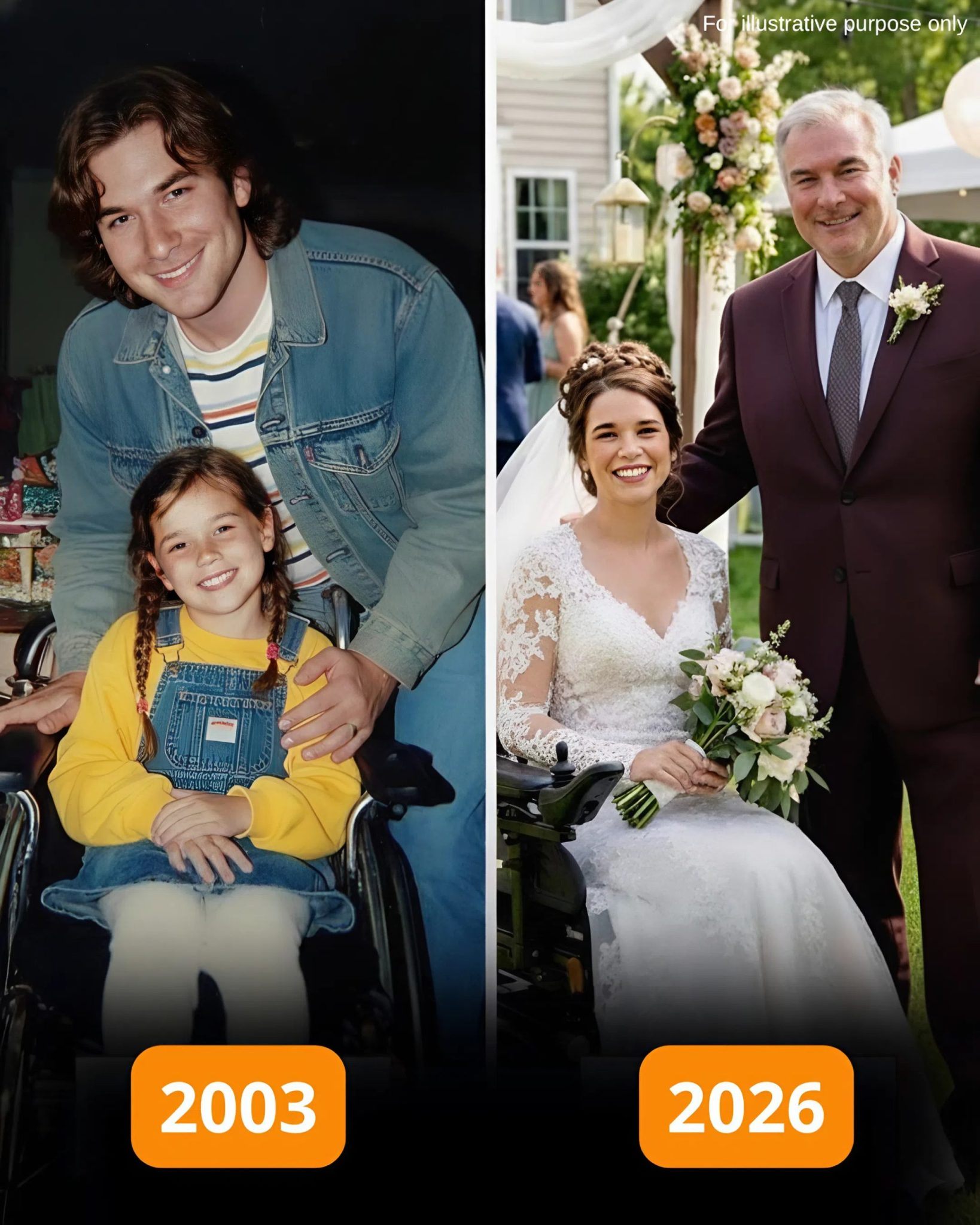
I thought I knew everything about the little girl I raised as my own. But on her wedding night, a stranger emerged from the crowd with a secret that could’ve unraveled everything I believed.
My name is Caleb. I’m 55 years old, and more than 30 years ago, I lost my wife and young daughter in a single night, tearing my world apart.
It happened in a car crash — a phone call. A calm but emotionless voice on the other end told me there had been an accident, and just like that, they were both gone.
Mary, my wife, and Emma, our six-year-old daughter. I remember standing in the kitchen, holding the receiver, staring into nothingness. The silence was deafening — not just in the quiet of the night, but in the pause between each thought.
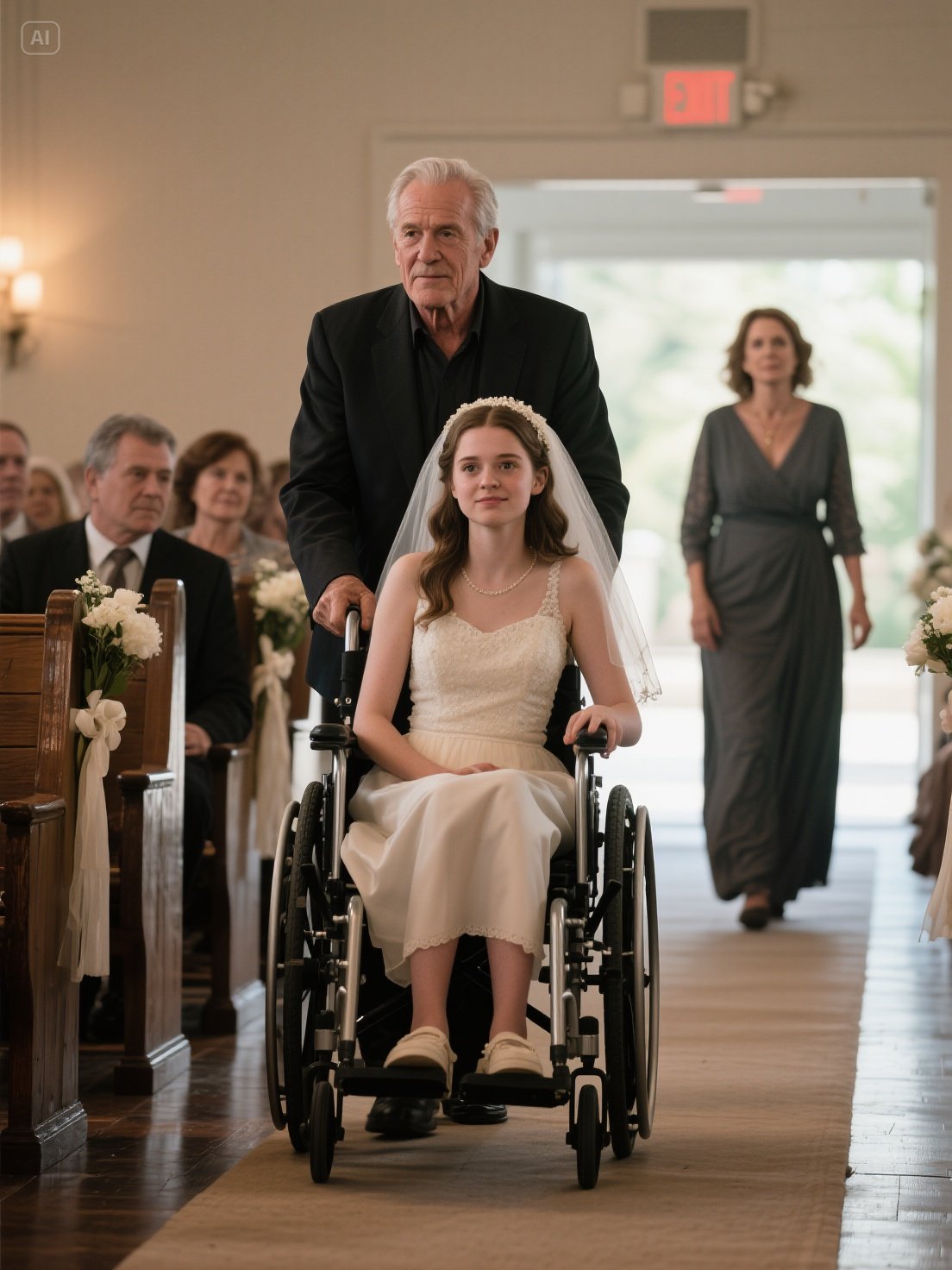
For years, I lived in a daze. I woke up, went to work, came home, and ate frozen meals in front of the TV, hardly tasting a thing.
Friends tried to check in. My sister called every Sunday. But none of it mattered.
The house remained empty.
I kept Emma’s drawings on the fridge until they faded and yellowed. I got through the long, lonely days with a broken heart, unable to throw them away. I never thought I would be a father again. That part of me was buried forever.
I had already been one — and failed to keep them safe.
But life does strange things when you least expect it.
One rainy afternoon, years later, I found myself pulling into the parking lot of an orphanage. I told myself I was just curious, not committing to anything. I wasn’t looking for a replacement.
But something deep inside me — maybe a whisper of my former self — wanted to see if I could still make a difference, even though I didn’t know what I was searching for.
The orphanage smelled of bleach and crayons. I could hear laughter echoing from one hallway, and a tantrum being soothed somewhere behind a closed door.
I met with a caseworker named Deirdre. She walked me through everything. Patient, honest, no sugar-coating. Then we passed a large window overlooking a small play area, and that’s when I saw her.
She sat quietly in a wheelchair. Her hair was tied neatly in a ponytail, and she held a notebook in her lap.
While the other children ran and played, she just watched them. Her face was calm — far too calm for a child her age.
“That’s Lily,” Deirdre said softly, noticing where my gaze had landed. “She’s five, and she’s been here for a while.”
“Why is she in a wheelchair?”
“Car accident. Her father died in the crash. Her spinal cord was damaged — an incomplete injury. With therapy, she might improve. But it’s a long road.”
“And her mother?”
“She signed away her parental rights shortly after. She said she couldn’t cope with the medical needs. Or the grief.”
Something clicked. I looked back at Lily. And, as if she sensed we were talking about her, she turned and looked right at me. Our eyes locked.
She didn’t flinch or look away. She just sat there, watching me, as though waiting for a door to open or close, like all the others before it.
Something inside me cracked. I didn’t see a diagnosis or a burden. I saw a child left behind — still quietly waiting for someone who wouldn’t leave her.
Even her features reminded me of my late daughter.
Deirdre explained that no one wanted to adopt Lily. My heart clenched, and in that moment, I knew. She was the child I wanted to adopt — the one I wanted to give my love to, and who truly needed it.
I asked to start the adoption process immediately, leaving Deirdre stunned.
There were background checks, interviews, and home visits.
I often returned to visit Lily at the orphanage. We talked about animals and books. She showed me her drawings. She loved owls, she told me, “because they see everything.” That struck me. She had already seen too much.
When I finally brought her home, all she had was a worn backpack, a faded stuffed owl, and a notebook full of sketches. I showed her to her room and gave her time to adjust.
For the first few days, Lily didn’t say much, but she always watched me — as if still deciding whether this was real.
One evening, while folding laundry in the living room, she rolled in from the hallway and asked, “Dad, can I have some more juice?”
I dropped the towel. That was the first time she called me Dad!
From then on, we were a team. Her therapy became part of our routine. I celebrated every little milestone — the first time she stood for 10 seconds without support, and when she took five steps with braces! She worked hard, with fierce determination.
School presented its challenges. Some kids didn’t know how to treat her. But Lily wasn’t one to sulk. She learned quickly and slowly made friends. She became fiercely independent, hated pity, and refused to let anyone think she was fragile.