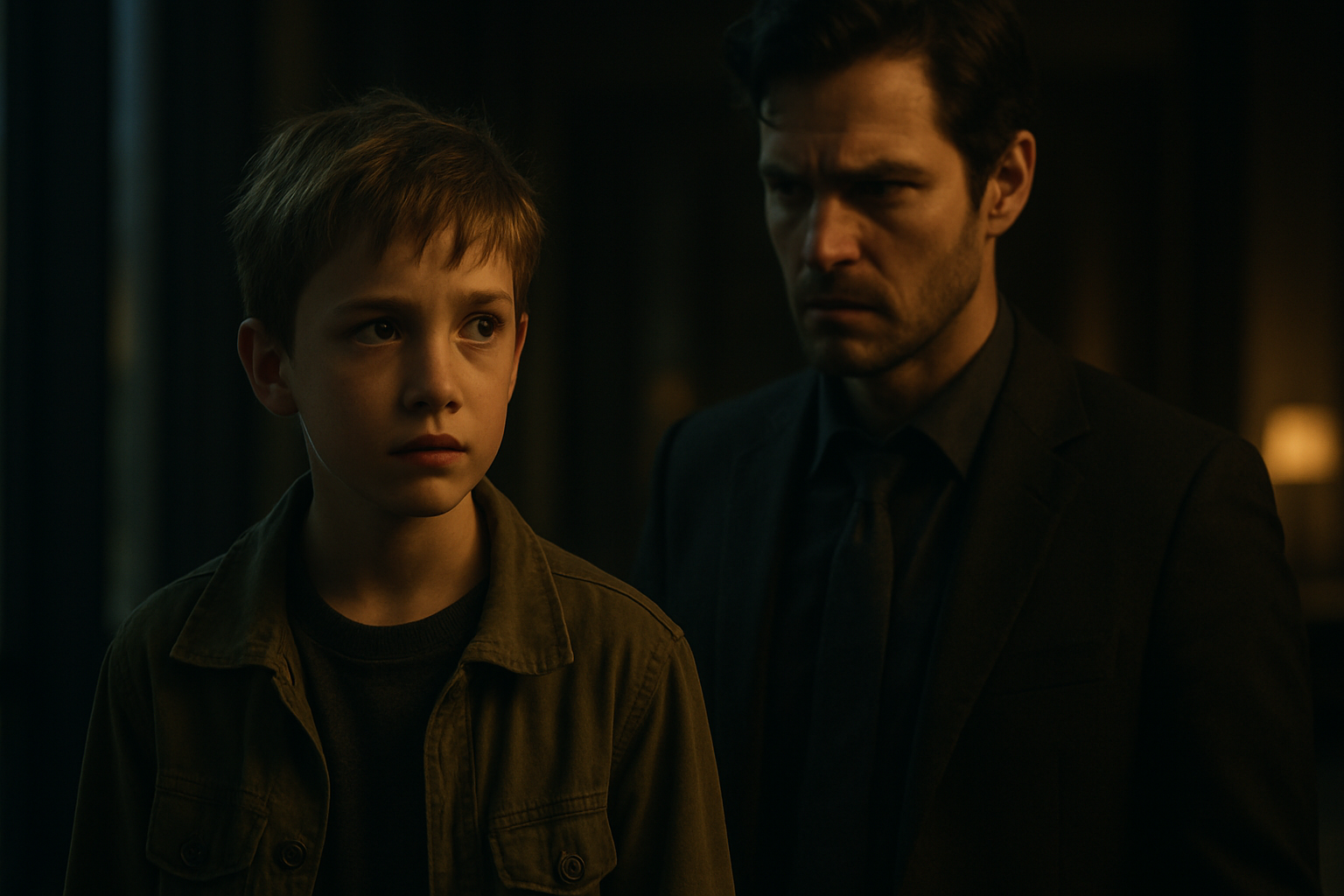
His mouth hardened on the last word.
“I knew part of it,” he continued. “I did not know Martin was inside the house.”
Vanessa stared at him.
“You knew?”
“Yes.”
“The engagement?”
“Is not what she thinks it is.”
It took Vanessa a second to understand him. Then another to believe he had actually said it.
“You proposed to a woman you suspected of conspiring against you?”
“No,” Adrian said. “I allowed a woman who believed she was trapping me to believe I was trapped.”
The silence after that was thick enough to touch.
Vanessa’s eyes dropped before she could stop them.
To the wheelchair.
To his legs.
To the careful stillness she had accepted as injury because everyone in the house had accepted it. Because the world had accepted it. Because there were things decent people did not question, and a man’s body after an accident was one of them.
Adrian said nothing.
He did not rush to fill the silence. He did not soften the implication. He simply let her arrive.
“You can walk,” Vanessa whispered.
He looked at her then. Not offended. Not ashamed. Not triumphant.
“Yes.”
The word was simple. Almost bare.
For a moment, fear gave way to anger so sharp it steadied her.
“Do you understand how insane that sounds to people who don’t have nine billion dollars and a private security team?”
That almost-smile appeared and vanished. “I do.”
“Do you?”
“I understand it sounds arrogant,” he said. “It was also necessary.”
Vanessa leaned back slightly, as if distance might make him make more sense. “Necessary.”
“After the accident, everyone around me changed. Some became protective. Some became impatient. Some became careless.” His gaze moved briefly toward the closed door, beyond which the penthouse continued breathing its polished lies. “Vivienne became bold. If I recovered publicly too soon, they would retreat. If I remained underestimated, they would move.”
“And you let them move around your staff,” Vanessa said. Her voice came out harder than she intended. “Around my son.”
There it was.
The thing she had been carrying beneath everything else.
Not the company. Not the board. Not the prenup. Not Vivienne’s greed or Martin’s strategy or Park’s promises.
Caleb.
Her son with his dinosaur pajamas and cracker crumbs and solemn belief that all chairs were either “fast” or “sleepy.” Caleb, who had seen something he did not have words for. Caleb, who had touched Adrian’s injured knee like he was checking whether the world had lied to him.
Vanessa expected Adrian to defend himself. Rich men usually did, even when they apologized. They built explanations like walls and expected everyone else to stand outside them.
But Adrian nodded.
“That is why I owe you more than an explanation,” he said. “You were pulled into this without consent.”
The anger inside Vanessa faltered because she had been ready for excuses. Excuses were easier to reject. This—this calm acceptance of blame—found a more vulnerable place in her.
She looked away first.
“She’s going to come for my job.”
“She already has.”
Vanessa’s head turned back.
Adrian held her gaze. “I stopped the first file. She’ll try again.”
“Of course she will,” Vanessa said, her voice low.
Vivienne would not shout. She would not slap. Women like Vivienne did not need to. They made calls. They documented concerns. They used phrases like pattern of unreliability and boundary issues and unsuitable environment. They made destruction look like administration.
“What do you want from me?” Vanessa asked.
“Five days.”
She waited.
“Continue as you have,” Adrian said. “Tell me if Martin enters the house again. Tell me if Vivienne changes plans. Tell me if anything touches Caleb. In five days, it ends.”
Vanessa gave a short, humorless breath. “And if I say no?”
“Your job remains. Your pay increases retroactively for the extra hours you’ve worked. Caleb’s room stays available until you choose otherwise.”
She narrowed her eyes. “That sounds like you prepared the answer before asking the question.”
“I did.”
“Because you thought I’d say no?”
“Because you should be free to.”
The words struck her in a place she had not guarded because no one had aimed there in years.
Free.
In Vanessa’s life, freedom was mostly something printed on signs and said by people with savings accounts. Bills decided. Bus schedules decided. Daycare policies decided. Weather decided. Caleb’s cough at two in the morning decided. Employers decided. Landlords decided. Men who never learned her name decided.
Choice, when it came, usually arrived as a trap dressed in clean clothing.
But Adrian Kang, sitting in a wheelchair he did not need, in a library that cost more than her entire neighborhood block, had offered her something almost no one in that penthouse gave the staff.
A real way out.
No punishment disguised as disappointment. No threat hidden under kindness. No expectation that gratitude should replace consent.
A choice.
Vanessa folded her hands more tightly.