Temporary housing for veterans coming home with nowhere steady to land. Safe transitional cabins for women leaving violent homes. A workshop. A training kitchen. Counseling offices. Legal assistance. Land stewardship jobs.
In Dad’s notes, one sentence appeared again and again:
Let the mountain shelter people who were told they were too difficult to love.
I sat on the floor of the back room with the papers in my lap.
For the first time since the funeral, I did not feel cheated.
I felt summoned.
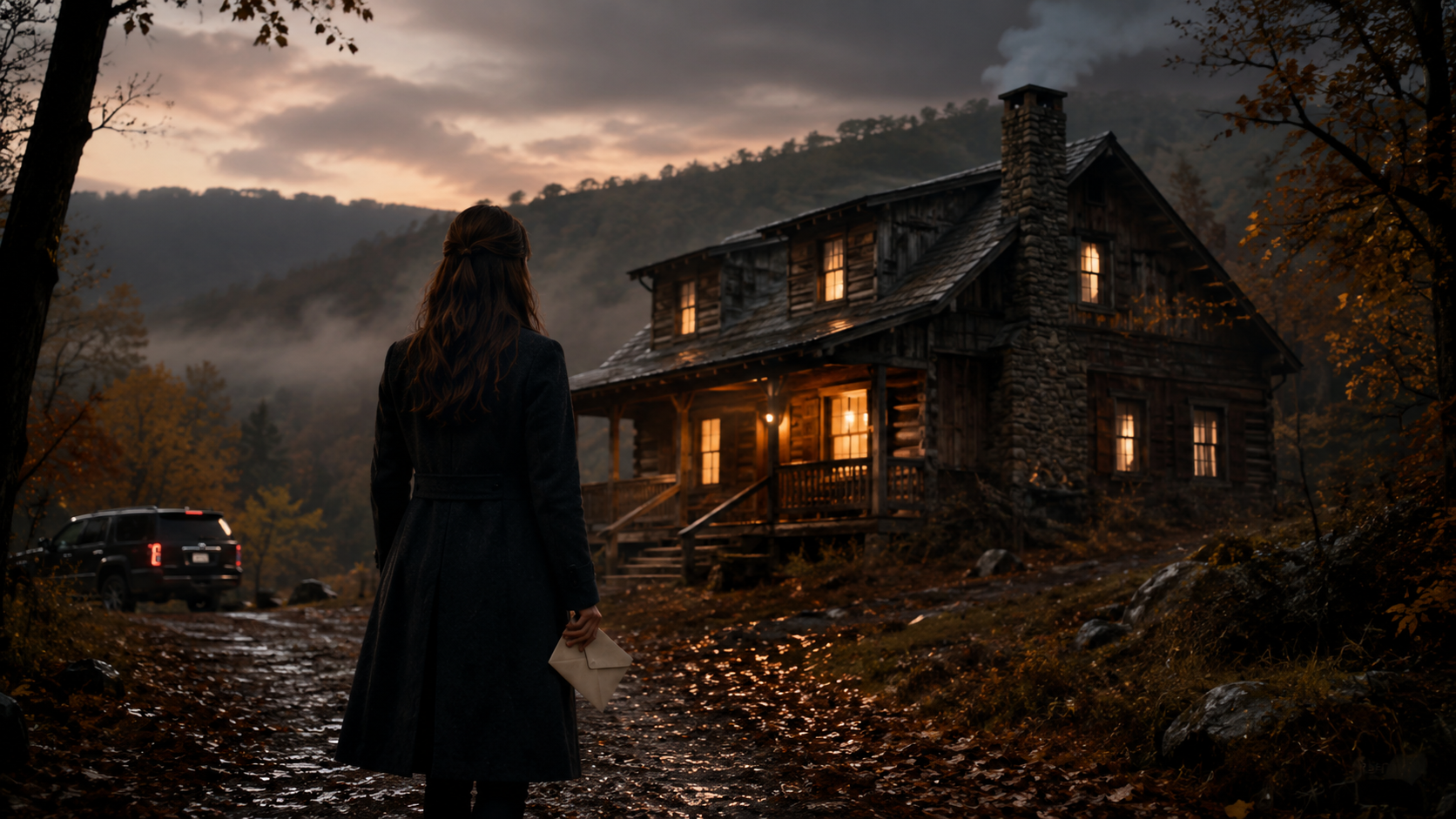
Maribel arrived two days later in a silver Range Rover that looked offended by the mud.
My mother sat in the passenger seat, pale and tense.
Maribel got out wearing heeled boots, a wool cape, and the expression of someone who expected the wilderness to apologize.
I watched from the porch.
She stopped at the bottom step and looked up at me.
“Are you going to invite us in?”
“No.”
Her mouth opened.
My mother looked wounded. “Rowan.”
“You should have called first.”
Maribel laughed. “Don’t be dramatic. We’re family.”
“That word does a lot of work for you.”
Her eyes narrowed.
She glanced at the cabin, then at the chimney, then at the new lock I had installed on the back room door.
“What are you hiding?”
I leaned against the porch post.
“My property.”
“Dad left you a cabin, not a kingdom.”
“Then why are you here?”
The question landed.
For half a second, the mask slipped.
Panic flashed behind her eyes.
Then she recovered.
“I’m here because Mom is worried. You disappeared into the woods after a funeral. You’re grieving. You’re not thinking clearly.”
My mother stepped closer.
“Rowan, darling, this land is too much for you. You have your career. Your life. Repairs, taxes, legal issues… Maribel has contacts. She knows developers. She could help manage it.”
“There it is.”
Mother frowned. “There what is?”
“The part where peace means giving Maribel control.”
Maribel’s cheeks flushed.
“You always twist everything.”
“No. I finally stopped smoothing it out for you.”
She climbed one step.
“I know Dad hid something here.”
My pulse slowed.
Not quickened.
Slowed.
The way it had before difficult missions. The way fear became focus.
“What makes you say that?”
“Because he was strange about this place. Because he kept coming here when he was sick. Because no sane man leaves two hundred acres to the daughter who barely came home unless he has some sentimental scheme.”
My mother whispered, “Maribel, stop.”
I looked at her.
“What do you know, Mom?”
Her eyes filled, but she said nothing.
Maribel pointed at the cabin.
“That land belongs to all of us.”
“No. It belongs to me.”
“Legally, maybe.”
“Legally is the only maybe that matters.”
Her voice sharpened.
“You think because you wear boots and stare into the distance, you’re better than me.”
“I think Dad made a choice.”
“He was dying.”
The words struck the air like a slap.
My mother closed her eyes.
I came down one step.
“Be very careful.”
Maribel’s jaw trembled.
“He was weak. He was guilty. You used that. You always knew how to make him feel sorry for you.”
I almost told her.
I almost opened the door, dragged out the maps, showed her Ruth’s journal, the mineral report, the foundation papers. I wanted to watch her realize she had laughed at a fortune. I wanted her shame to come back to her with interest.
Then Dad’s letter moved through me.
Do not sell because someone humiliates you.
Do not keep it only to prove a point.
I smiled.
“No.”
Maribel blinked. “No what?”
“No, I will not explain my inheritance to someone who came here to take it.”
“You can’t just refuse.”
“I already did.”
She looked to Mom.
“Say something.”
My mother’s voice broke.
“Rowan, if there is something valuable here, perhaps sharing it would keep the family together.”
I laughed once.
Not because it was funny.
Because some wounds become absurd when they repeat themselves too many times.
“You still think family means handing Maribel whatever she wants so she doesn’t punish everyone with her disappointment.”
“That is unfair.”
“No. It is precise.”
My mother looked down.
Maribel stepped back, shaking with rage.
“I’ll contest the will.”
“Do it.”
“I’ll have the land assessed.”
“No, you won’t.”
“I’ll get an attorney.”
“Get two.”
Her face twisted.
“You really are impossible.”
I walked to the bottom step and met her eyes.
“No. I am finished being convenient.”
For once, neither of them spoke.
Maribel left first.
My mother lingered by the car, one hand on the open door, looking at me as if she wanted to cross the space between us but had forgotten how walking worked.
Then Maribel honked.
Mother flinched and got in.
I watched them drive away through the trees.
For the first time in my life, being left behind did not feel like losing.