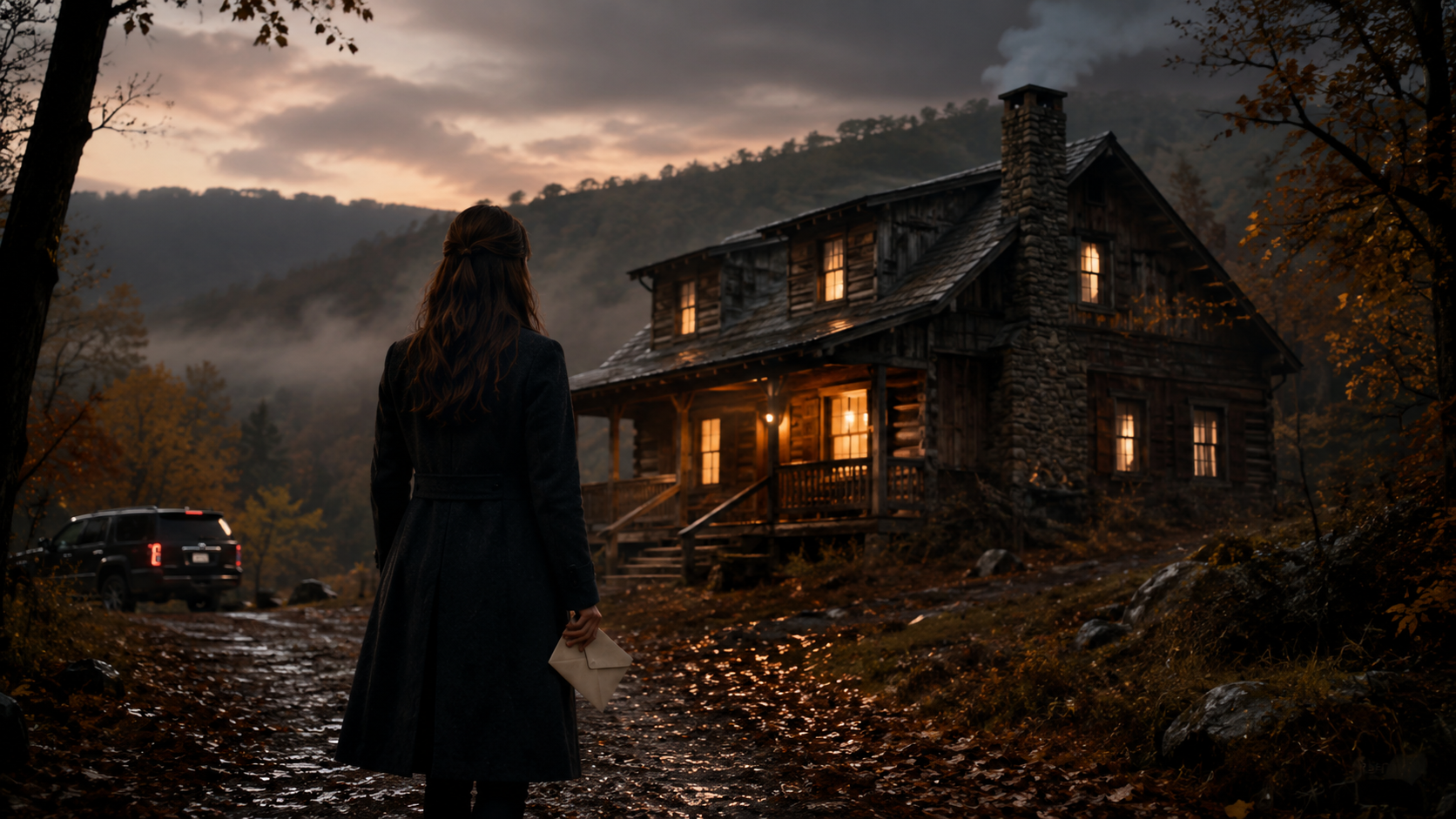
It felt like land settling under my feet.
Maribel filed a challenge within three weeks.
She claimed undue influence.
She claimed Dad had lacked capacity.
She claimed I had manipulated him, despite the fact that I had been deployed most of the year and had only seen him twice in his final month.
Russell answered every accusation with paper.
Medical evaluations.
Witness statements.
Transfer records.
Trust documents.
Dad had prepared for every blade Maribel might throw.
I stayed at the cabin through December.
I installed cameras. I fixed the porch with Abel. I learned the old trails. I met Sheriff Mara Kent, a calm woman with gray eyes and no patience for rich people pretending trespass was a misunderstanding.
I hired independent environmental counsel.
I learned about extraction leases, royalty structures, conservation easements, nonprofit governance, and how quickly men in expensive jackets began smiling when they realized a woman owned something they wanted.
Every night, I read Ruth’s journal.
She had buried a husband, a son, and every version of herself that expected fairness from the world. She wrote like a woman who had learned to sharpen grief into tools.
One line stayed with me:
A woman is not bitter because she keeps what others planned to steal.
I taped it above the sink.
Two nights before Christmas, the south gate camera sent an alert at 1:22 a.m.
Headlights.
Then two figures climbing the fence.
I called Sheriff Kent before I put on my coat.
Abel arrived with a flashlight and an old shotgun pointed safely at the ground.
We found the men near the creek with sample bags, GPS equipment, and a portable drill.
One claimed they were hikers.
Sheriff Kent looked at his polished loafers.
“In December? With a drill?”
He stopped talking.
By sunrise, they had admitted a consulting firm paid them to collect samples.
They refused to name the client.
They did not need to.
I called Maribel at 8:04 a.m.
She answered brightly.
“Ready to be reasonable?”
“Two men were arrested on my land last night.”
Silence.
“That sounds like a local matter.”
“They were taking soil samples.”
More silence.
I sat at the kitchen table with Ruth’s photograph in front of me.
“Listen carefully,” I said. “If I discover you sent them, I will not handle it like your sister. I will handle it like the legal owner of protected land with a very patient attorney and a sheriff who dislikes trespassers.”
Her voice turned cold.
“You’ve changed.”
“No. I stopped asking permission to be angry.”
“You think Dad chose you because you’re better than me?”
“I think Dad chose me because he knew I would not sell Ruth’s mountain to the first man who called me smart.”
A pause.
“Who is Ruth?”
That stopped me.
For the first time in years, I felt something almost like pity.
Not forgiveness.
Not softness.
Just recognition.
Maribel did not know either.
We had both grown up in the same house of omissions.
The difference was that I had mistaken silence for shame, and she had mistaken it for entitlement.
“Ask Mom,” I said.
Then I hung up.
The mediation happened in January, in a glass-walled conference room overlooking a wet city street.
Maribel arrived in navy silk with our mother beside her. She looked polished, composed, and ready to win.
She did not look ready for Dad.
Russell played the video near the end.
I had not known it existed.
Dad appeared on the screen thinner than memory allowed, wrapped in a gray cardigan, seated in his study. His face looked tired, but his eyes were clear.
“My name is Harlan James Whitaker,” he said. “I am recording this because I know grief turns people into lawyers when love has failed to make them honest.”
Maribel went very still.
Dad continued.
“Celeste, I loved you. I also let you convince me that where I came from was something to polish away. That was my weakness, not yours alone.”
My mother covered her mouth.
“Maribel, I love you. I have provided for you generously. But you have often mistaken attention for devotion and inheritance for proof. I left you finished things because finished things comfort you.”
Maribel’s eyes filled.
Then Dad looked directly into the camera.
“Rowan, I left you the cabin and the land because you understand unfinished things. You understand duty. You understand repair. You understand that value often hides beneath insult, weather, and work.”
My chest tightened until breathing hurt.
“If anyone claims Rowan pressured me, they are lying. If anyone claims I did not understand what I was doing, they are insulting me. The land, the water rights, the mineral rights, and the responsibility are hers. Not because I love her more. Because I trust her differently.”
Maribel stood so quickly her chair struck the wall.
“This is disgusting,” she whispered.
Her attorney touched her sleeve. She pulled away.