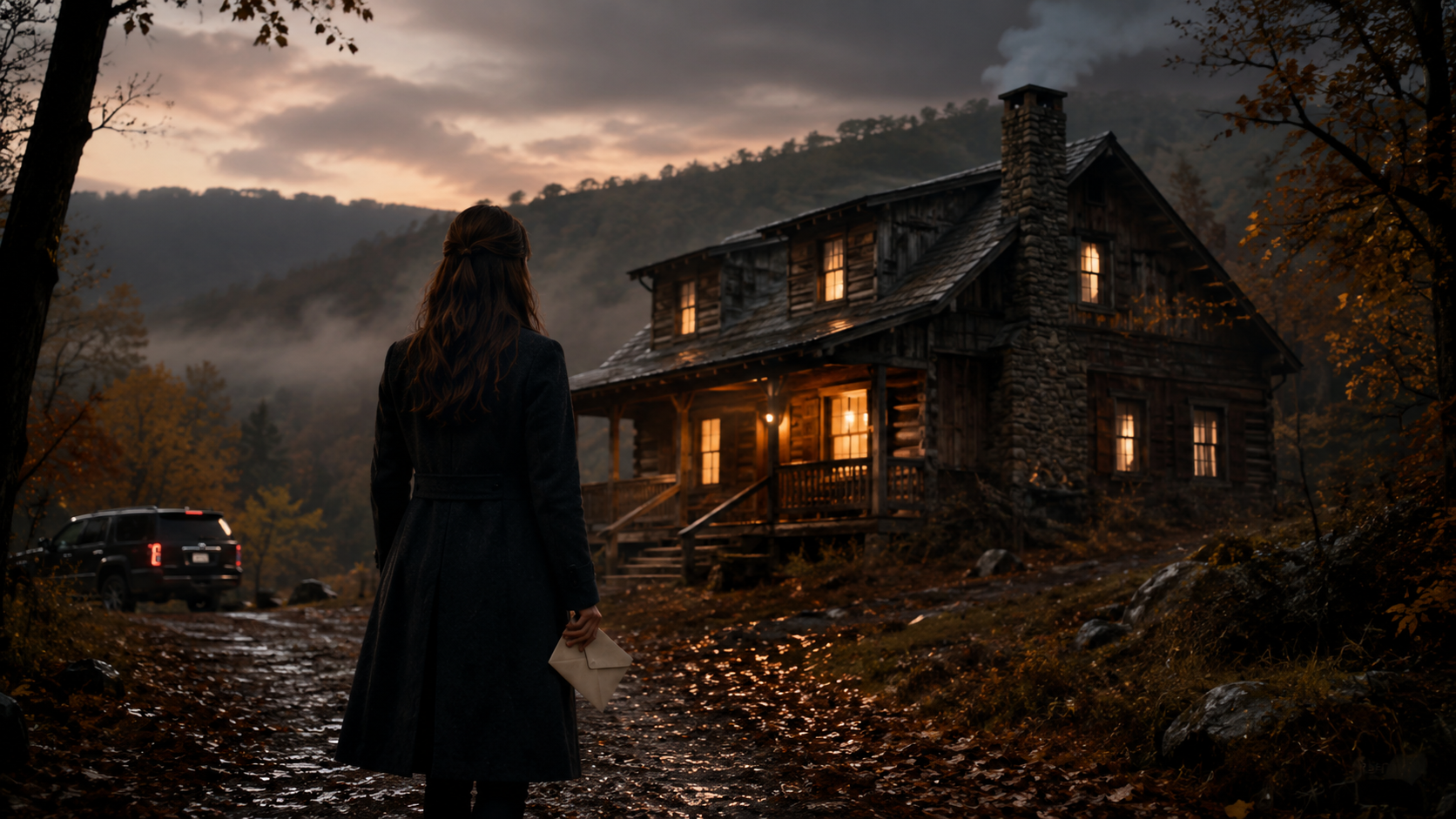
I am sorry.
Your sister sees value when it shines. Your mother trusts what looks respectable from the road. You, my daughter, have always understood damaged things. You repair what others discard. You sit with what is unfinished. You do not run from hard weather.
That is why the land is yours.
Not as a prize.
As a charge.
Do not rush.
Do not sell because someone humiliates you.
Do not keep it only to prove a point.
Use it well.
There is enough here to ruin this mountain or redeem something in our name. I am trusting you to know the difference.
I loved you loudly in my heart and quietly in rooms where I should have stood up.
Forgive me if you can.
Dad
The first sob came from somewhere below my ribs.
Ugly.
Sudden.
I bent over the letter and pressed it to my chest.
The fire burned low. The cabin creaked in the wind. The woman in the photograph looked out from another century as if she had been waiting for me to arrive late, hurt, furious, and finally ready.
I cried until there was nothing left but ash in my throat.
I slept in the chair by the fire.
At dawn, I opened the back room.
It was not a bedroom anymore.
It was an archive.
Shelves lined the walls. Boxes were labeled in Dad’s careful handwriting. Deeds. Water tests. Family letters. Ruth’s recipes. Court filings from the 1970s. Photographs. Newspaper clippings. Old mining offers marked REFUSED in red pencil.
On the far wall hung a framed sketch of the cabin and ridge.
Beneath it, Dad had pinned a note.
This room is the difference between inheritance and memory.
I spent three days there.
I barely answered my phone.
Maribel called twelve times.
My mother called six.
Texts followed.
Maribel: We need to discuss the cabin.
Maribel: Mom says you’re being emotional.
Maribel: Old land comes with liabilities. Don’t touch anything important.
Maribel: I know Dad hid something out there.
That last one made me stand still in the kitchen.
I read it twice.
Then Abel came in carrying split wood and saw my face.
“What?”
I held up the phone.
He read the message and his expression darkened.
“She’s sniffing smoke.”
“How much does she know?”
“Maybe nothing. Maybe enough to be dangerous.”
“Who else knew?”
“Your father. Russell. Me. The engineer. The lab people under nondisclosure. Sheriff Mara Kent knew there had been trespassers last spring, but not why.”
“Trespassers?”
Abel set the wood down slowly.
“Two men came through the south ridge with survey flags. Your father caught them. They claimed they were lost.”
“Were they?”
“They had a drone and soil bags.”
My stomach tightened.
“Why didn’t he report it?”
“He did. Quietly. Your father did everything quietly.”
That sentence made anger rise so fast I nearly shook.
Quietly.
Dad had loved quietly.
Protected quietly.
Regretted quietly.
And now the quiet had left me surrounded by people who thought silence meant weakness.
I called Russell.
He answered on the second ring.
“You found the box.”
“Yes.”
A pause.
“I’m sorry.”
“Don’t be sorry. Tell me if Maribel can challenge the will.”
“She can try.”
“Can she win?”
“No.”
“You sound certain.”
“I wrote the structure myself. Your father transferred the land into a protected trust arrangement before the final will was executed. The mineral rights were verified separately. There is no shared ownership, no management clause, and no opening for your sister unless she can prove incapacity.”
“Can she?”
“No. Your father anticipated that. He completed medical evaluations, recorded statements, and signed everything in front of witnesses.”
The relief should have been comforting.
Instead it made me sadder.
Dad had prepared for war with his own family.
“Why didn’t he tell me about Ruth?” I asked.
Russell exhaled.
“That is a longer answer.”
“I have time.”
“Your mother hated the cabin. She believed your father’s attachment to it kept him tied to a world she wanted him to outgrow. She wanted refinement. Donor dinners. Investment circles. A life without mud on the floors. Ruth represented everything your mother feared people would see if they looked too closely at where he came from.”
“And Dad let her erase Ruth?”
“Yes,” Russell said softly. “He did.”
I looked at Ruth’s photograph on the table.
That old woman had kept a mountain through poverty, insults, and men in suits, only to be hidden by the family she saved.
Not anymore.
“What happens next?” I asked.
“We secure the property. We update the trust. We activate the charitable framework if you choose to.”
“What charitable framework?”
Silence.
Then Russell said, “He hoped you would ask that.”
The foundation papers were in Box Seven.
Dad had planned it all.
Not a resort.
Not luxury cabins.
Not a quick sale.
The Whitaker Ridge Project.