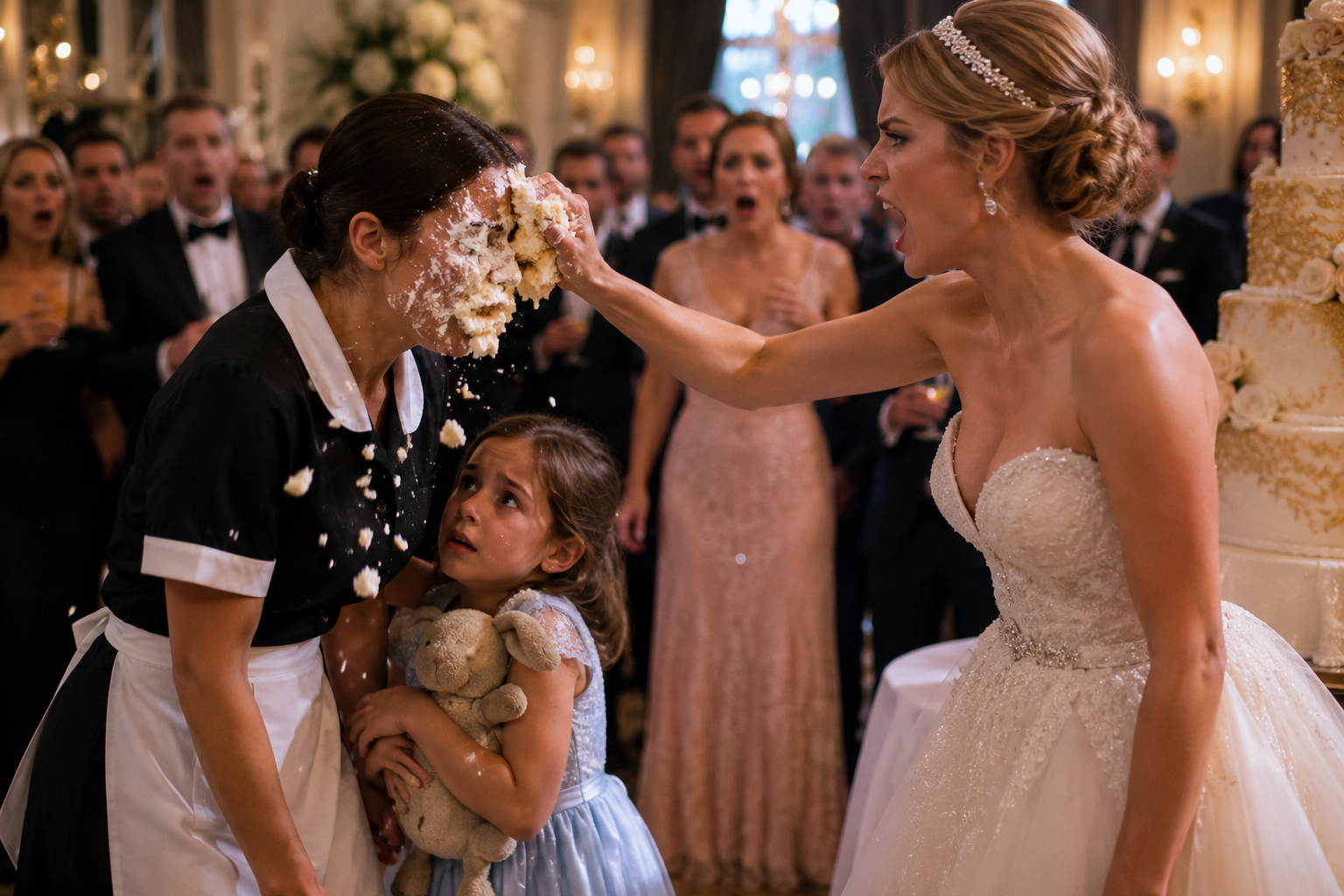
The wedding had not been a romance.
It had been a strategy.
When confronted, Vivienne denied everything.
Then she blamed Marcus.
Then she blamed Julian for being emotionally distant.
Then she cried.
Julian did not soften.
That surprised people. He was known for mercy. Sometimes too much of it. But he understood now that mercy without boundaries was not kindness. It was permission for the next betrayal.
The marriage certificate had not yet been filed.
The wedding was voided.
Vivienne’s family tried to bury the scandal. Julian refused. Marcus Vale became the subject of an investigation. Contracts were frozen. Vivienne left the state within weeks, no longer photographed in bridal magazines, no longer smiling beneath chandeliers.
Elena expected to be fired.
She expected it because life had trained her well. When powerful people were embarrassed, someone powerless usually paid the bill.
For three days, she came to work with a resignation letter folded in her purse.
Julian did not summon her.
He did not ask Rosie to repeat the story.
He did not mention the cake.
He let the house become quiet again.
On the fourth morning, Elena found him alone in the kitchen before sunrise. He stood by the window, looking out at the gardens, holding a cup of coffee he had forgotten to drink.
“Elena,” he said.
She stopped in the doorway.
“Yes, Mr. Ashbourne?”
He winced at the title.
“I owe you an apology.”
“You don’t.”
“I do.”
She looked down.
Julian set the coffee aside.
“I allowed someone into this house who treated you as less than human. I ignored signs because seeing them would have forced me to admit I was wrong. I let loneliness make decisions judgment should have made. Because of that, you and Rosie were hurt under my roof.”
Elena’s eyes burned, but she refused to cry.
“I needed this job,” she said. “That’s why I stayed silent.”
“I know.”
“No,” she said, finally looking at him. “You don’t. You’re kind, Julian, but you don’t know what it feels like to measure dignity against rent. You don’t know what it feels like to tell your child to be quiet because the truth might cost dinner next week.”
The words landed hard.
Julian accepted them.
“You’re right,” he said. “I don’t know. But I want this house to become a place where nobody has to make that calculation again.”
He reached for an envelope on the counter.
Elena stiffened.
“If that’s severance—”
“It isn’t.”
Inside was a formal offer.
Director of Estate Operations.
Triple her current salary.
Full health coverage for her and Rosie.
A small cottage on the property, if she wanted it.
Education support for Rosie.
Elena stared at the paper.
“I don’t understand.”
“You have been running half this estate unofficially for years,” Julian said. “You know the systems. You know the staff. You know what my mother wanted this house to be. This is not charity. This is recognition that should have come sooner.”
Elena’s hands trembled.
“I need time.”
“Take all the time you need.”
She took nine days.
Then she accepted.
The first thing she changed was the staff policy. No more invisible labor disguised as family loyalty. No more emergency shifts without childcare support. No more unpaid hours hidden behind phrases like “we all help out here.” Clear schedules. Clear wages. Clear respect.
Julian approved every line.
Over the next year, Ashbourne Manor changed.
Not dramatically.
Not for photographs.
Deeply.
The ballroom still hosted charity events, but the cold perfection left it. Staff members spoke without flinching. The kitchen had laughter in it again. Rosie started school and no longer hid when important guests passed through the halls.
She still carried Sir Hopswell on difficult mornings, though she insisted he was “retired from dangerous investigations.”
Julian saw Elena often.
At first, he kept a careful distance. He never wanted gratitude to become pressure. He never wanted kindness to become another kind of power.
But trust does not always arrive in grand declarations.
Sometimes it grows over burnt toast during a staff breakfast.
Sometimes it grows when a child demands that a billionaire attend a puppet show because “you are tall enough to be the mountain.”
Sometimes it grows in a quiet library, when a man who has spent years being strong finally stands before his mother’s portrait and breaks.
Elena found Julian there one rainy evening.
She did not touch him.
She did not tell him it would be all right.
She simply stood beside him.
Sometimes that is the kindest thing one human being can do for another.
Two years after the wedding that never became a marriage, Ashbourne Manor hosted a spring benefit for shelters supporting single mothers and children.
The ballroom was full again.
White flowers.
Soft music.
Glasses shining beneath chandeliers.