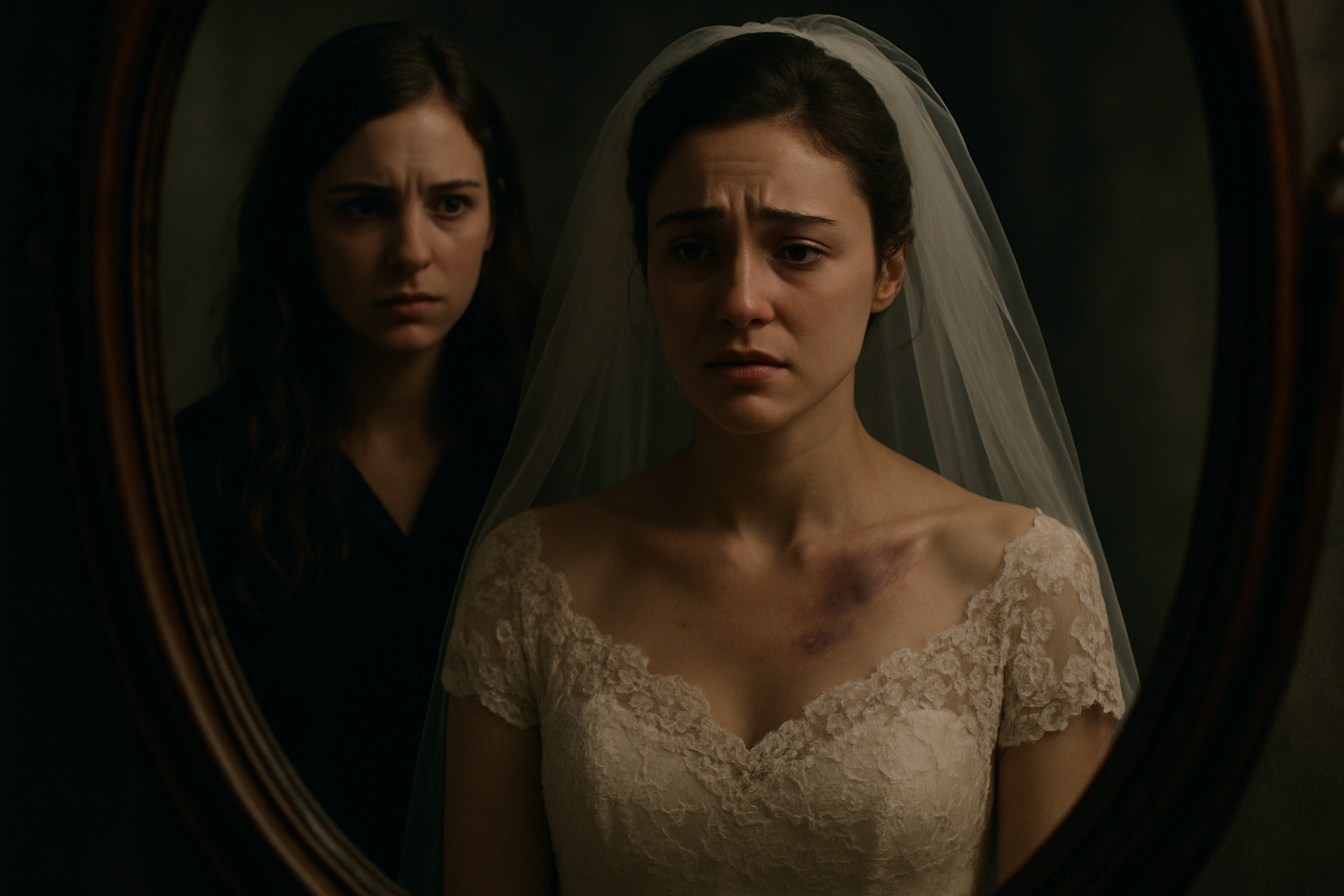
After dinner, Amos stood awkwardly and tapped a spoon against his water glass.
“Oh no,” Lila said. “Dad has a speech.”
Amos pointed at her.
“You hush. I practiced this in the truck.”
Elise smiled.
“He did. Three times.”
Amos cleared his throat.
“I don’t have fancy words,” he said. “That’s Celeste’s department.”
“Objection,” Celeste said.
“Sustained,” Lila added.
Amos chuckled.
Then grew serious.
“I spent a lot of nights thinking about what I should have seen. What I should have done. I can’t go back. None of us can. But I can say this now. No business, no house, no family name, no debt, no reputation is worth a person’s safety.”
His voice trembled.
“If I ever made either of you feel like keeping peace mattered more than telling the truth, I am sorry.”
Lila’s face changed.
Amos looked directly at her.
“You did not shame this family. You saved it.”
Elise cried quietly.
Lila stood and went to her father.
He wrapped his arms around her carefully, the way he had learned to do after asking whether touch was okay.
She nodded into his shoulder.
Celeste watched, feeling something loosen inside her.
For years, she had thought being the strong sister meant standing between Lila and every danger.
Now she understood.
Strength was not always a wall.
Sometimes it was a witness.
Sometimes it was a phone call.
Sometimes it was letting someone walk halfway down the aisle alone because she needed to know her legs still belonged to her.
Later that night, after their parents left and the dishes sat stacked in the sink, Lila and Celeste sat on the back porch beneath blankets.
The pecan tree creaked above them.
“Do you ever think about what would’ve happened if you hadn’t come to that dress fitting?” Lila asked.
Celeste looked into the dark yard.
“Yes.”
“Me too.”
Celeste turned to her.
“But I did come.”
Lila nodded.
“And I did tell you.”
“You did.”
Lila pulled the blanket tighter.
“I used to think the worst day was when everyone saw what happened to me.”
Celeste waited.
“But it wasn’t,” Lila said. “The worst days were the ones where I smiled and nobody knew I was disappearing.”
Celeste’s throat tightened.
“I don’t want to be only the girl from the wedding video,” Lila said.
“Then don’t be.”
Lila gave a soft laugh.
“That simple?”
“No. But simple and easy aren’t the same.”
Lila looked out at the yard.
“I want to build something.”
“The shop?”
“Maybe. Maybe something for women leaving men like Grant. Not just emergency help. Practical help. Bank accounts. Documents. Storage. Job references. People always say ‘just leave,’ like leaving isn’t a thousand tiny locked doors.”
Celeste smiled.
“That is the most Rowan thing you’ve ever said.”
“What? Turning trauma into paperwork?”
“Turning pain into furniture,” Celeste said. “Something useful. Something that holds weight.”
Lila was quiet.
Then she said, “Will you help me?”
Celeste looked at her sister, at the woman emerging from the ruins.
“Always.”
One year after the wedding that never happened, Rowan & Sons hosted an open house.
Not a grand reopening.
Amos refused to call it that.
“We never closed,” he said. “We just cursed more than usual for a while.”
But the shop had changed.
A new sign hung above the office door.
Rowan Custom Woodworks.
Lila had designed it herself, dropping “& Sons” not out of bitterness, but truth.
Amos cried when he saw it.
Then blamed sawdust.
In the back corner stood a new worktable made from salvaged walnut.
Above it hung a brass plaque:
FOR THE PEOPLE WHO NEED A FIRST STEP.
The table belonged to Lila’s new nonprofit, First Step Fund.
It helped survivors gather documents, open safe bank accounts, pay for emergency transportation, and store evidence securely.
Celeste handled compliance.
Elise organized volunteers.
Amos built lockboxes, bookshelves, and desks for women moving into new apartments.
The shelter director said the Rowans were impossible because they kept doing more than they promised.
On the day of the open house, families wandered through the shop eating cookies and admiring furniture. Former employees had returned. New apprentices swept floors and asked Amos too many questions.
Near closing, a woman arrived with a teenage daughter.
Celeste recognized her.
The customer in pearls.
The one who had once stared at Lila’s scars.
The woman approached carefully.
“My daughter wanted to meet you,” she said.
The girl looked embarrassed and brave.
“I saw your video,” she said. “The one from the wedding.”
Lila’s expression softened.
“I’m sorry you had to see something like that.”
The girl shook her head.
“No. I mean, I’m sorry it happened. But seeing you say no in front of everybody…” She swallowed. “It helped my mom leave.”
The woman began crying.
The girl took her hand.
Lila’s eyes filled, but she smiled.
“I’m glad you’re here.”
The girl looked around the shop.
“My mom said this place almost got taken from you.”
“It did,” Lila said.
“But it didn’t.”
“No,” Lila said. “It didn’t.”
The girl studied the plaque over the walnut table.
“Is this where people start over?”