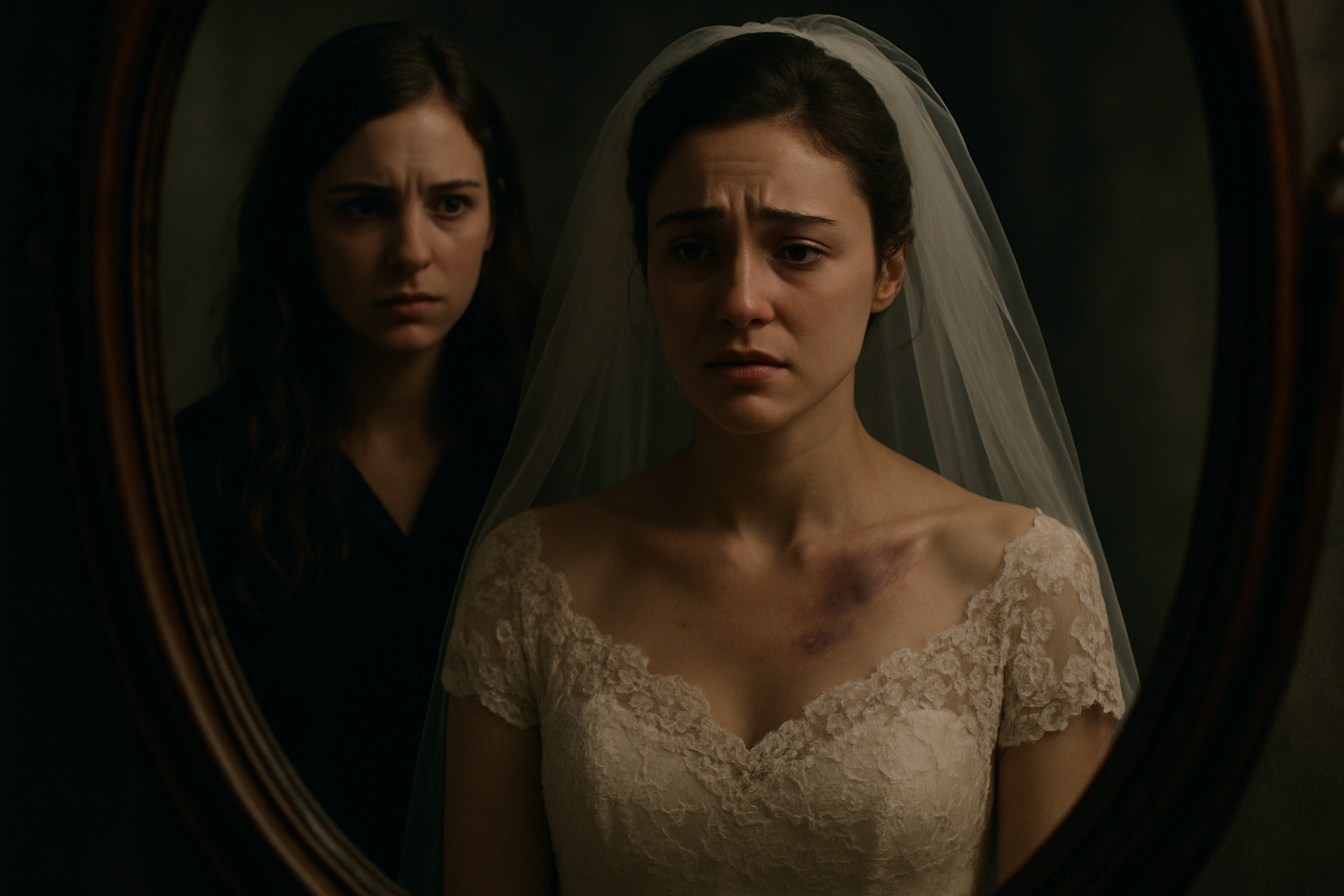
Lila glanced toward Celeste, who stood near the doorway pretending not to cry.
“Yes,” Lila said. “Sometimes. But starting over doesn’t always look dramatic. Sometimes it looks like filling out a form. Sometimes it looks like sleeping through the night. Sometimes it looks like learning your own laugh again.”
After they left, Lila walked outside.
The evening sun lay warm across the parking lot. The shop windows glowed behind her.
Celeste followed.
“You okay?”
Lila smiled.
“I think so.”
“That sounded almost convincing.”
Lila laughed.
“I am okay. Not every minute. Not every day. But right now, yes.”
Across the lot, Amos locked the front door while Elise reminded him twice to check the side entrance.
Inside, the new sign caught the light.
Rowan Custom Woodworks.
A family name altered.
Not erased.
“Do you still have the picture from the estate?” Lila asked.
“Of course.”
“Can you send it to me again?”
Celeste looked at her.
“You lost it?”
“No. I want to print it for the office.”
Celeste opened her phone and found the photo.
Lila beneath the tree.
Back bare to winter light.
Scars visible.
Face lifted.
For a long time, Celeste had thought the most important image from that year would be Grant in handcuffs. Or Sterling’s face when his kingdom cracked.
She had been wrong.
The real image was not punishment.
Not revenge.
Not even justice.
It was Lila standing in the place meant to bury her, no longer asking permission to be seen.
Celeste sent the photo.
Lila looked down when it arrived.
Then she smiled.
“I used to hate those scars,” she said.
“You don’t now?”
“I still hate how they got there.” Lila touched the screen lightly. “But I don’t hate the woman who survived them.”
Celeste did not blink away her tears.
“That woman is pretty hard to hate.”
For a while, they watched the sun sink behind the low buildings and power lines. Traffic hummed in the distance. A train horn sounded far off.
Life, stubborn and ordinary, kept moving.
The world would not become safe all at once.
Powerful men would still buy silence.
Families would still mistake appearances for peace.
Women would still smile in photographs while hiding bruises under lace, denim, makeup, or excuses.
But in one woodworking shop, beneath the smell of cedar and varnish, a different inheritance had begun.
Not fear.
Not silence.
Not the old belief that scandal was worse than suffering.
A table.
A form.
A phone number.
A sister who noticed.
A father who listened.
A mother who stopped asking what people would say.
And a woman who learned that walking away from the altar was not the end of her story.
It was the first honest sentence.
Whenever someone asked Lila why she kept the picture from that ruined wedding day, she gave the same answer.
“Because that was the day everyone thought I lost everything,” she said. “But really, it was the day I got myself back.”