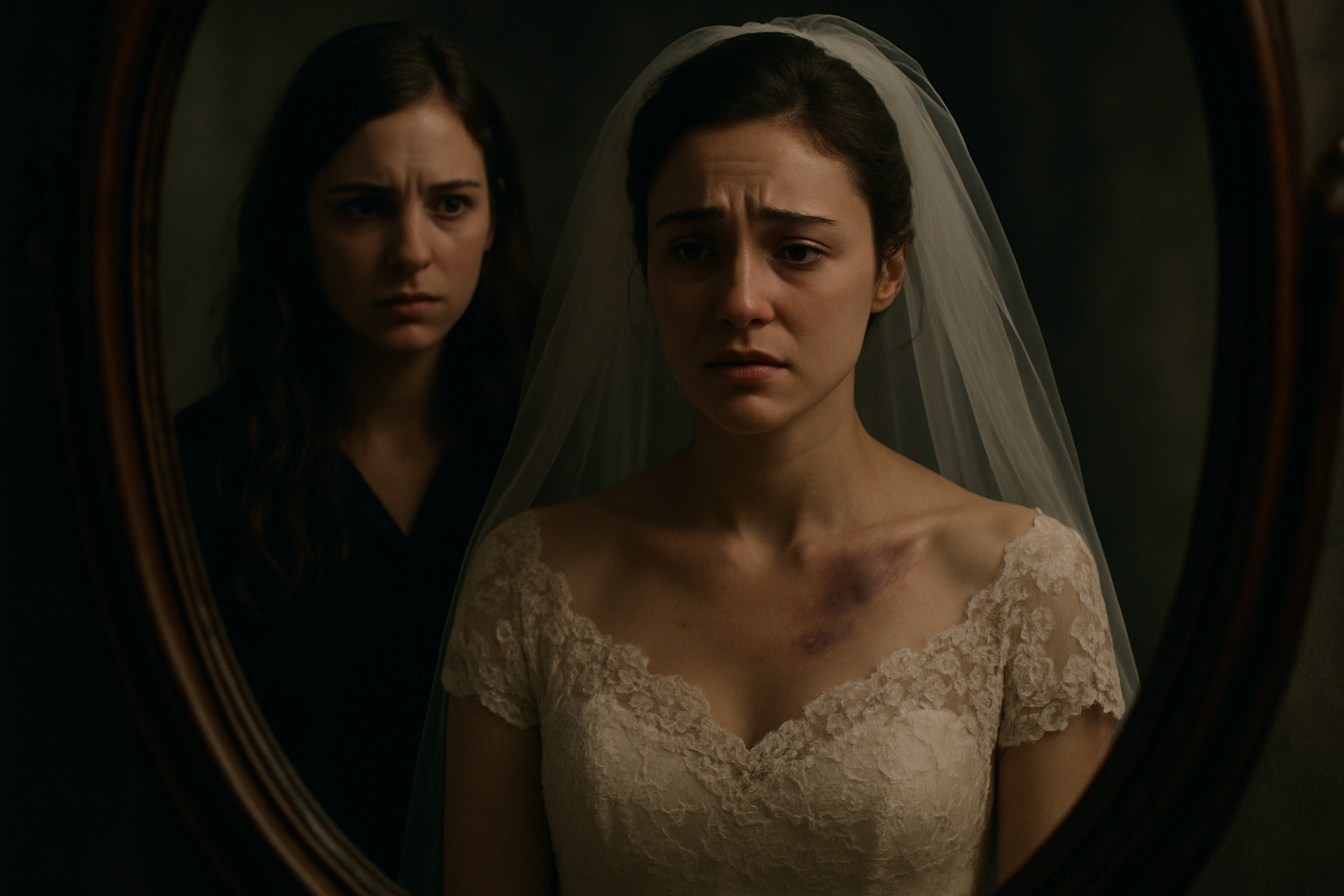
His sentence was not as long as Lila had privately hoped.
But the protective order was strict.
If he violated it, he would go back.
Sterling fought harder.
He hired expensive attorneys. Claimed political persecution. Claimed rogue employees. Claimed Amos had been a willing participant.
That last lie nearly broke Amos.
But the paper trail held.
It showed pressure. Deception. Victor acting as the bridge.
Victor, desperate to save himself, cooperated.
The day his cooperation agreement became public, Elise sat in Celeste’s kitchen with a cup of tea going cold between her hands.
“He sent me a letter,” she said.
Celeste looked up.
“What did it say?”
“That he prays we’ll forgive him.”
Lila went still.
Elise took the letter from her purse but did not unfold it.
“I wanted to burn it,” she said. “Then I wanted to read it. Then I wanted your father to read it and tell me what to feel.”
“What do you feel?” Celeste asked.
Elise’s eyes shone.
“I feel like forgiveness is too often demanded from the people still bleeding.”
Lila reached across the table and took her mother’s hand.
Elise squeezed it.
“I may forgive him someday,” she said. “But not because he asked nicely from a safe distance. And not because the family wants Christmas to be comfortable.”
Celeste nodded.
“That sounds honest.”
Elise gave a tired smile.
“Honest is exhausting.”
“Yes,” Lila said. “But it weighs less than pretending.”
By fall, the shop survived the worst of the collapse.
Orders increased after a local paper told the story of how a small family business had been used by powerful men. Former clients returned. A church commissioned benches. A women’s shelter asked Amos whether he could build bookshelves at a reduced rate.
He built them at cost.
Then refused to charge for labor.
Lila began volunteering there on Tuesday evenings.
At first, she sorted donated clothes and kept to herself.
Then one night, a nineteen-year-old named Tessa came in with a split lip and a baby on her hip.
She insisted she had slipped.
Everyone in the room recognized the sentence.
No one challenged it directly.
Lila sat beside her on a couch while the baby slept.
“I used to say I fell too,” Lila said quietly.
Tessa stared at the floor.
Lila did not push.
“My sister asked me who did it,” she continued. “I lied the first time. Then I told her. Both things were part of surviving.”
Tessa’s eyes filled.
“If I say it out loud, everything changes.”
Lila nodded.
“Yes.”
“I’m scared.”
“I know.”
“What if nobody believes me?”
“Then you start with one person who does,” Lila said. “One is enough for the first step.”
Tessa cried silently, the baby sleeping against her chest.
Lila stayed with her until midnight.
When Celeste picked her up, she found Lila sitting outside under a yellow security light, wrapped in a cardigan.
“You okay?” Celeste asked.
Lila looked older somehow.
Not in a bad way.
“I thought helping her would make me feel powerful.”
“And?”
“It made me feel sad.”
Celeste sat beside her.
“Sad is not the opposite of powerful.”
Lila leaned her head against Celeste’s shoulder.
“I hate how many of us there are.”
Celeste looked toward the shelter windows, each one glowing with a private story.
“I know.”
Six months after the wedding, Lila asked Celeste to drive her back to the estate.
Celeste lowered her coffee cup.
“Why?”
“I want to see it without him there.”
“You don’t have to.”
“I know. That’s why I want to.”
They went on a cold Sunday morning.
The vineyard was dormant. The hills were brown. The sky was soft and colorless.
The estate had resumed hosting weddings, because beautiful places often return to business before people return to themselves.
The courtyard looked smaller without three hundred guests.
No altar.
No chairs.
No roses.
No federal agents crossing stone.
Only trees, limestone, and wind.
Lila stood where Grant had been arrested.
Celeste stayed a few feet behind.
For a while, neither spoke.
Then Lila unbuttoned her coat and slipped it off.
Underneath, she wore a dark green dress with a low back.
The scars were pale now, raised in places, silver against her skin.
The cold air touched them.
Lila inhaled sharply.
But she did not cover herself.
“I thought this place would swallow me,” she said.
Celeste waited.
“It didn’t.”
“No,” Celeste said. “It didn’t.”
Lila turned around.
Her eyes were wet.
But she was smiling.
“Take my picture.”
Celeste did.
Lila stood beneath an old tree, shoulders back, scars visible, face lifted toward the winter sun.
She did not look like a bride.
She did not look like a victim.
She looked like a woman who had walked through the life someone else chose for her and come out carrying the pen.
That evening, the Rowans gathered at Celeste’s house for dinner.
Amos brought a pecan pie from a bakery, since his own pie had once been banned by unanimous family vote. Elise brought roast chicken, mashed potatoes, and green beans with too much butter. Lila brought flowers. Celeste burned the rolls and called it a culinary choice.
They laughed more than anyone expected.