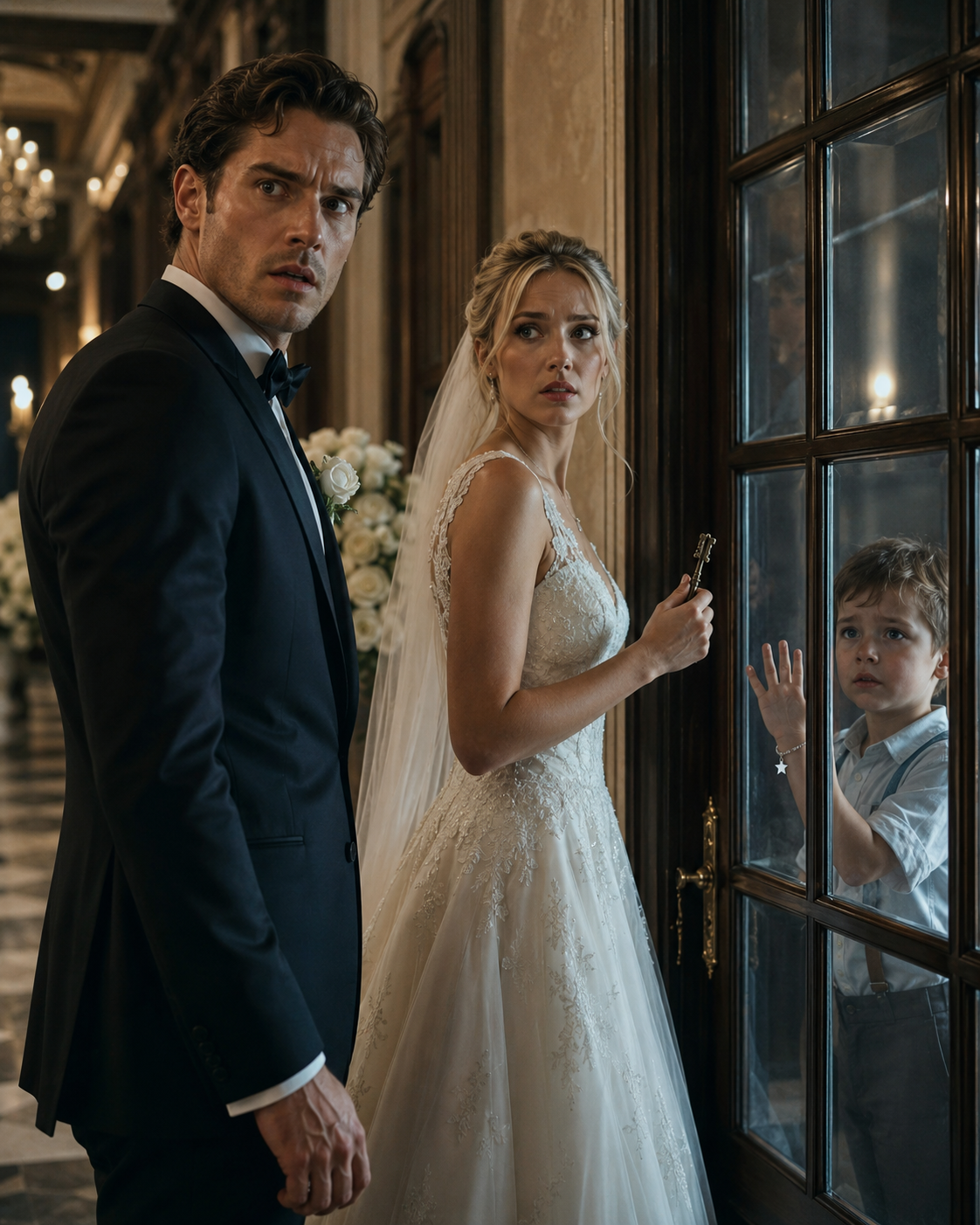
The wedding was supposed to begin at four.
By three-thirty, Whitmere Hall looked less like a home and more like a portrait of wealth pretending it had never known shame. White roses climbed the stone archways. Crystal glasses waited in perfect rows beneath the terrace awning. A string quartet tuned near the fountain, their notes drifting over the lawns like something expensive and obedient.
I stood in the west gallery, dressed in a black morning suit that had been fitted three times and still felt too tight around my chest.
My name was Julian Ashford. I was the last son of a family that had survived wars, bankruptcies, scandals, and every kind of quiet humiliation money could hide. People called me fortunate. Powerful. Untouchable.
That afternoon, I believed them.
In less than thirty minutes, I was supposed to marry Celeste Marlowe.
Everyone loved Celeste.
She had the kind of beauty that made strangers lower their voices. Pale gold hair, calm blue eyes, a smile so delicate it seemed almost rehearsed by candlelight. She moved through rooms as if she had been born knowing which angle flattered her best. She never raised her voice. Never arrived late. Never failed to say the right thing to the right person.
My mother had called her “a blessing.”
My aunt had called her “the woman who finally made Julian human.”
I had called her my future.
I should have known that perfection is often just fear wearing silk.
The first scream came from the old conservatory wing.
At first, I thought it was a bird striking the glass. Whitmere Hall had too many windows, too many mirrors, too many rooms that turned every sound into an echo. Then it came again.
A child.
Not crying.
Screaming.
The sound cut through the music, the champagne laughter, the murmur of guests gathering outside. It was small, terrified, and desperate enough to make every hair on my arms rise.
I turned toward the sound before I understood why.
From the far end of the gallery, Mrs. Bell, our housekeeper of thirty years, dropped the silver tray she was carrying. Glasses shattered across the marble. She looked toward the west corridor, and the color drained from her face.
“Mr. Ashford,” she whispered.
I was already moving.
The west corridor had been closed to guests that day. Celeste had insisted on it. She said the old rooms were dusty, unsuitable, embarrassing beside the decorated ballroom. I had believed her because I wanted the day to be easy. Because when you are about to marry someone, you begin forgiving small mysteries before they have even been explained.
The scream came again.
Then came the knocking.
Small fists striking glass.
I ran.
My shoes slipped once on the polished floor. Mrs. Bell followed behind me, breathless, one hand pressed to her chest. Around us, the house seemed to hold its breath. Even the quartet outside stopped playing.
At the end of the corridor stood the old garden room, a narrow chamber with a glass-panel door that overlooked the winter courtyard. The room had not been used in years. Its curtains were always drawn. Its lock was stiff. Its air smelled faintly of dust and lemons.
And behind the glass stood a little boy.
He could not have been older than five.
His brown hair was tangled. His cheeks were wet. His shirt was torn at one sleeve and streaked with dirt. He stood on tiptoe, beating both palms against the glass as if the whole world existed on the other side and he had only seconds left to reach it.
When he saw me, his mouth opened, but no sound came out at first.
Then he pointed.
Not at the door.
Not at me.
At the woman standing beside it.
Celeste.
My bride stood in her wedding gown, white lace trailing over the black-and-white marble like spilled moonlight. Her veil was already pinned in place. Pearls circled her throat. Her bouquet lay on a side table, abandoned and crushed at the edges where her hand had gripped it too hard.
In her right hand, she held a brass key.
For one breath, none of us moved.
Then Celeste smiled.
It was the wrong smile. Too quick. Too clean. Too polished for a corridor filled with a child’s terror.
“Julian,” she said softly. “Thank goodness you’re here. I was just about to call someone.”
The boy shook his head violently behind the glass.
Mrs. Bell made a broken sound. “Oh, dear Lord…”
I looked from Celeste to the child, then back to the key in her hand.
“Open the door,” I said.
Celeste blinked. “Of course. I only locked it because he was hysterical. He wandered in from the service gate. I didn’t want him running into the ceremony and frightening people.”
The child slapped his palm against the glass.
“She put me here,” he cried. His voice cracked on every word. “She said I had to stay quiet.”
Celeste’s eyes sharpened.
Not with fear.
With warning.