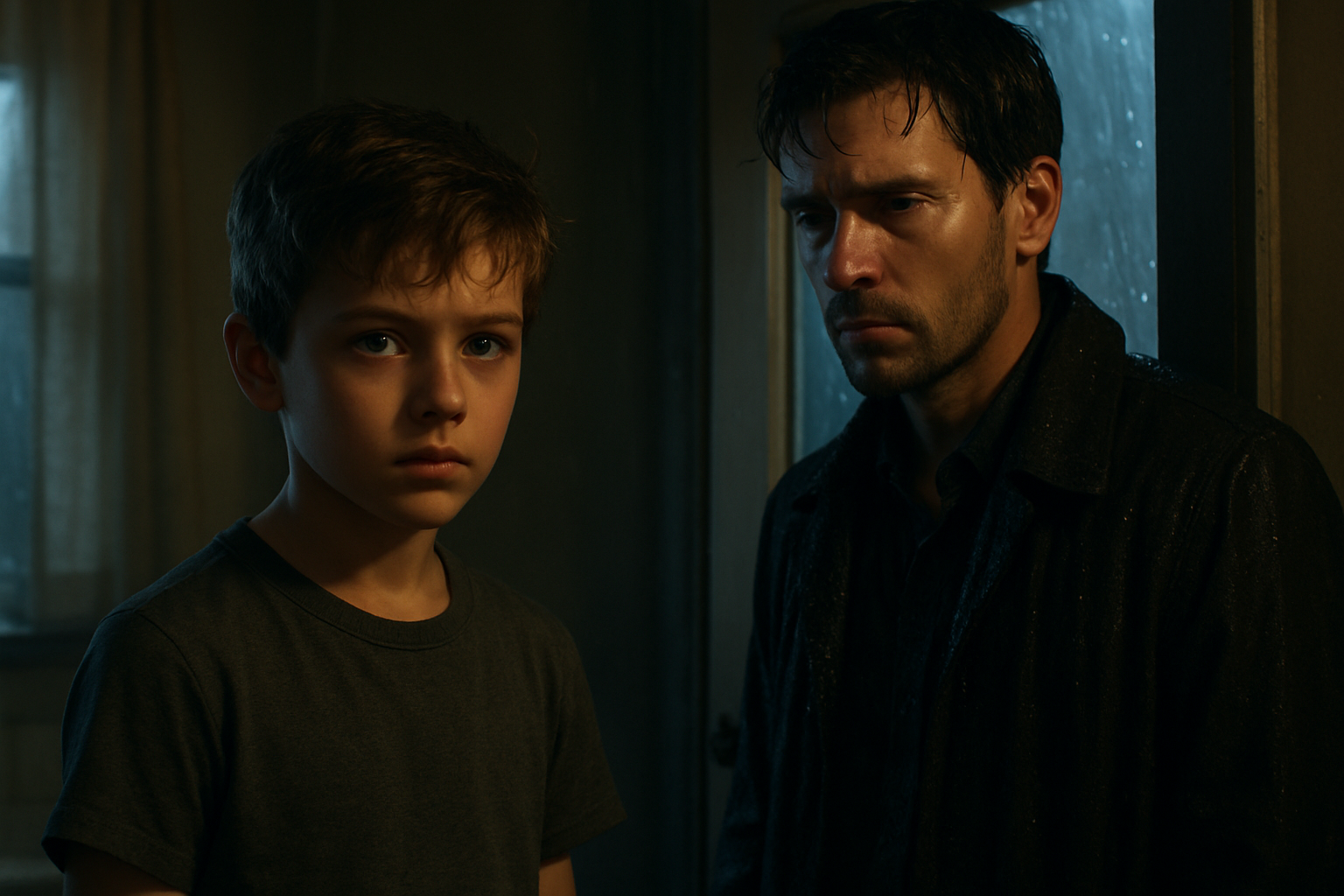
Tessa’s mouth twisted. “Your world.”
“Temporarily.”
“Your world is never temporary, Nolan. It spreads.”
He had no answer because she was right.
His world spread. It seeped beneath doors. It turned strangers into investigators. It made childhoods into headlines and women into mysteries for bored people to solve between lunch and errands.
Caleb adjusted the strap of his backpack, though he was not wearing shoes and clearly had no intention of going anywhere yet.
“Statistically, controlled relocation is safer than emotional resistance,” he said.
Tessa stared at him. “You are too young to sound like a crisis consultant.”
“I read.”
Nolan hid a smile.
Tessa saw it and gave him a look that warned him not to enjoy parenting yet.
They packed for a week.
Tessa moved through the house with quiet efficiency, folding Caleb’s clothes, gathering medication from the bathroom cabinet, slipping school forms and chargers into a canvas tote. Nolan offered to help three times. Each time, Tessa gave him tasks so specific he understood they were designed to prevent him from ruining anything.
“Not that drawer.”
“Fold, don’t roll.”
“No, he won’t wear that shirt. It itches.”
Caleb packed books first, clothes second.
“You only need enough for a week,” Tessa told him.
“A week is an estimate,” Caleb said. “Estimates fail.”
He brought four astronomy books, two notebooks, a mechanical pencil case, and a battered stuffed moon with one eye missing. When Nolan noticed it, Caleb lifted his chin.
“It has sentimental value.”
“I didn’t say anything.”
“Your face did.”
Nolan looked away before his smile betrayed him.
Leaving Tessa’s house felt like evacuation.
Security men in dark coats stood between the porch and the SUV while cameras flashed from behind parked cars and through bare winter branches. Reporters shouted questions that turned the cold air dirty.
“Nolan! Is Caleb your son?”
“Tessa, how long have you known him?”
“Did he pay you to stay quiet?”
“Caleb, look here!”
At that, Nolan’s entire body changed.
He stepped between the shouting voices and the boy so fast one of his security men reached instinctively for him. Rage tore through him, hot and clarifying.
“He’s a child,” Nolan snapped, voice low enough to be dangerous. “Back off.”
For once, the cameras hesitated.
Tessa saw it. Saw the fury. Saw the instinct.
But she did not thank him.
Not then.
The apartment in Harbor East looked like money had tried to imitate comfort and missed the point.
The ceilings were high. The furniture was modern, angular, and expensive in a way that discouraged actual sitting. The windows were wide enough to make the harbor look staged, all steel water and winter sky. Fresh flowers sat on the dining table though Nolan had not ordered them. Someone had stocked the refrigerator with sparkling water, berries arranged in glass containers, imported yogurt, and food no child would voluntarily eat.
Caleb walked through the living room with his hands clasped behind his back like a tiny museum critic.
“This place has no personality,” he said.
“It has good security,” Nolan replied.
“That’s not the same thing.”
Tessa laughed before she could stop herself.
The sound was small, startled, and real.
Nolan looked at her immediately, helplessly.
He would have paid an obscene amount of money to hear it again. Then he realized, with a shame that nearly made him flinch, that paying for things was exactly the problem.
Life inside Nolan’s apartment became an awkward experiment in proximity.
Nolan did not know how to live with people without delegating care. His life had been engineered for years by others: meals appearing, laundry vanishing, schedules printed, flights changed, rooms cleaned before he noticed they were messy. If something broke, someone fixed it. If he needed something, someone anticipated it. If he wanted silence, entire floors bent around the preference.
Tessa had no patience for men who mistook expense for effort.
When he ordered dinner from a restaurant with a tasting menu and no visible food Caleb recognized, she opened the containers, stared at the artful portions, and said, “He’s eight, Nolan, not a visiting ambassador.”
Caleb peered into one box. “This carrot has foam on it.”
“It’s a reduction,” Nolan said.
“It’s suspicious.”
Tessa made scrambled eggs and toast.
Caleb ate all of it.
Nolan watched from the counter, feeling like a billionaire who had been defeated by butter.
The next morning, determined to be useful, he arranged breakfast himself. By arranged, he meant he asked the building concierge to bring up pastries from the best bakery nearby, organic fruit, fresh juice, and three kinds of coffee.
Tessa entered the kitchen, looked at the spread, and sighed.
“What?” Nolan asked.
“Do you own cereal?”
“No.”
“Do you own milk?”
“I own almond milk.”
Caleb glanced up from the table. “I’m not a squirrel.”
Nolan bought cereal that afternoon.
Too much cereal.
An entire shelf of it.
Tessa opened the pantry and closed it again without speaking.