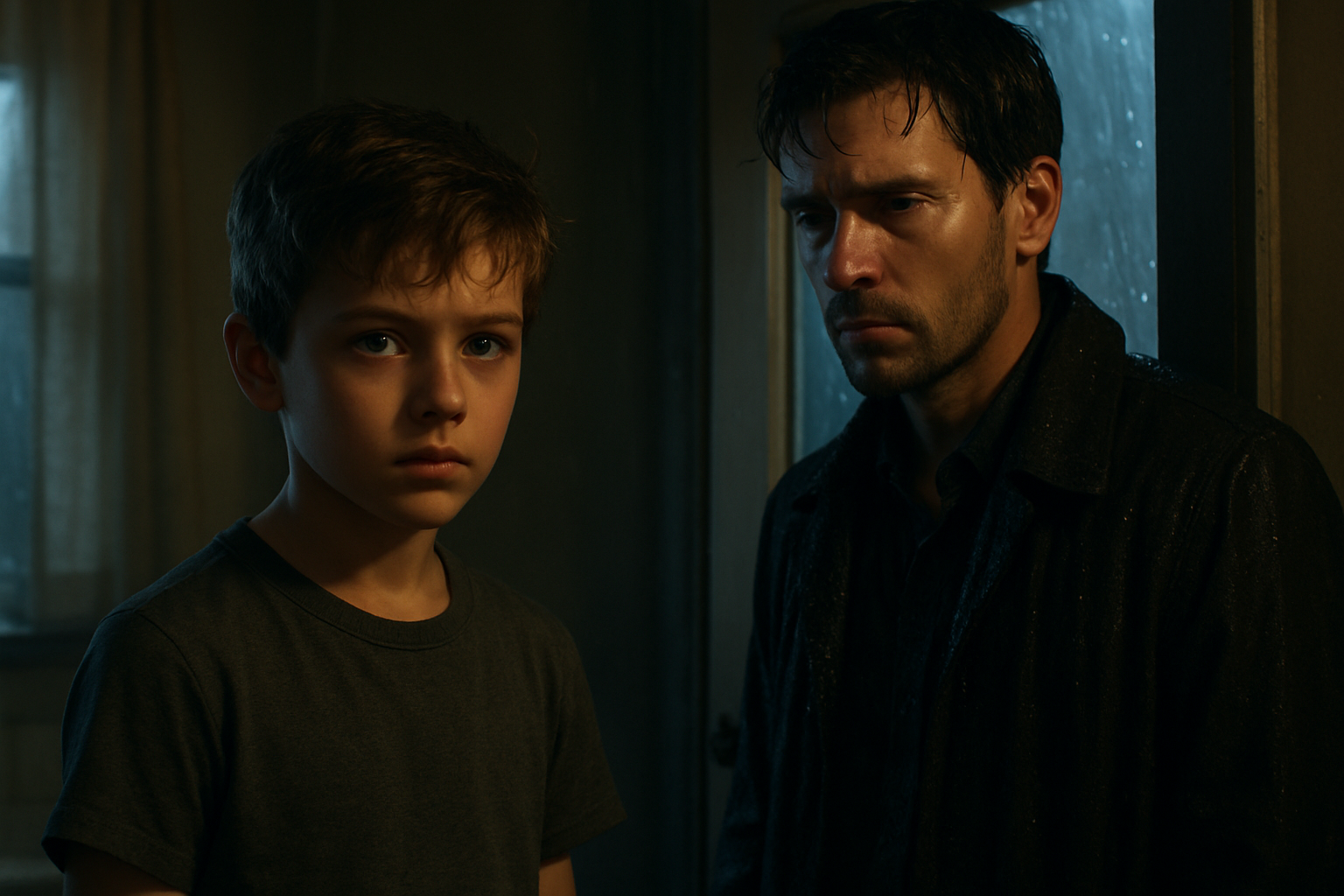
“You didn’t answer.” Her voice did not rise. That made it worse. “I called again. You didn’t answer. I left a message saying I needed to talk to you. I waited with my phone in my hand until the battery died. That same afternoon, your face appeared on an entertainment segment from Seoul with a woman in a red dress touching your mouth like she owned it.”
Nolan remembered Seoul in flashes: too many cameras, too much perfume, a hotel balcony glittering above traffic. A model with red lipstick who had leaned too close for the photograph because his manager had said it would help the image. He remembered laughing because everyone around him laughed. He remembered feeling empty afterward.
He had not remembered that Tessa had been trying to call.
Or maybe he had buried it so deep he could pretend forgetting was innocence.
“So I sat on the bathroom floor for an hour,” Tessa continued. “Then I got up. I made an appointment. I applied for Medicaid. I told my mother. And I started raising my son.”
My son.
Not our son.
The distinction landed exactly where she intended.
Nolan wanted to defend himself. The instinct rose automatically, ugly and familiar. He wanted to tell her he had been managed, scheduled, handled, pushed from one country to another until his own life felt like a room he only rented. He wanted to tell her that half his calls had been screened by assistants, that his mother had controlled access to him with velvet-gloved ferocity, that his manager had treated distraction like disease.
He wanted to say the woman in Seoul had meant nothing.
That every woman after Tessa had meant less.
That for nine years he had mistaken achievement for healing and noise for company.
But explanations were not answers.
Not yet.
Maybe not ever.
“I’m sorry,” he said.
The words felt too small to carry the damage, but they were the only honest ones he had.
Tessa looked toward the hallway Caleb had used minutes earlier, as though she could still see him there, small and solemn and brilliant.
“Be sorry quietly,” she said. “He doesn’t need another adult making feelings his job.”
Nolan stayed one night.
Then three.
The first night had been necessity. The storm had knocked branches across streets, his driver had been delayed, and the reporters who always seemed to orbit his life had not yet caught the scent.
The second night, he told himself he stayed because it was late, because Caleb had asked him one question about orbital mechanics and then twenty-seven follow-ups, because Tessa’s guest blanket was already folded at the end of the couch.
The third night, he stopped lying to himself.
He stayed because when Caleb read at the table, he tilted his head the same way Nolan did when thinking.
He stayed because Tessa hummed under her breath when she cooked, and hearing it made some ruined room inside him ache with recognition.
He stayed because leaving that house felt, absurdly, like abandoning them all over again.
Then the reporters found Tessa’s street.
It happened with the speed of rot.
A neighbor’s niece recognized the black SUV idling at the curb and posted a blurry photograph online. By noon, two entertainment accounts had matched the vehicle to Nolan’s security team. By three, a long-lens camera caught Nolan walking Caleb home from school, wearing sunglasses and failing spectacularly at invisibility.
The resemblance between them did not need confirmation.
The internet devoured it whole.
By dinner, hashtags were breeding like mold.
SECRET SON?
BILLIONAIRE DAD HIDES FAMILY IN BALTIMORE.
WHO IS TESSA MONROE?
Photos appeared within hours. Tessa leaving the grocery store two winters ago. Caleb at a school science fair, grinning beside a cardboard model of Saturn. A picture of Tessa at nineteen, scraped from an old college page, placed side by side with current images beneath captions that dissected her life as though she had offered it up for public consumption.
Tessa placed her phone face down on the kitchen table and pressed both palms flat beside it.
She did not cry.
Nolan wished she would, and hated himself for wishing it. Crying would have given him something to do. A shoulder to offer. A glass of water. A hand at her back. This calm made him feel useless.
Worse than useless.
Responsible.
Caleb came downstairs in socks, hair damp from a shower, and surveyed the room with the grave composure of a much older person entering a war room.
“They found us,” he said.
“Yes,” Tessa replied.
“Are we leaving?”
Tessa looked at Nolan before she could stop herself.
The glance lasted less than a second, but Nolan caught it. He saw the calculation, the fear, the resentment of needing help from the man who had made help necessary. He saw how much she hated that his world had arrived at her doorstep like weather she could not bar from the windows.
So he did not pretend not to notice.
“I have a secure apartment in Harbor East,” he said carefully. “Private elevator. Garage access. Staff entrance. Security downstairs. We can stay there until it cools down.”