Graham’s mother cried for the cameras.
His coaches called it destiny.
Jonah slapped him on the back and said, “Don’t forget us when your suits cost more than my car.”
Elise said nothing for almost a full minute.
“When?” she finally asked.
“Three weeks.”
She nodded, rinsed a plate that was already clean, and did not look at him again for the rest of dinner.
Their last night was supposed to be normal.
It wasn’t.
They sat on the roof with cheap takeout, two stolen beers Jonah would have pretended not to notice, and every unsaid thing pressing between them.
“You’ll love California,” Elise said.
“No, I won’t.”
“You’ll have investors and parties and famous people pretending your jokes are good.”
“My jokes are good.”
“They’re expensive. That’s different.”
He looked at her. Really looked.
“Come with me.”
She laughed once because she thought he was joking.
He wasn’t.
“Graham.”
“I mean it.”
“I have school. My mom. Jonah. A life.”
“You could have one there.”
“Yours?”
He did not answer fast enough.
That was the trouble with Graham even then. He wanted fiercely, but fear made him selfish. He wanted Elise in his future, but he had not imagined what she would lose to stand there.
Elise saw the hesitation.
“Exactly,” she whispered.
He should have apologized.
Instead, he kissed her.
She should have stopped him.
She didn’t.
The kiss was not gentle. It was two years of restraint losing the fight. What followed was not cheap or careless. It was beautiful, frightening, and already grieving itself.
For a few hours, there was no company. No investor. No mother. No future waiting with a knife.
Only Graham.
Only Elise.
Only morning light creeping under the curtains like a witness.
Then Graham ruined it.
He woke before her, panicked at the tenderness in the room, and reached for a joke because jokes were armor.
“You steal blankets like a criminal,” he said.
Elise opened her eyes.
“That’s what you want to say?”
“I’m reporting facts.”
She sat up, pulling the sheet around herself.
The look on her face was not anger.
Anger would have been kinder.
It was disappointment settling somewhere he could not reach.
At the airport, he promised to call when he landed.
She said okay.
His mother waved impatiently from security. His new manager shouted that they were late.
Graham turned back.
The words were there again.
I love you.
Elise looked at him as if she knew exactly what he was failing to say.
“Go become famous,” she said.
So he did.
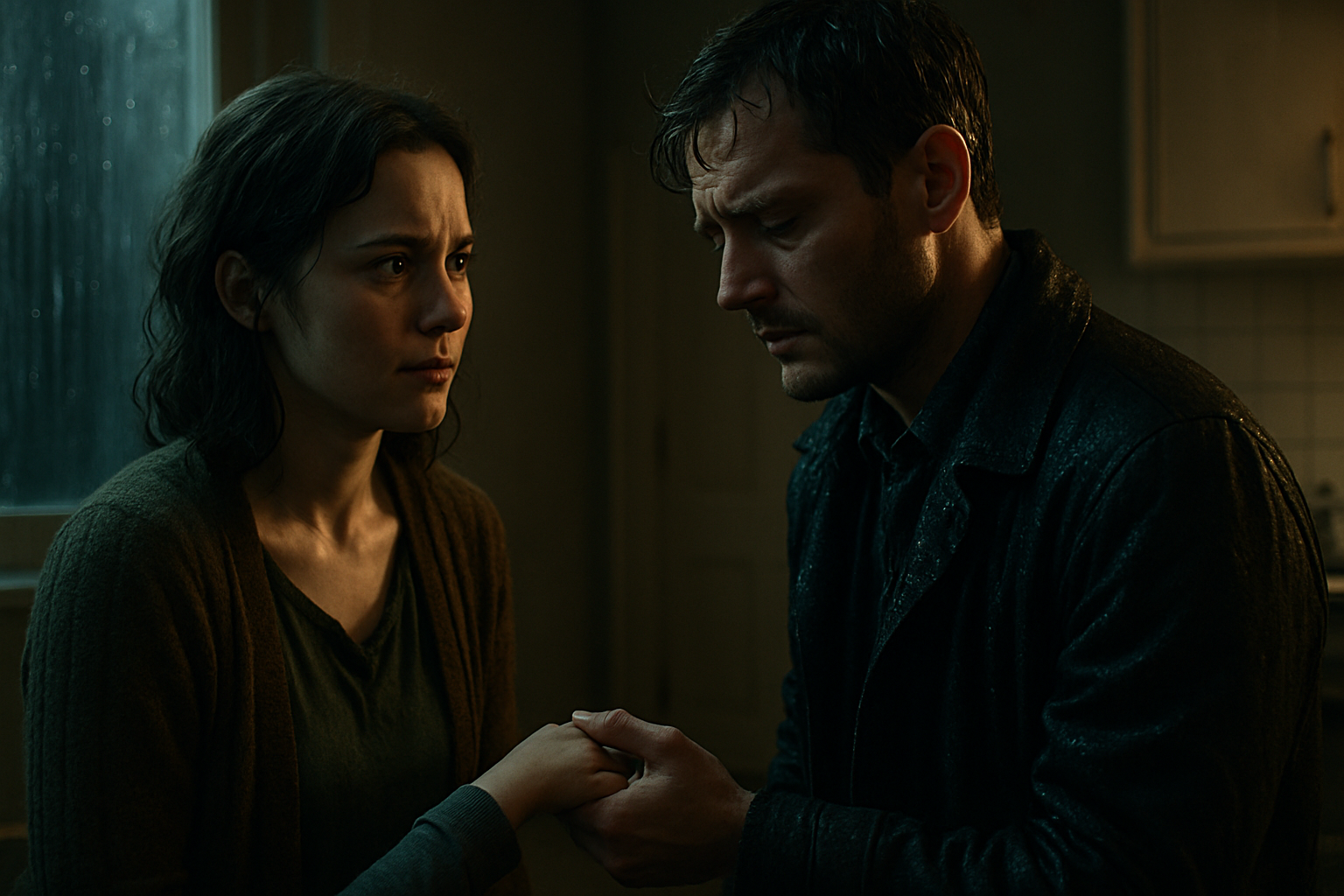
Nine years later, lying awake on Elise’s couch while the storm faded to a cold drizzle, Graham understood that fame was the least impressive thing he had ever achieved.
Morning smelled like coffee and judgment.
Graham opened his eyes to find a boy sitting at the kitchen table in a school sweater, eating cereal while reading a thick book about deep-space observation.
The boy looked up.
“You snore,” he said.
Graham sat up carefully. “Good morning to you too.”
“It was informational, not rude.”
Elise stood at the counter, hair twisted into a knot. She failed to hide her smile.
Graham stared at the boy.
Eight years old.
Gray-blue eyes.
That crescent birthmark.
His heart did the math before his mind would allow it.
The boy saved him the trouble.
“You’re staring because you think I might be yours,” he said calmly.
Elise set her mug down too hard.
“Miles,” she warned.
“It’s fine, Mom. He was going to ask badly. I made it more efficient.”
Graham almost laughed, but his throat hurt.
“How old are you?” he asked.
“Eight.”
“When is your birthday?”
“March third.”
Graham closed his eyes.
The date struck like a bell.
He had done the math all night. March third made denial impossible.
When he opened his eyes, Miles was watching him with curiosity instead of fear.
“You’re a bad liar,” the boy said.
“I didn’t lie.”
“You said nothing. Your face tried to.”
The school bus came seven minutes later.
Miles put his bowl in the sink, packed his book, and paused near Graham.
“Goodbye, sir.”
“Goodbye, Miles.”
The door closed.
The house settled.
Elise leaned against the counter and waited. She knew silence could punish Graham better than shouting.
He stood.
“Why didn’t you tell me?”
Her face changed so fast he wished he could pull the question back.
“Because nine years ago,” she said, “I watched you tell a reporter on national television that fatherhood looked like a prison sentence.”
Memory hit him.
A rooftop bar. Cameras. Applause. A woman asking if the handsome young founder wanted a family someday.
Graham, twenty-two and drunk on attention, had laughed.
That life isn’t for me. I’d be terrible at it.
The clip had gone everywhere.
“I was twenty-two,” he said weakly.
“I was nineteen and nine weeks pregnant.”
The kitchen went still.
Elise’s voice stayed even, which told him the wound had never healed.
“I called you anyway. I told myself cameras make men stupid. You didn’t answer. I called again. You didn’t answer. That afternoon your face was on a segment from overseas with a woman in a red dress touching your mouth like she owned it.”
“Elise—”